Ardmore Banking Advisors Celebrates 35 Years Providing Credit Risk Management Services to Financial Institutions Nationwide
ARDMORE, Pa., July 22, 2026 /PRNewswire/ — Ardmore Banking Advisors is celebrating its 35th anniversary providing credit risk and other risk management services to financial institutions in over 30 states. Founder and Board Chairman T. Alexander (Sandy) Spratt attributes Ardmore’s growth and success to its consistent values of integrity, respect, independence and value-added service for clients delivered by its outstanding and loyal team of partners and other professionals.
Over the past five years the current management team of Thomas Spratt, President & CEO, Steve Peck, COO, Peter Cherpack, EVP of Technology, Lara Hartin, EVP & CRO, Todd Sardich, EVP of Consulting, and Eileen Gaul Isdaner, CAO has led team members residing in 15 states to deliver multiple consulting engagements including Due Diligence, entire bank Credit Risk Management Evaluations and Loan Review throughout the United States.
Guidance is provided by an active and independent Board that focuses on strategic improvements, employment of core values and the innate mission of delivering trusted and actionable value-added services to help clients achieve their goals. Ardmore’s independence, experience and insight is especially valuable when providing confidential M&A due diligence on the quality of loan portfolios and lending processes.
“I am proud of our history of stability and excellence of our partners and other team members, and thankful for the many loyal clients that have been with Ardmore, some for over 25 years,” Sandy Spratt commented. “Our recent seamless transition to our current excellent management team will serve Ardmore and its clients very well in the future.”
Ardmore Banking Advisors M&A Webinar Highlights
We are pleased to present the following compilation of highlights from two M&A due diligence webinars presented by Ardmore in partnership with Bank Director and RMA. If your bank is considering a merger, sale, or acquisition, please contact us today at speck@ardmoreadvisors.com.
Summary of RMA Philadelphia’s 2026 Annual Bank Presidents’ Panel
Teresa Wood, Chris Annas, Dan Fitzpatrick and Bernie Shields made up the 2026 RMA Philadelphia Bank Presidents’ Panel
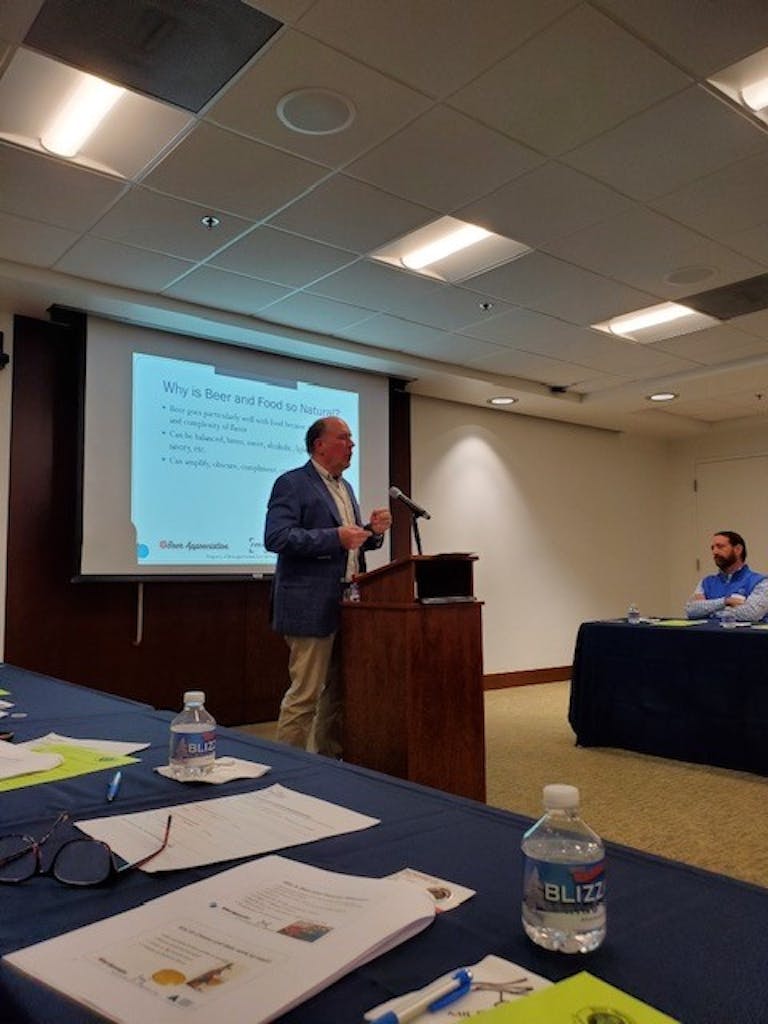
For the 20th consecutive year, Ardmore Banking Advisors served as the gold sponsor for the Philadelphia Chapter of the Risk Management Association’s Annual Presidents’ Panel, which was held at the Philadelphia Union League on Tuesday, May 12.
Ardmore’s Senior Consultant, Teresa Wood, also a Board Member of the Philadelphia RMA, served as moderator of the panel, featuring Chris Annas, Chairman & CEO of Meridian Bank, Dan Fitzpatrick, President of the Mid-Atlantic and Midwest Regions of Citizens Bank, and Bernard Shields, Pennsylvania Market President of WSFS. The panel had a lively discussion of a wide range of topics from AI in banking, private credit, cybersecurity and fraud, and the impact of fintechs, particularly on community banking.
What follows is a summary of the panel discussion, and some of the key issues discussed. Please note – the opinions expressed are those of the panel and are merely presented here for informational purposes.
The Current State of the Banking Industry – Geopolitical Factors & Volatility
The panel discussed the current banking climate and the various factors impacting it – including the perception that we’re now living in unusually volatile times. There was a general agreement that there have always been turbulent times, with the aftermath of the terrorist attacks of 9/11, the COVID-19 outbreak, and the economic crisis of 2008 given as examples, and that a key aspect of banking is to be able to react to the environment and still meet clients’ needs.
The panel did point to concerns over lingering inflation, tariff uncertainty, and the war in Iran leading to rising oil prices as the largest factors causing portfolio disruption. Technology lending, particularly the impact of AI, was mentioned as an area with the potential for problems. Some larger banks are also seeing opportunity in defense spending, with an almost unlimited need for munitions with conflicts in Ukraine and the Middle East ongoing.
What Keeps You Up at Night?
When asked what issues are most concerning, all three bank presidents found consensus on cybersecurity and fraud prevention. Every institution is aware of the threat posed and there is a need for constant scrutiny and safeguards. All it takes is one mistake to cause massive disruption, and the cybercriminals are learning new tactics every day. Customer education on scams is also important.
Other areas of concern include the potential of the regulatory pendulum swinging back towards perceived overreach– particularly around mortgage scrutiny, Fintech deposit disintermediation (using the Silicon Valley Bank failure as an example), and hiring and succession practices with more senior lenders approaching retirement.
Artificial Intelligence (AI) in Banking
One of the most substantial portions of the discussion focused on the use of AI in banking, how it can be leveraged in the future, and whether there is concern about its use triggering layoffs and eroding business models. While the panel generally agreed that there is no danger of it completely removing the human factor, there is the potential for it to allow employees to repurpose their time. Potentially, AI can reduce time spent on tedious tasks, freeing it for other more profitable activities, creating efficiency. For example, marketing tasks that used to take five hours can now take five minutes. One panelist highlighted the significant opportunity there.
One president pointed to the numerous data points involved in lending and using Copilot to make suggestions, then letting human administrators decide whether or not to use them. Another president said that enough back-office tasks were automated to the point that staff members could be redeployed to front end tasks.
Another comment was made that AI could evolve to the point that it could solve one of the main areas of concern – staffing. As more junior staff are promoted to replace retiring senior executives, it’s possible that AI can be utilized to replace some junior staff functions.
The Regulatory Shift in Attitude and Experience
When asked how regulatory exams have evolved in recent years, all three bank presidents agreed that they have become easier. When there are changes in Washington, bankers feel the differences faster than anyone else. Many new directives from Washington are creating a fairer overall evaluation of risk as opposed to traditional examinations that often would drill deep to find any issues, no matter how trivial. Another factor is that many examiners have left the agencies, and some are being replaced with a more inexperienced workforce that is willing to work with banks and accept internal risk controls as long as any major issues are addressed. One panelist stated: “It is sort of like they are saying ‘Washington has told us to give you latitude. Don’t screw up. Keep doing what you are doing…see you later.’”
The M&A Landscape
The panel addressed a couple of questions regarding the potential for merger activity and the regulatory attitude around it. Members of the panel pointed out that there were around 18,000 banks when they started in their banking careers and now there are about 4,600, so it’s a safe bet that mergers will continue. The softening attitude of the regulators towards M&A and regulation in general, as discussed earlier, facilitates M&A. One of the current major driving factors is the need to stay ahead of the curve on technology and the growing need for up-to-date cybersecurity defenses. These growing needs can drive some banks to merge with others out of necessity. Another driver mentioned was private banking, as it is a key service for regional banks and a revenue source that is missing for some banks. As such, banks may have to acquire private banking through M&A.
ProSight Loan Review Manager’s Forum Notes
Summarized by Peter Cherpack, Ardmore Banking Advisors
*Please note, this article is simple a summary a summary of the items discussed at the Loan Review Manager’s Forum, presented by ProSight, in March of 2026, and is distributed for information purposes only. The forum is made up of institutions ranging in size from $75 million to $34 billion, with titles of attendees including Director of Loan Review, Chief Credit Officer and Loan Portfolio Managers.
Loan Review Department Models
Loan review departments vary in scope from those performing full document validation to selective document checks, with most departments retaining final authority over risk ratings, following a documented resolution process when disagreements occur . Some departments review loans both pre- and post-approval, and practices reflect differing approaches to balancing independence and operational involvement in the bank.
Pass Watch & Upgrading
Attendees noted regulatory scrutiny on how long loans remain on pass-watch and differing attitudes about upgrading—some managers handle upgrades while others leave them to credit to preserve independence. The group agreed that pass watch status should not be indefinite and that independence concerns can justify limiting LR involvement in upgrades, though practices vary.
Managing Projection-Based Loans
Banks generally risk-rate projection-based loans (e.g., construction) at a stabilized future value while monitoring progress—often via quarterly or annual reviews—with appraisals and projections stress-tested for changing market conditions. Regulators expect updated market assumptions (CoStar, Moody’s) and documentation showing alignment among borrower, bank, and appraisal projections.
Do Loan Reviewers Respread Financials?
Practices vary: some loan review teams respread financials when they are received if Credit has not respread them (often within a bank’s grace period), while others rely on credit’s spreads or automate spreading via AI tools. The consensus was that risk ratings should reflect the most current financials available, and missing or late financials can potentially justify exceptions or downgrades.
Using AI in Loan Review
Attendees see AI as a time saving tool for pulling financials and drafting analyses, but consensus is that human verification remains essential. Opinions differed on whether AI should suggest risk ratings. Use is constrained by data privacy concerns (firewalls, restricted access) and by management policy, but many believe that management expects expanding, careful use of AI copilots and other AI tools for efficiency gains.
CRE Concerns
Overall, CRE repricing risk was not an immediate worry, though many banks plan targeted reviews of maturing or repricing CRE loans and stress testing exposures. The idea of stress testing all CRE that was maturing and not yet at market rates was cited as a best practice. An assessment of CRE repricing was part of one department manager’s continuous monitoring approach.
Continuous Monitoring Programs
Most banks use a seasoning period (often six months) and key risk indicators to target new loan monitoring, applying lighter initial reviews and deeper follow-ups as needed; some re review entire relationships to avoid split ratings. There is no uniform target coverage percentage; practices are risk driven and often incorporated into overall coverage metrics.
Business Unit Risk Assessments
Banks use formal or informal business unit risk assessments to prioritize reviews, leveraging automated systems to produce summary data by department and sometimes presenting those summaries to boards. Early warning systems (color coded status) were highlighted as valuable for smaller loans and proactive portfolio oversight, though source data origin may affect perceived independence.
Using Third-Party Loan Review Service Providers
Participants view third party co sourcing as a valuable way to obtain independent perspective, benchmarking context, and add expertise for new products or markets. Many banks with internal loan review departments engage vendors periodically (e.g., every two years). Regulators generally see co sourcing positively as a contributor to independence.
Internal Risk Rating Matrices and GCF
Risk rating matrices combining quantitative and qualitative criteria are useful to support ratings and resolving disagreements; inclusion of guarantor coverage and global cash flow (GCF) requires documented policies and careful evaluation of guarantor ability/willingness to pay. Regulators expect these practices to be codified in policy where relied upon.
Responsibilities of a Loan Review Department
Scope varies by bank size and policy—some LR departments perform compliance, document checks, or appraisal review while others focus strictly on credit risk; clear policy determines responsibilities. Banks should consider aligning their resources and structure to the mission of the department and avoid assuming tasks better handled by other departments.
New Emerging Risks
Attendees flagged industry specific concerns (software firms, agriculture commodities, gas/oil impacts), possible consumer credit issues, and risks from banks’ increased exposure to private credit and crypto. These constitute evolving watch areas rather than immediate crises, but warrant monitoring and inclusion in review planning.
Regulatory Shifts in Sentiment
The group observed a regulatory emphasis on material financial risk, data driven exams, and greater reliance on banks’ own loan review processes, with smaller banks likely to see less experienced examiners and more question driven, data centric exams. Strong loan review programs and documented practices can reduce examination burden and increase examiner reliance on a bank’s controls.
Review of Recent OCC Credit Concerns
OCC commentary suggests CRE risk is stabilizing unevenly across property types and metros, with certain markets still fragile with high vacancy in class B and C , Office and Hospitality. Specialty niche lending like data center construction presenting operational challenges. There is concern about Multifamily in some overbuilt markets, new growth in C&I and private credit lending were noted as areas of heightened attention. Managers should continue to monitor market and sector nuances (vacancy, rent trends, tenant demand) as they assess CRE exposures.
Presentation on Hiring Loan Review Staff
Ardmore led discussion on hiring/training in a remote and competitive market, emphasizing vendors’ focus on fast, concise credit analysts and the strategic use of remote/part time talent. Firms like Ardmore leverage automated platforms, a mix of part time and full time remote staff, and streamlined onboarding to meet seasonal and contract demands. Due to differences in need for internal loan review, larger banks may hire specific expertise, while smaller banks may hire new talent directly from school or a bank management rotation program.
Group Breakout Highlights
Breakouts discussed and reinforced varied practices: some banks downgrade for missing financials, most ensure independence via reporting lines, coverage targets range (30–60%), documentation is critical amid turnover, and annual planning methods differ (full year vs. rolling). Remote work models vary widely and productivity is best evaluated over months/quarters given external variability in review timing.
White Paper: Loan Review Hiring Best Practices, Pitfalls and Options in 2026
Executive Summary
Hiring competent loan review staff today is an onerous task for banks and outsourcing vendors alike in a very competitive environment. Both need to source seasoned credit staff who can adapt their mindset and practices to meet the specific needs of loan review analysis.
Many bank loan review department staff not only perform credit analysis but also navigate and socialize their findings with the bank’s business lines. In addition, many bank loan review models involve deep re underwriting and elaborate narrative analyses.
Loan review outsourcing vendors prioritize hires who can perform efficient, succinct credit analysis – typically former commercial lenders and credit officers who have made loans and can produce concise, time bound reviews. Vendors rely heavily on remote and part time talent (including second career professionals) to manage seasonality and control costs. Remote work is a strategic enabler that broadens the candidate pool but requires specialized management and productivity monitoring.
In most banks, the chances for advancement and formal careers in loan review are very limited, which can lead to staff leaving the bank, or moving to other bank departments, creating on-going turnover.
The following explores today’s dynamics and contrasts of loan review staff hiring for banks and loan review outsourcing firms.
Bank Loan Review Department Case Study
A commercial financial institution with $35 billion in assets employs 20 people in their Loan Review department, which includes ops/data people, managers, team leaders and administrative positions. There are about 10 staff members who only perform review work.
The Bank has hired six new review staff in the last year (which was more than usual). Some of the former staff had retired, others moved to better paying positions in the bank and still others to better positions in loan review departments at other banks. Bank management understands that typically there isn’t that much of an internal career path within the Bank’s loan review department and realizes that people may leave for more money.
The Bank feels that their success in hiring good people is directly related to creating detailed job descriptions for each position and lending specialty. They find this to be particularly helpful when looking for people with specialty lending/credit experience (like leveraged lending, agriculture, consumer, etc.). The Bank has created several different templates for the different credit analysis specialties.
The Bank has found success by hiring staff with workout experience and ex-regulators with credit backgrounds (there are other agency tracks where they don’t work directly with loans, and the Bank finds that their level of credit analysis usually isn’t sufficient). Hiring candidates with underwriting experience can be good, though the Bank feels that most underwriters are trained to “sell the deal,” so they tend to create very long write ups. Many new hires from other related disciplines must change their mindset to perform loan review effectively, and for some, the transition is hard. They don’t generally hire ex-auditors unless they are from a bank where the lines between loan review and internal audit are blurred. In those banks, the auditors may have some relevant credit experience. In the Bank’s experience the best candidates are those with a varied and mixed credit/lending background.
The Bank has successfully hired some people from other loan review departments, but they are careful where to hire them from – as they have to come from a bank with a good credit culture. The Bank’s management looks for candidates with experience in institutions that are – more or less – their size and complexity.
The Bank has a hybrid remote work policy but made an exception for both internal loan review and internal audit, due to the “independent” nature of their work. Staff in these departments can work remotely full time. They only hire seasoned people, who can generally handle a remote position.
They don’t hire trainees that can be a drag on the team. Their hires are expected to already have credit training and have the expertise for analyzing more sophisticated credits. Candidates with those skills are costly and management is willing to pay for them.
In the vetting process, the bank utilizes “case studies” which detail the borrower and loan situation and describe the terms and conditions of the borrower/deal. They ask the candidates to create a risk grade for the loan and explain why. They give the candidates three or four case studies 24 hours in advance of the interview.
The bank uses several different types of case studies based on loan products, but no financial or other loan documents are provided. They are looking at their candidate’s thought process, their observations of the case study and their analytical thinking. The process takes about 45 minutes, which they currently remotely, (they used to be concerned that candidates might use AI to create the analysis, but they have found that the AI responses just aren’t that good, so there is no advantage to the candidate that use it).
Outsourced Loan Review Service Provider Case Study
This loan review provider has been in business for over 30 years and has served hundreds of banks from $250 million to over $50 billion in assets. They employ over 50 people in their loan review line of business which includes loan review analysts, operations, quality control, and report writing specialists.
This firm’s loan review staff’s current average time in banking is 29 years with experience in positions like C-Level, Lenders/Relationship Managers (60+%), Chief Credit Officers/Credit Officers (38%), Regional/Market Presidents (37%) and other positions like Underwriter, Credit Review Consultants, Risk Officers and Special Assets.
Most candidates hired have come from submissions to the company website. While they do get referrals from their staff, a higher percentage of outside applicants are hired.
Based on the loan review firm’s experience, the number one attribute for a good loan review analyst hire is commercial lending and/or commercial credit experience. These people are more easily able to understand what the outsourced service is and how and why it is delivered. People with prior bank loan review department experience can find it difficult to retool to a service provider’s more succinct approach.
In this firm’s experience, hiring ex-examiners or regulators can be less productive, as they may have no actual lending experience. Similarly, hiring auditors can be problematic as they typically don’t have the same type of analytical and credit background as a good bank lending or credit officer.
Underwriters can be a good source for a loan review hire depending on how they are trained, as the best hires are those that have worked directly with the lenders on specific deals. Those that are in “underwriting farms” are less likely to understand the nuances and type of analysis needed for loan review.
For vendors, part-time/second career staff can be a great fit as they can work seasonally, which fits the outsourced model. Leveraging part-time staff doesn’t work so well for a bank unless they use a hybrid model (partially outsourced) or there is a seasonal aspect to their portfolio. Part-time staff must be trained, managed and scheduled in a different way than full-time bank staff. This is a somewhat specialized process, since part-time staff may have specific limitations on availability, total hours desired, remote work limitations, etc.
Allowing remote work is a key to successful staffing for a loan review firm. Allowing work from home is particularly important for part-time staff, as it works with their lifestyle. Many of the part-time second career reviewers would not be working at all if they weren’t able to work remotely. Banks that can’t hire remote staff have the “double whammy” of dealing with the expectations many candidates have for remote work and forced sourcing of candidates from the local market. Training and managing remote workers are special skill sets.
This loan review firm has a dedicated hiring/training manager (who also sometimes works in loan review jobs at client banks). The firm’s hiring process includes being interviewed by the hiring manager, then again by recently hired Loan Review Analysts. The new hires best understand the skills needed and can relate to the candidate’s potential on-boarding/transition process.
This loan review firm doesn’t “credit test” their candidates, though some vendor firms can ask them to read a write-up, look at financials and provide a credit analysis. The firm typically only considers senior people with deep banking experience, so there is little value in testing their credit skills. The hiring manager can usually determine what the candidate knows by reviewing their resume and through the interview. The firm does not teach “credit” to their candidates, that skill set is an expectation for all new hires.
Ardmore Banking Advisors Sponsors RMA Philadelphia Chapter’s Annual President’s Panel
Ardmore Banking Advisors is proud to once again serve as the gold sponsor for the Risk Management Association Philadelphia Chapter’s Annual Presidents Panel.
This year’s panel, scheduled for Tuesday, May 12th at the Union League in Philadelphia, will be moderated by Ardmore’s Senior Consultant, Teresa Wood, and feature Christopher J. Annas of Meridian Bank, Daniel Fitzpatrick of Citizens Bank, and Bernard Shields of WSFS.
This year’s discussion will focus on how bank leadership teams are managing through today’s evolving economic and regulatory environment. Panelists will share perspectives on credit and balance sheet management, interest rate and liquidity dynamics, regulatory expectations, and competitive pressures, as well as their strategic outlook for growth and risk management in the year ahead.
To register for the panel, please click here.
Please Join RMA Philadelphia for Upcoming Event
Ardmore Banking Advisors encourages you to join the Philadelphia Chapter of RMA ProSight for their upcoming event, “Building Blocks of Modern Capital Markets: What Every Lender Should Know” scheduled for March 24th from 4:30 PM to 7 PM at PNC Bank – 1600 Market Street in Philadelphia.
This information session is designed to equip financial professionals and bank lenders with a foundational understanding of the key components of today’s capital markets. A panel of experts spanning Derivatives & FX, Loan Syndications, and Debt Capital Markets will demystify complex products and discuss how each discipline supports credit execution, client service, and competitive positioning.
For more information, and to register, please click here.
Please Join RMA Philadelphia for Upcoming Economic Webinar
Please join the Risk Management Association Philadelphia Chapter as Amanda Agati, EVP and Chief Investment Officer of PNC presents a webinar focused on the current state of the U.S. economy and how key market fundamentals may impact investors and businesses in 2026.
Key Points and Issues from the 2025 Prosight (Formerly RMA) Risk, Fraud, and Compliance Annual Conference – Summary by Ardmore Banking Advisors
The recent conference on risk management in the banking industry, presented by Prosight (formerly RMA) highlighted key trends and challenges that banks face as they navigate an evolving landscape impacted by technology, regulatory changes, and economic uncertainties. Below is a high-level summary of the major points discussed in key sessions.
Community Bank CRO Panel
A panel of Chief Risk Officers (CROs) from community banks addressed key operational risks for 2025, emphasizing concerns around fraud, financial crime, and cybersecurity. Community banks, often reliant on vendor solutions for advanced security measures, face challenges in educating customers about cyber risks, particularly as many still use checks, which are susceptible to fraud.
The discussion also highlighted the slow adoption of AI technology in community banks due to budget constraints, with some institutions utilizing AI for basic tasks like summarizing meetings but largely remaining cautious in their overall approach.
On growth strategies, panelists stressed the importance of community engagement and maintaining strong relationships with local businesses. While there are mixed signals in the commercial real estate (CRE) market and concerns about slowing multifamily construction, the consensus is that opportunities remain, particularly in industrial warehouses.
The panel agreed that the impact of tariffs has not been as severe as anticipated, but the situation has created an opportunity to allow banks to engage with clients about potential effects on their businesses. Overall, community banks believe their agility and personal service can help them navigate challenges, even as they face long-term issues such as adapting to attract younger customers while maintaining an aging client base.
Community Bank CCO Panel
A Community Bank CCO panel discussed strategic risk management among community banks, focusing on priorities for 2026. Key topics included the use of data analytics for early warning systems to monitor credit activity and concentrations, particularly in CRE. Concerns were raised about cybersecurity threats and the impact of tariffs, with specific industries like office CRE, nonprofits, and construction facing heightened scrutiny due to market uncertainties.
Panelists expressed a cautiously optimistic outlook, noting increased competition and loan demand while emphasizing disciplined underwriting practices. They highlighted the importance of technology in monitoring smaller relationships and adapting to emerging risks, including fraud and inflation.
Talent acquisition and retention were also critical issues, with many banks implementing rotational training programs to further develop existing employees. Overall, the CROs emphasized the need for vigilance and adaptability in navigating the evolving banking landscape.
Mid-Sized Bank CCO Panel
The panel emphasized a diversified approach to assessing trade policy and interest rate risks, advising against betting on only a single outcome. Banks must continuously evaluate multiple scenarios and maintain open communication with clients to understand their strategies in response to potential market changes.
The session also highlighted the importance of stress testing portfolios based on current economic conditions and the need for proactive engagement with clients to monitor impacts from tariffs and interest rates. Current priorities for banks include balancing risk profiles with loan growth and for those active in M & A, enhancing data quality post-acquisition.
The discussion also touched on the evolving role of bankers in a landscape increasingly influenced by AI, urging the adoption of new technologies while ensuring they do not hinder strategic decision-making processes.
Strategies for attracting the next generation of bankers involve showcasing diverse career paths within the industry and adapting to the changing work environment, particularly the challenges from remote work.
Large Bank CCO Panel
The discussion began with exploring AI usage in commercial underwriting emphasizing that while AI tools can enhance efficiency, they must be well-structured and governed. Many banks’ proprietary AI systems, referred to as ‘closed systems,’ primarily rely on historical data, aiming to minimize manual errors. Unfortunately, these systems can be reliant on legacy data, which is typically not complete or always accurate.
Despite advancements, human oversight remains crucial to ensure the accuracy of AI-generated information. The challenges ahead will involve integrating these AI solutions, ensuring data quality, and establishing robust controls.
Tariff uncertainty poses significant challenges for banks as their clients navigate strategic plans amidst unpredictable conditions. The panel highlighted the need for early warning indicators to proactively monitor portfolios and understand industry impacts. Communication with clients is vital, especially as they adapt to changing market conditions. Strategies include stress testing high-risk sectors and maintaining regular meetings to assess the evolving landscape and prepare for potential downturns.
Banking Disruptors
Key findings from a recent survey revealed that three-quarters of executives see potential in new business models and mergers and acquisitions, while nearly all view AI as more of an opportunity than a risk. However, there is a significant gap in communication regarding AI strategies between management and employees, with the majority of staff lacking confidence in using AI in their roles. As banks seek to integrate AI across various functions, they face challenges in determining acceptable risk levels and establishing appropriate controls.
There are also concerns about geopolitical risks, with the need to be aware of the vulnerability of supply chains. The rise of private equity and non-bank financial players, along with the acceleration of digital assets such as stablecoins pose other disruptions.
Regulatory changes are shifting toward more tailored, risk-based supervision focusing primarily on financial risk. The agencies are also actively considering possible reduction in capital requirements and the facilitation of bank mergers. While this permissive environment encourages innovation, it also requires banks to adapt quickly to stay competitive. Ultimately, banks must evolve from a risk-prevention mindset to a more proactive one of strategic resilience to navigate these disruptions effectively.
How to Successfully Build Trust in AI
There is a growing challenge in managing AI risks within banking, and with the absence of a definitive playbook, there is a need for a thoughtful approach that incorporates transparency and accountability. Key challenges discussed included balancing innovation with regulatory compliance, addressing cyber threats, and meeting evolving customer expectations in digital banking. A successful AI implementation requires clear objectives, a strong data foundation, early stakeholder engagement, and emphasizing the importance of data quality and governance.
A key element of successful AI implementation is the significance of establishing clear AI guardrails to address ethical practices to ensure trust in the AI systems. The “human in the loop” approach was recommended to maintain oversight and validate AI outputs. A growing best practice is to engineer a process that starts with human input and direction, allowing AI to do the heavy lifting through data, then human verification and validation at the end of the process.
As AI technologies evolve, mid-sized banks are expected to enhance their capabilities, improving customer experience and operational efficiencies while navigating the associated increased risks, particularly related to data privacy.
Chief Risk Officer Panel
Three Chief Risk Officers from different sized banks discussed the evolving risk landscape in banking, emphasizing the need to strengthen risk governance in response to regulatory changes. Key priorities for 2026 included building trust within institutions, enhancing operational resiliency, and improving data governance.
The panel highlighted the risks associated with the rapid pace of technological advancements, particularly in AI, which poses challenges in fraud and confidential data management. Due to this, there is a requirement for all banks to invest in protective measures. Smaller banks face resource constraints, necessitating strategic trade-offs in prioritizing risk management efforts.
Panelists noted concerns about emerging economic risks, including localized issues in CRE and shifts in consumer spending. While a recession is not an immediate concern, CROs are vigilant for early warning signs. The discussion also covered the importance of proactive governance frameworks for AI and digital assets, as well as the necessity of adapting risk management strategies to align with corporate goals.
Chat with the OCC
The fireside chat with the Deputy Comptroller of the OCC began with a comment about how the overall health of the banking system is strong, with high profitability and capital levels. However, the OCC emphasized the need for vigilance amid economic uncertainty, particularly regarding fraud and cybercrime. Credit management remains stable, with non-current rates below historical averages, although some softness is noted in retail sectors like credit cards and auto loans.
The OCC’s priorities moving forward include streamlining mergers and acquisitions, tailoring risk-based supervision for community banks, and reforming capital and liquidity regulations.
The OCC is proactively engaging with AI, recognizing its potential for improving underwriting and fraud detection while acknowledging the associated risks. The Deputy Comptroller noted that while there are risks in innovation, there are also risks to banks from not innovating. Data governance and confidentiality are still critical, especially as banks increasingly rely on third-party providers and digital assets.
Cybersecurity remains a top concern, necessitating a comprehensive approach to operational resilience. Overall, the OCC encourages open communication between bank management and supervisors to preemptively address potential issues and ensure effective risk management.
Concentration Management
There is a critical need for banks to manage concentrations and portfolio risk in today’s uncertain economic and regulatory environment. Panelists stressed that various types of concentrations such as loan types, vendors, and even liquidity—can pose significant vulnerabilities, as evidenced by past high-profile bank failures. Regular monitoring and updating of concentration limits are essential, with a focus on identifying reasonable thresholds and adapting to changing conditions.
To manage these risks effectively, the panel recommended using straightforward metrics like capital amounts and techniques like stress testing and considering peer comparisons for new insights. Strong communication with frontline teams is crucial for identifying potential issues early. When approaching concentration limits, red flags and proactive dialogue allows for timely adjustments in strategy. Ongoing research into emerging risks and a flexible and continuous review process around concentration limits are vital for navigating the evolving landscape of banking risks.
CRE Market Review
A panel of large bank CRE experts expressed cautious optimism regarding geographic expansion of their CRE footprint as interest rates drop and conditions stabilize. Panelists discussed strategies for entering new markets, beginning from existing contiguous locations and then gradually establishing a local presence.
There was also a discussion about lending to private credit, highlighting its specialized nature and the increasing competition in this space. In addition, adding protections like covenants helped reduce risk, while having a positive impact on capital.
Data centers were identified as the most desirable CRE asset type, driven by AI demand and reputable borrowers like Microsoft with long-term leases. Access to nearby power is crucial to the location of these projects.
The retail market is experiencing somewhat of a revival with new concepts and approaches, a popular example being grocery stores with takeout options. Meanwhile, while challenges persist in the multifamily sector, particularly in affordable housing, opportunities remain as oversaturation decreases and demand for traditional mortgages rises.
Protecting Your Brand – Managing Reputational Risk
This session began with panelists differentiating between brand risk and reputational risk, noting that while brand represents a company’s promise, reputation reflects how well that promise is kept. Banks face multiple risks, including fraud, operational issues, and evolving technology threats, which can escalate into reputational crises if not managed proactively. The session stressed the importance of being prepared for crises by maintaining a strong code of conduct, scenario planning, and effective internal and external communication strategies.
The political environment presents additional challenges, with misinformation and employee activism posing risks to reputations. Companies must constantly monitor public perceptions and prepare for potential backlash.
The emerging risks associated with AI usage, particularly its potential biases, were highlighted. Ensuring human oversight in AI applications and preparing for macroeconomic and geopolitical risks are essential for safeguarding reputational integrity.
Economist Review of Current Conditions
The economic outlook presented suggests that while the U.S. economy is not in a recession, it faces challenges that make the environment uncomfortable. Job growth has stagnated, particularly outside the healthcare sector, and while layoffs have not been widespread, consumers remain cautious. {Since this session was recorded, several large layoffs have been announced.} Despite historical indicators showing no signs of an impending recession, concerns persist regarding regional variations and the impact of policy changes, particularly involving tariffs and immigration.
Economic headwinds include a trend towards deglobalization and the potential fallout from US-China tensions, which could further strain labor markets and consumer confidence.
Relating to geo-political challenges, the panel noted that while some firms have absorbed costs from tariffs, the broader implications on production and job opportunities remain unclear and concerning. The session concluded with a discussion of various risks that could exacerbate economic instability, including geopolitical tensions and other potential market disruptions like the rise of digital currency.
Philadelphia Chapter of the Risk Management Association Presents Economic & Bank Supervisory Update – November 5, 2025
Ardmore is pleased to sponsor the upcoming Economic and Bank Supervisory Update, presented by the Philadelphia Chapter of the Risk Management Association, which will be held at 8 AM on November 5th at the Federal Reserve Bank in Philadelphia.
The event will feature a conversation between the Fed’s outreach economist and adviser, Ryotaro Tashiro, and executive vice president of Supervision, Regulation and the Credit Department, William Spaniel. Ryo will discuss Third District economic conditions, while Bill will discuss supervisory trends and concerns for Third District financial institutions. A Q&A session will follow their presentations.
2026 Credit Risk Management Challenges – Be Prepared
By Peter Cherpack – Executive Vice President of Credit Risk Technology and Partner, Ardmore Banking Advisors
As we approach Q4 of 2025, bankers should consider some of the significant trends in credit risk management and think about what practices and resources are needed to successfully manage emerging risk in 2026. What follows is a brief overview of trends in a few key areas:
External Credit Risk Environment
2025 was marked with some major carry-over concerns from 2024 including CRE concentrations (Office and Retail in particular) and interest rate risk from maturing lower interest rate loans. Concern over those issues continues as we move into 2026, though the likelihood of a significant CRE bubble burst has lessened. And, while there are still pockets of risk in CRE, these seem to be localized issues. Concerns over high interest rates persist, although the recent decrease – and insinuations of further adjustment – could help to alleviate those. Good early communication with borrowers and proactive relationship management by banks seem to be containing the overall level of risk.
On the other hand, new uncertainties in the economy due to the unknown impact of the implementation of tariffs will likely continue into 2026. According to an August 7th article in the American Banker, “Tariffs can cause financial firms to scale back certain activities. A 2023 paper by researchers at the New York Federal Reserve found that banks respond to such trade measures by pulling back from riskier business loans and shifting into safer investments. This reduction in lending can, in turn, slow the broader economy.”
Banks are encouraged to stress test their portfolios to anticipate tariff impact on higher risk industries and import/export reliant borrowers. The OCC has specifically suggested using multi-model stress testing to help assess credit risk in this area.
Regulators Doing More With Less
In 2025, a clear trend within the prudential agencies was to look more closely at a financial institution’s risk management processes and practices to help examiners assess if a more in-depth examination is justified. Layoffs in the agencies, coupled with a clear message from Washington to pump the brakes on regulation, have created a need for regulators to adapt their approach. Based on feedback we have gathered from our clients and at industry events and seminars hosted by ProSight (RMA) and others, the bank’s loan or credit review departments are impacted by such shift. Typically, asset quality and loan review targeted exams have focused on thorough analysis of underwriting and risk rating of a significant portion of the bank’s loan book.
Starting in 2025, it appears that examiners from the OCC and the Fed specifically, are spending more time reviewing and assessing loan review departments’ (or their third-party providers) processes and practices in detail. It seems that if the examiners feel that the bank’s loan review processes and controls are adequate, they are less concerned with deep dives into the portfolio on asset quality.
Loan Review best practices include clear documentation of all processes, “showing your work” on your workpaper/line sheets and a clear and concise summary of Loan Review’s rationale for approving or disagreeing with the risk rating from the line. Some also believe that the use of an expert third-party provider of loan review services for a specific segment of the portfolio is another way to prove to the regulators that the bank is proactive, as another set of eyes looking at credit risk can bring another valued perspective to the bank’s risk managers.
Increased Importance of Timely Annual Borrower Reviews
While annual borrower reviews have always been an important piece of the credit portfolio management puzzle, missing annual borrower reviews can be a “Red Flag” to examiners, symptomatic of larger systemic issues, due to the new regulatory focus on “process”. The annual borrower review does not have to be an exhaustive, re-underwriting of all loans, but it should give examiners evidence that relationships that represent potential risk to the bank are being monitored appropriately.
Like the regulators, bankers are also trying to do more with less, so sometimes annual borrower reviews are left until the end of the year, and do not get completed. It is recommended to enforce a cycle of annual borrower reviews earlier in the year, and to have Loan Review cite administrative exceptions if they are not current in the loan files. If necessary, using third-party support for completing the annual borrower reviews can help, but there has to be enough time remaining to complete them for the cycle. There is no reason to give regulators a reason – like stale financials and missing annual borrower reviews –to dig deeper in these challenging times.
Artificial Intelligence Usage Lagging in Most Banks
In August 2025, the American Banker released the results of its “Chasing the potential of intelligent automation report” with 153 banks and credit unions (CU’s) responding. While the use of AI for fraud detection continues to be a success story, according to the report, more than 50% of regional bankers and credit union executives stated that privacy concerns were the primary showstoppers for AI implementation.
While a concern for all banks – community banks in particular pointed to “company culture” as a primary challenge to AI adoption in 2025. The need to get an institution’s data cleansed and structured so AI utilities can use it effectively is also cited as a major concern and roadblock to progress. Unfortunately, most bankers (57%) reported that they didn’t have the expertise in-house to develop and support AI models and projects, and 52% also indicated that AI training was in need as well.
The study called out a clear correlation between the size of the financial institution and relative sophistication of their IT architecture as a major determinant of the number and scale of AI projects. This suggests that community bankers and mid/smaller CU’s are going to be slow AI followers and will be waiting to see how things shake out at larger organizations in 2026. For now, fraud, compliance and customer service are areas most likely to grow adoption in the coming year. While some larger institutions are trying to model risk management applications, and even credit decisioning using their own data with AI tools, these are outliers for the near term until privacy and cultural issues are tackled.
Managing Credit Risk in the Uncertain Times of Tariffs
The future impact on commercial banks of the recent on-again off-again tariffs is not yet known, as nothing like it has happened for generations. Bankers are struggling with the unpredictability of the near-term and the uncertainty of the not-too-distant future. While nothing is certain, two recent articles in the RMA Journal, “Tariffs, Turbulence, and the Road Ahead for Banks,” (4/9/2025) and “Tips on Managing Tariff Risk in Your Lending Portfolio” (4/16/2025) have outlined the areas most likely to be impacted by these tariffs, and some proactive approaches banks can take to prepare for the unknown.
An obvious place to start is to review borrowers that rely on imports as an important part of their business model. From construction to consumer goods, import-heavy industries could see margins shrink rapidly, so it makes sense to examine how much imports matter to any individual company. Prepare for credit quality to deteriorate as higher costs and slowing demand would negatively impact cash flow and increase delinquencies in these companies. Bankers should consider best practices like stress-testing export-heavy business borrowers as well, since export businesses could face increased pressure.
Other industries to prioritize include manufacturing and construction as the costs of building and housing could rise because of the tariffs on Canadian lumber. Due to the tariffs on China, the price of appliances and fixtures will most likely rise, and the price of electrical equipment to HVAC will increase with tariffs on Mexico.
Companies relying on agriculture could feel some pain if other countries boycott our agricultural product exports. This will likely negatively impact the transportation distribution industry as there will be less trade, fewer shipments, less manufacturing activity and logistics. This could also lead to softening in the warehousing market as much less imported material goods would need to be stored.
There is also justifiable concern over commercial real estate portfolios as a large amount of CRE debt will need to be refinanced in the near term. Defaults would rise if those loans fail to roll over due to higher interest rates at the same time as we experience a weaker economy, and borrowers face a stiffer underwriting standard. In addition, many banks that have spent significant effort in the past few years trying to balance out their CRE exposure by increasing their C & I portfolio may be surprised at how the tariffs would add increased risk in those holdings instead.
While none of this scrutiny and proactive risk management alone will erase the growing uncertainty about the future, credit managers do have the best practices of concentration stress testing in their risk management tool kit to help. The prudent use of stress testing borrowers in tariff-sensitive industries like those mentioned in this article can help banks understand the potential weight of near- term economic change on their bank’s earnings and capital. Leveraging common stress testing tactics can help bankers anticipate possible negative results of the new uncertainty .
If you are interested in more information on how proactive stress testing can help your bank gain clarity in uncertain situations, please join us for our complimentary webinar “Contain Credit Uncertainty with Stress Testing Practices” on Wednesday, June 4th at Noon EST. This presentation, in partnership with ProSight (RMA), will describe how banks can use basic stress testing to show examiners that their institution is proactively managing risk levels – from both a commercial and consumer perspective.
Multifamily CRE – The Next Bubble Ready to Burst in 2025?
In the current economic climate there are many portfolio segments at potential risk due to environmental, political and other external factors. It is multifamily, however, – long seen as one of the safest CRE property types – that regulators and industry experts have begun raising concerns about.
The OCC has expressed concern over increasing risk growing in niches in CRE lending for the past few years. But it was in their recent “Semi-Annual Risk Perspective”, presented last month at RMA’s Loan Review Department Managers Forum, where they sounded alarms about emerging risk in Multifamily CRE.
The OCC presentation mentioned multifamily vacancy rates are well above the national rate for many metro centers including Atlanta, Austin, Charlotte, Dallas, Denver, Nashville, Orlando, Phoenix, Tampa and Houston as net absorption is unable to keep pace with construction (these metros are showing a 10 – 15% multifamily vacancy rate). Furthermore, market conditions are stressed, as higher interest rates and other economic conditions have increased the risk that borrowers may need to refinance at higher rates while also experiencing cash flow challenges. Moreover, declines in CRE valuations for some property types like office and multifamily have increased re-margining requirements at maturity, increasing refinance risk. As such. loans are maturing in a very different environment compared to initial underwriting.
The OCC outlined what they consider to be key components of sound credit risk management practices to effectivity manage such risks:
Stress testing at both the portfolio level (commercial and retail) and facility level (commercial);
Timely and accurate information systems and reporting and effective concentration risk management; and,
Timely and accurate risk ratings (always important as a best practice).
The website, BankRegData, which compiles and shares credit assessments based on analysis of call report data, issued a report in March detailing ”troubles brewing in the multifamily lending space”. BankRegData reported that Industry multifamily (MFR) delinquencies leapt from 0.97% in Q3 to 1.35% in Q4 in 2024. The 1.35% is the highest delinquency figure since the 1.53% logged in 2013 Q2.
BankRegData’s founder, Bill Moreland, points out that more than 60% of banks greater than $400 Billion in assets have a multifamily delinquency rate in excess of 1% and the $100 billion to $399 billion group is right behind at about 50%. On the other hand, in comparison, the sub-$1 billion banks have just 6.00% with a 1% or greater multifamily delinquency rate.
BankRegData commented that this comes as little surprise as they see the same pattern in CRE in general, but warns that this will not just be contained to larger banks. As time goes by, the delinquency issues migrate down the asset size food chain. This is not to say that all banks will have multifamily issues, however, BankRegData suspects it is a good bet that two or three quarters from now, smaller bank delinquency rate percentages will be significantly higher.
Also of concern are trends in multifamily chargeoffs – which jumped $145.95 million (93.71%) over 2024’s third quarter and are up substantially over the early 2023 periods. The $301.70 million in 2024 Q4 was the highest figure since the $454.37 million logged in 2011 Q4. Storm clouds appear to be gathering.
In a recent article in the RMA Journal “Insider” newsletter, Tom Cronin from AFS pointed out that oversupply of multifamily properties is a key driver in increased risk. As single-family homes have increased in cost, there was an expectation that multifamily demand would be solid for the foreseeable future, however, the higher end multifamily projects are more vulnerable to inflation and rising rents. In many of those projects “vacancies have been extremely high”, Cronin reported. Over 60% of the multifamily loans in Texas are considered “distressed”.
In early April, Ardmore attended the Philadelphia region RMA’s CRE Panel, which reviewed the current state of the real estate market with a focus on multifamily. In contrast to recent comments from the regulators, the panel noted that multifamily development in the Philadelphia market remains in strong demand, supported by favorable interest rates.
An audience member asked why the panel was so bullish on multifamily when the regulators recently stated concerns over increased risk in that CRE segment. One panelist explained that the risk was largely determined by the geographic market. Some markets are still very good (like Philadelphia) while others are not performing as well. Another panelist pointed out that you just have to be very smart about the location within the market, considering demographics, availability and proximity to amenities – like grocery stores. They also felt it was generational; younger professionals like to rent, living with more mobility and less commitments, and that isn’t likely to change in the foreseeable future.
Tariff Risks: Construction & Development
The RMA Philadelphia panel also highlighted challenges associated with construction and development, noting that new projects are currently on hold due to tariff-related uncertainties, which could inflate material costs by as much as 30%. Developers face increasing cash requirements and risk, necessitating more guarantees to secure financing. Opportunities for converting office spaces to residential were also discussed, but this process is complex and potentially costly.
The impact of tariffs was a significant focus, with expectations that they will raise construction costs considerably. Developers are adjusting their strategies, including sourcing materials domestically to mitigate these rising costs. Historical context was provided by comparing current challenges to post-COVID supply chain issues.
Key Takeaways
In a time of such economic uncertainty, it is always prudent to take a second look at all areas of the portfolio, but when a segment has been as historically stable as multifamily CRE, the need is much more significant. If you’d like a focused, unbiased look at all segments of your portfolio – including multifamily CRE – trust the credit risk professionals at Ardmore Banking Advisors and our proprietary solutions to provide you with the valuable insights that you’re looking for.
Key Takeaways from the 2025 Risk Management Association Loan Review Department Managers Forum
Recently, two members of Ardmore Banking Advisors’ Senior Leadership Team had the privilege of attending the Loan Review Department Managers Forum, presented by RMA (now ProSIght) in Tempe, Arizona. Ardmore’s Executive VP, Peter Cherpack, and Senior VP, Risk Management & Senior Director of Consulting, Todd Sardich, joined representatives from 14 banks nationwide to discuss managing a bank’s loan review function and the issues impacting loan review most in the current economic climate.
What follows is a summary of the key topics discussed at the Forum.
“The opinions discussed are those of the Forum participants for general informational purposes only, and does not constitute professional advice of any kind.”
During the forum, Ardmore made a presentation on management and board reporting for loan review departments. This presentation was based on a survey sent out to more than 30 present and past attendees of the forum, asking about what they reported to management and the Board, and how that information was communicated. More than half of the banks surveyed responded to the survey, with about two-thirds using an all-internal loan review model, and more than half reporting directly to the Board of Directors.
Some key findings include:
A strong consensus around topics/items reported and typical metrics used: Most reported on a selection of Key Risk Indicators and Credit Metrics, and credit ratings of the current exams with comparisons to previous ones. Many also reported on changes in overall bank risk and progress toward department goals.
All reported downgrades and policy exceptions, while most are reporting on covenant compliance, Weighted Average Risk Rating and administrative exceptions by bank segment.
Relatively few banks were using automated summary reporting as a source for their board and management reporting, suggesting that very few respondents had an automated Loan Review system. Most created their reports manually, using data from their bank’s core system, loan portfolio analysis and their own manually tallied results from loan review exams as the source for their reporting.
An example of scorecard metrics was explored in detail, which included a list of metrics by category. Categories included asset quality, portfolio management, risk recognition, exceptions and qualitative factors like market/economic and industry.
At the end of the presentation, examples of basic and advanced loan review reports were presented and discussed with the Forum members. Some of the advanced reports showed both leading and lagging indicators of risk, which is evolving to becoming an industry best practice.
OCC’s Fall Semi-Annual Risk Perspective
Two members of the OCC made a presentation focused on the most recent OCC SARP (Semi-Annual Risk Perspective). Some specific points of note:
2024 saw some moderation in credit risk, but bankers should guard against complacency.
Commercial credit risk is considered moderate overall though there are still pockets of risk based on market and region. Not surprisingly, this relates to CRE in particular, which is a stressed market.
Uncertainly is the word of today with residential, credit card and auto loans all reacting to the uncertainly.
Tariffs are certainly an issue driving uncertainty. The last time the cost of steel skyrocketed, contingency budgets for construction projects were not sufficient, and it appears that most costs for supplies will go up. Travel will certainly be impacted, as will transportation and cross-border trade. Large retailers are already feeling the impact of the tariffs.
From a CRE perspective, while occupancy rates are slowly growing, the vacancy rate still sits at 14% nationwide. It appears that further occupancy and job growth is currently stalled. Vacancy looks to peak in 2026 then slowly decline. Multi-family is another area of concern, with vacancy rates slowly growing in that segment.
Inflation risk is still significant.
Retail appears to be doing surprisingly well, with retail bankruptcy at an all-time low.
The latest efforts in Washington, DC to cut staff and real estate holdings will have a significant impact on that region’s economy.
A prudent risk management process and an industry best practice is multiple variable stress testing – both on individual CRE projects and at a portfolio concentration segment level. Using multi-variable stress models like NOI/Property Value and Interest Rate are particularly valuable now with growing uncertainty. The level of sophistication of the stress testing models should be tailored to the risk and complexity of the bank’s portfolio.
The agency is now focusing on CRE risk (specifically refinance risk), looking for banks to have robust stress testing programs, as well as looking at agricultural lending (tariffs), insurance risk, growth of private capital in lending, and review of current ACL methodologies.
Breakout Group Notes (Smaller Banks) $1 – 10 Billion in Size (approx.)
During session breakouts, Ardmore participated in a group of bankers at institutions between $1 and $10 billion in asset size. Here are some of the most discussed issues:
Relationship with the first line – The group discussed the relationship with lending and the need to avoid a “gotcha” mentality. Ideally, they want to position Loan Review as trusted advisor and a valued resource. They appreciate when the first line reaches out to Loan Review asking how they would handle a situation. One banker reported that they gave every line sheet/work paper back to the first line, so they could read and file it, while most of the others only gave out the line sheets for those borrowers with “findings” in the exam.
Administrative Exception Management – Most in the group agreed that missing financial statements were the top issue they encountered, and the main source of administrative exceptions. Some will even note in their exam if the financials aren’t in the file initially and the lender sends it in later. A significant source of exceptions is documentation of covenant compliance. One banker commented on how it appeared that a number of lenders would do some rudimentary testing of compliance, and if it looked OK, they would just move on without evidence in the file that the covenant was tested. Another banker said that in their bank this wasn’t much of a problem, as the covenant testing was shown on the annual review documentation. All agreed that different cultures at different institutions contributed greatly to compliance, filing and other administrative issues. If there is no consequence or enforcement of administrative policies, they won’t get followed.
Other sources of exceptions included missing collateral documentation, missing facility ratings (banks with dual risk rating), and follow-up on approval conditions that the loan officer was charged with completing at origination.
Document Review – There was a brief discussion of document review, with some participants doing it in depth and with others taking more cursory looks at key source documents against the loan agreement for inconsistencies. Some have internal loan operations document review functions. One banker commented that they will note issues, but usually not make a finding out of it because they “don’t want to be the document police.”
Using Scorecards – The group talked about scorecards and how some use them and others don’t. One banker said that they have 26 different scorecards – one for every type of loan. Another said their scorecards are based on the main source of repayment. There was a discussion about how the term “scorecard” means different things to different people. Larger banks use origination tools like “Moody’s Credit Lens” which creates the risk rating(s) using complex scorecards, while others use simple matrices of loan/borrower characteristics for determining the risk rating, which they also call a scorecard. Still others used metrics and risk indicators to “score” the amount of risk and/or credit administration for each borrower, rolled up to the segment reviewed.
Targeted Exams and “Lite” Reviews – Bank structure seemed to have an impact on whether institutions use mostly targeted or risk-based reviews. Those banks structured by line of business generally used samples of each line of business to cover all aspects of risk, while others structured along regions had more sampling options to work with. Most said that they had the flexibility to create a risk targeted review if so directed by management or if they felt there was an area that represented emerging risk. Many leave the fourth quarter sampling criteria pretty open to allow for flexibility and clean-up during that time.
Those banks that conducted a portfolio risk assessment would use the results of that assessment to help direct their risk-based review planning. The formal risk assessment is a best practice for mid and larger banks, and something the examiners are typically looking for in their exams.
The idea of having different levels of loan review in the portfolio was discussed, with one banker saying he had a “Lite Review” which had less scrutiny of documentation and is more focused on credit quality. As it turned out, most of the reviews were “Lite” and only 10% were what he considered to be “Full”. The “Full” were designated by the size of the loan, with those over $10 million getting a deeper dive. Most of the rest of the group just used one form for all.
AI in Loan Review – The breakout group discussed a recently released Loan Review solution using an AI “Co-Pilot”. One member of the group had attended a product call, discussing this new tool and its capabilities. From what the banker could tell, it will allow you to import your line sheets and then create a list of questions to ask the lender or try to answer yourself about the borrower from reading the loan files. The questions were based on the loan and borrower characteristics in the line sheet. It wasn’t clear what the knowledge base was that the AI tool was drawing its conclusions from, though it sounded like a CHAT GPT type solution. On the face of it, it seemed that this, or similar solutions, could be valuable training aids, though it is not clear if a bank’s particular lending practices and policies influenced the recommendations from the tool.
Managing Loan Review with New Verticals – The final area of discussion focused on the difficulty in being an expert in all lending verticals of the bank. Some of the loan review managers stated that they get new verticals all the time and this was a challenge, due to unfamiliarity with the credit impact. One larger bank manager said that his bank had a research team that helped loan review analysts learn the new loan/borrower types. Others suggested that you should work with your lenders to better understand their borrowers, risk characteristics and underwriting criteria. Some managers said they task a member of the team to find all the information they can on the vertical and become the department’s source of information. Finally, it was pointed out that one of the advantages of using third-party loan review firms was that they often had experts in many different lending verticals and could call in experts on specific areas as needed.
Risk Rating Practices and Policy Exceptions Few attendees at the forum used dual risk ratings with most using only the borrower rating on a 1 – 9 scale. Some have expanded the pass ratings to be more granular. One $10B bank said they were considering dual risk rating (DRR) now, considering it an extension of the CECL classifications of their portfolio. There was a discussion of the use of watch lists and watch ratings, and how long a loan should be so classified. The concept that the risk rating should be based only on the primary source of repayment was also discussed. Some felt that LGD (loss given default – based on guarantor and collateral support) was considered to be secondary or even tertiary in importance. One banker mentioned that they sometimes make the guarantor a co-borrower to make the borrower risk rating more holistic, but another banker said their examiner warned against that. There was a brief discussion about no recourse loan structures and carve-outs and how they use them.
The concept of “who assigns the risk rating at the bank” was discussed. Some said they (Loan Review) had complete control, while others had a more collaborative practice with credit and the line. Still others simply approved or denied the risk rating assigned by the lender. One banker said all of his bank’s new loans were graded pass by default, unless they were approved with policy exceptions. Another said that the rating was assigned by committee, but the Loan Review department had veto power. Yet another said that at their bank, the CCO used to have the final say, but that role had been recently passed on to Loan Review.
One banker stated that if the loan officer was unhappy with a rating, Loan Review would listen to the rationale and document it, but at the end, Loan Review still had the final say. He would work closely with the CCO, but also every loan with a policy exception at approval would automatically be sent for a second review. 10% of his approved loans had policy exceptions. Several bankers reacted that 10% was very low and they had 50% up to 70% with policy exceptions, but the exceptions were “reasonable”. There was further discussion that if that many loans have exceptions, maybe the loan policy should be revised instead. Main policy exceptions discussed were: Longer amortization periods (CRE) 25/15, extended absorption for construction projects, and limited or no guarantees.
One banker said they have seen an uptick in policy exceptions recently, but she had attributed that to new lenders coming on board. Another banker at a more rural institution said that the practice in their bank was for loan review to “pre-risk grade” all loans. They explained that in their area, all lending was relationship-based and they would even book special mention loans based on the borrower’s history with the bank and the loan’s characteristics (he referred to “multi-generational family lending”). They would be on special mention for the first 6 to 12 months, and managed by special assets.
On Financial Statements – One banker asked about missing financial statements, asking how long do you wait if the borrower was paying as agreed. Do they really want these customers as borrowers if they won’t provide their financial information? Some cited the competitive pressure for this, and for extending delivery periods and longer amortizations.
A couple of the forum attendees said they put incentives in their loan agreements such that if they don’t get financial statements, they can raise the interest rate on the loans. They reported that they had some borrowers that simply accepted the higher interest rate and continued to pay for a long time or until payoff.
Key Takeaways from the 2024 Risk Management Association Annual Conference
Last week, the Risk Management Association (RMA), presented their 2024 Annual Risk Management Virtual Conference, offering hours of content on a wide range of credit and lending subjects. Our credit risk professionals were in attendance and have summarized what we feel were the key takeaways around some of the most pressing issues in the banking industry. We hope that you find this information pertinent and useful.
Please note that the following summary is assembled based on the opinions of the panelists during the RMA Conference, and is presented here for informational purposes.
The Economy, CRE and What’s Next
Speaker: Victor Calanog – Manulife Investments
From the top, “We are turning the corner”. But there is uncertainty, which appears to be rising due to political/regulatory change and the shift from rate hikes to rate cuts.
At the beginning of 2024, it was estimated that world GDP would slow, but that changed around June due to rate cuts. These rate cuts are occurring because the threat of inflation is receding – but unfortunately, labor markets are not looking good, which could be a sign of an impending recession. Recessions are a fact of life when it comes to business, and in a long enough timeline, they are always a possibility.
As we begin to turn the corner with rates, we will continue to experience volatility. As lending markets thaw, risk premium will compress as the market becomes more competitive, which will in theory stabilize markets.
Rate changes mean that demand for refinancing will remain high, but lenders will have to step up. As rates have come down, activity has increased, we will be busy in the next 12-15 months. The speaker said that it’s hard to call this the end of a cycle. Usually you do it after it passes. It’s very hard to do it beforehand.
CRE Cap rates flattened in 2022 and ticked up slightly in recent months, but they are stagnant compared to ten-year treasury yield. On the buy side, can’t rely on traditional cap rate compression from the past 10-15 years. Returns from real estate will also remain in flux.
One area of new growth is “cold storage” – a subtype of industrial storage – it is soaring. (refrigerated warehouses). Aging inventory and complex construction are powering this growth. This is huge for food transportation and bio-pharmacy industries that need their inventory to be kept cold. Best markets for this are east coast cities with ports (Baltimore, Philadelphia, NYC).
Using AI to Boost Your Efficiency
Speakers – Erik Shumar and Jenny Wei – Huron Financial Institutions
Representatives from Huron Financial discussed issues with AI in banking. AI has been discussed at RMA for years, but now it has moved past just fraud applications, into potential uses at every area of business.
One panelist said “topic detection” for regulations is a good use of AI as it gives the bank the ability to look at its regulatory inventory, all of the laws and rules governing it, and determine which topics can categorize them. Recent MRA’s have spurred banks’ obligations to map regulatory imperatives to their policies and bank cultures. They can comb the laws and enhance the connections that might not be as clear as they should be to adhere to rules and regulations. In the old days, analysts would look through everything and compile lists and tasks – could take years. Now? By leveraging AI, it can be done within months.
Banks are using Gen AI mostly internally. They are not putting it into public ChatGPT so that the banks have more data protection and cybersecurity controls built-in. That does add to the expense profile and expertise of the staff needed to build and use it, however.
How much is it to start? Depends on the use case, but getting started it’s fairly reasonable. It’s when you get to customizing, repeat use, and owning licenses that the bills really start to pile up. That’s why for some smaller banks, they feel it’s just not worth the expense.
How Banks Can Mitigate Unaffordable Insurance
Speakers: Matt Bryant – Frost Bank, Donald Sheets – Harvard University, Christian deRitis – Moody’s Analytics
How did we get to this place where insurance prices have jumped? Anecdotally, in late 2022 to early 2023, the rising costs of everything, materials and increased property taxes contributed. There had been a steady climb over the last decade, but the pandemic caused an acceleration, specifically in higher building and labor costs.
The recent situation is complicated because many things have been happening all at once – pandemic, changing climate, supply issues, rising costs, litigation and regulatory issues all contributing. Supply chain and building costs are a major reason.
Based in Texas, one speaker commented that where there’s a larger population there is larger possibility for loss with more rooftops for hurricanes and tornadoes to hit. This is intensified by the supply line disruption that increases the cost of repair and replacement.
Another panelist says it’s much more than that – when they started examining the issue, they noticed a larger issue that goes all the way up to the reinsurance levels. Modeling for premiums seems broken, and that is causing panic which impacts the insurers, and no type of insurance, in any region is immune. State Farm is on record saying that enhanced appetite for development results in building in more dangerous areas, which increases the price of insuring homes.
Regulatory Panel Discussion – Heightened Risk Focus for 2025
Speakers: Doreen R. Eberley – FDIC, Scott Hunt – National Credit Union Administration, Grovetta Gardineer – OCC, Jennifer Burns – Federal Reserve Board
Current regulatory focus is on managing liquidity. With the reduction in rates, banks have seen deposits increase and some pressure easing on competition. There is a growing importance of stress testing, and contingency funding plans are still important. It is important for banks to be focused on deposits and customer segmentation. Balance sheet management doesn’t stop with liquidity. Interest rate and price risk should be considered when looking at the balance sheet.
There is a recognition that the regulatory agencies will be conducting contingency funding plan examination – not just at your bank, but also with peers and the industry at large. They need to see which way the tide is going and adjust. Credit unions are bound by regulation to have a federal backstop, but also have a central liquidity facility. Credit unions should consider both if it fits in their strategy.
Commercial credit risk remains moderate and stabilizing, but there are still pockets of risk in regional lending markets. CRE is still a concern. With Multi-Family, some borrower costs are rising faster than income – insurance in particular has become a fast-rising cost. Unfortunately, regulators feel that stress testing of repayment loan capacity is not happening consistently in the industry (as mentioned earlier).
CRE Office – It has been in the spotlight. Banks will need to adjust their analysis to what is currently going on, not what was happening when the loan was booked. Adjusting associated Q-factors for the reserve is now more important than ever.
OCC’s bank supervision operating plan suggests that they will be paying particular attention to consistency with banks’ risk appetite, adequacy of loan reserves and credit risk management practices, and especially their stress testing of the CRE office sector.
There is also a new focus on bank data quality, with the agencies looking for current, comprehensive, and reliable data. But, one must consider whether the data looked at is the proper data. There is an internal effort to ensure that regulators are inquiring about and understanding the right information.
Regarding both data and risk management, sufficiency of risk identification and measurement systems is among the greater challenges that CROs encounter. Challenges come from data integrity/accuracy, disaggregated processes across the bank, and disparate IT systems that create aggregation difficulties.
Proactive and demonstrated risk management is very important because it is the key determinate for a bank staying safe and in compliance for the duration. Especially if a bank starts small and grows, they need to learn and show evidence that they understand the additional risks that come from expanding portfolios.
When it comes to risk, “survivor bias” is a huge factor. People who have weathered previous downturns gain confidence, even if confidence is misplaced and they feel that they can ‘work through it.’ Risk is always evolving. The threats facing borrowers and banks today are very different from historic downturns and shouldn’t be ignored.
Cybersecurity: FDIC is sunsetting the cybersecurity assessment tool (“CAT”). It was originally a status check for banks to see their deficiencies and where they could improve. The tool has served them and community banks well, but the industry has matured and cyber risks have expanded, so the controls have grown and now a second framework is being issued. The industry should work directly with the companies creating the frameworks, so the regulators are “removing that barrier.”
Cybersecurity impacts everything. The use of AI is only fueling cyber threats, and with AI in Fintechs, there are ‘more doors’ for bad actors to get through. This environment heightens the need for good third-party risk management. Throughout their IT supply chain, banks need to reduce the options for complications as a result of a cyber threat. Banks and service providers should have security plans and identify vulnerability factors (use multi-factor authentication, testing of software updates, phased software rollouts, timely patch management and numerous backups.)
Leadership Panel: Today’s Risk Management Challenges in Mid-Tier Banks
Speakers: Rob Edwards – United Community Bank, Nathan Jones – Heartland Financial, USA Inc., Lisa Dow – Umpqua Bank, Paul Hoerig – First United Bank
The biggest challenges and opportunities in 2025 include managing the growing impact of Fintechs. While Fintechs are better with innovation, the banks themselves have to get better with it and marketing themselves. “Fintechs are ‘Amazon easy,’ but banks are not.” Fighting fraud is just getting tougher; we need to use technology to fight it. Maintaining process discipline and still move faster, how do we deal with the pace of change? You must try to spread a high level of risk ownership throughout the organization.
Priorities for 2025 include planning so that “people don’t think that RISK is just a 4-letter word”. You must remain curious as an organization. It is important to maximize vendor relationships and make sure the right talent is in the right roles. Work to retain your talent, and find ways to attract young talent.
On AI: How do you balance the potential for efficiencies and improving processes with the risks? Banks are still in the learning phase—how do we harness the power? Most are using AI for internal needs first, before using with customers. It’s going to be a heavy lift. We use humans to validate AI decisions, but under what circumstances? Banks want to be fast followers with AI but not cutting edge. We must effectively put risk guard rails around the opportunities, i.e, robust policies and controls. Banks must do the due diligence up front to understand the ripple effects.
What are important skills of a CCO or CRO that would be surprising to many? A diverse set of skills and approaches including solving puzzles, showing kindness and a demonstrable conviction towards managing risk. You have to have perspective, must be a good listener, be collaborative and when working with individuals, act to get the most out of them.
M&A Activity in Community Banking
Speakers: Michael Reed – Covington & Burling, Michael Nonaka – Covington & Burling
A view of M&A Landscape: There had been a significant slowdown due to the regulatory framework, uncertain economy, rising interest rates and simply fewer banks to merge. A lot of banks investment portfolios were upside down, and credit and interest rate marks made it challenging to agree on price. It’ll take a while for investment portfolios and loan portfolios to turn over and make this easier. Lower interest rates are helping with net interest margin. Another growing trend is Credit Unions acquiring banks, as CUs are able to pay more and will continue to be competitive buyers.
It is anticipated that the new administrative changes from the Trump regime will have an impact on M&A. While it will take some time for regulatory leadership to change, things should be more M&A friendly in the future. A return to less subjective supervision should help M&A as well. Anticipate a change in the expertise level of examiners as there will be turnover, forced or otherwise, some for cost reduction reasons.
The 2024 M&A guidelines established more challenging requirements including looking at deposit overlap (concentration risk), and will look at more quantitative requirements going forward in 2025.
Harmonizing the First, Second, and Third Lines of Defense: Strengthening the Three-Legged Stool
Speakers: Humberto Salomon – Citigroup, Saad Aslam – Citizens Bank, Mark Huffstetler – Truist
It is an important system of interdependent checks and balances; to be effective all three lines have a role and must work together for a common goal. Each of the panelists’ banks handle Loan Review differently: Some consider it the third line as direction comes from the board; and Loan Review provides the board with risk insights. For others, it’s the second line —translating bank risk appetite into actionable guidelines (as enabler, not enforcer); providing clarity and transparency.
Some even consider Loan Review part of the first line — at those banks loan review owns and manages risk; with oversight of credit management of the entire lifecycle of the credit. The 1st and 2nd lines jointly approve credits; perform portfolio management and quality assurance in the business line.
Common areas of concern include lender incentives– we need all lines of defense to manage it (checks & balances). Incentive plans drive behaviors—both good and bad. Banks have to be careful that the third line isn’t just a “Monday morning QB.” We need constant communication between the 3 lines; and criticisms must be constructive.
There needs to be an escalation process to get more eyes on riskier credits—informal, formal, and/or committees. It is best to have earlier conversations before a credit transitions to a distressed state.
On policies and guidelines: Policies drive the ship; they help make sure the 1st line knows how to manage risk, so they need to understand why the policies are important. The policies need to be comprehensive and practical, not overly complex and should be relevant as market conditions change. Policies are what actions are assessed against so they have to be dynamic due to changes in marketplace and in risk appetite. They can’t be too loose or too tight.
On policy exceptions: A good policy creates a path for exceptions, but policies can’t consider every situation, so there need to be exceptions. There is a real need to track exceptions— What is driving exceptions? Is market changing? Is policy too tight? Is staffing too low?
On Regulation: the best way to manage regulators is with absolute transparency—no surprises, you should provide a roadmap and guardrails. It is important to engage with regulators in many different forums; ongoing communication is important. Also important is demonstrating Loan Review’s effective challenge for the regulators. Notations in committee minutes are very important as it documents actions and shows an iterative process. It is valuable to document actions and decisions/rationale.
The Financial Services Industry of Tomorrow: A CEO’s Perspective
Speakers: Debbie Bianucci – Prosight Financial Association, Lynn Harton – United Community Bank
Lynn Harton has been a leader at small and large community banks (United Community Bank is approximately $30B in assets). He says “I spend half my time trying to stay small, the other half growing the bank”. “Culture is critical, you have to talk the talk and walk the walk. It’s just what you do – good people make the difference.” At United Community they have been surveying their customers and employees for 20 years (prior to Lynn’s tenure at the bank) and they share the results with them, and take actions to address issues. They primarily focus on the “good experiences” and work on making them even better.
On the economy – There is uncertainty, so you have to be prepared for anything. Things usually don’t change that quickly, so have contingency plans for just about any possibility. What keeps him up at night? Cyber security and fraud, it requires constant due diligence and testing. Not as worried about credit (“we have great people there”) or IT (“that’s a longer-term play”). He said that a few months ago he would have said “regulatory pressure” was a huge concern as we have been in a “regulatory super cycle” the past few years, but now he believes that will change under the new Administration.
On AI, he believes it’s “over hyped now” but “underhyped in the future”. Now it is mostly used to increase efficiency and speed with normal daily activities, but in the future whole new applications and use cases will be developed. Today it is “helpful, but not a game changer”.
Chat with Acting Comptroller of the Currency – Michael Hsu
Director Hsu says that the industry today reminded him of 2007, and worries about complacency. “Risk management is like doing exercises, you do them every day to stay fit, consistently”. Hsu feels he is a risk manager at heart, if you do the job well, you minimize surprises – “hope for the best but prepare for the worst”. It is important for banks to not lose the trust and confidence of the public.
On 2025 priorities of the OCC, the recently released “Bank Supervision Operating Plan” focuses on three areas: Financial Risk (Credit, Allowance), Operational and Compliance (included Cyber) risks. Currently there’s less focus on the financials risks, more on compliance/operational risk as the OCC believes that is more reflective of banking today.
On the survival of community banks – “We have the largest and most diverse economy in the world. It only makes sense that we have a large and diverse banking system. Banks exist to serve the people and the communities. Community banks offer some things that large banks can’t – targeted services for specific needs.” On the growth of the largest banks, “our economy is growing, so are the banks, and that’s OK, unless they get ‘too big to fail’ – that can be unmanageable. If banks begin to grow and get unmanageable, the Agency will see the signs”.
On AI in banking – “Banks have a good approach to innovation, start small and get sign-offs from the right people, then grow it from there. The challenge is the accountability, that is not clear. If AI hallucinates who is responsible? The developer, the users? It’s a black box. We encourage the banks to learn along with their regulators. We have an opportunity to learn together in a controlled, trustworthy way”.
On Cyber Security – “We have made great progress. The public/private partnership of information sharing has been well-coordinated. We realize that in this framework one weak link impacts us all. But there is still lots of work to do there…fraud is growing everywhere, and the bad guys are getting better. We need constant improvement in our protections. The playing field is constantly changing, and we need a collective industry response. It can erode the trust in banking.”
Looking at 2025: “We will have a ‘vibe shift’ in 2025 – some good, like supporting growth and competition, which can be positive and foster innovation. But, I have concerns as a risk manager. Deregulation can be OK if it’s done smartly. But if it’s a race to the bottom, that’s bad. Talk with your regulators about where the ‘minimum’ is. We need some controls. We don’t want them so weakened that there’s no effective controls at all.”
CEO Spotlight – Managing Diversified Growth in a Changing World
Speakers: Monica Bowe – First Busey Corporation, Priscilla Sims Brown – Amalgamated Bank
Amalgamated Bank was started to support people in the textile trade (“needle workers”) about a 100 years ago, as they could not find a bank that met their needs. Amalgamated now is a $8+ billion in assets with coast to coast presence and close to $50 billion in investment and custodial assets. They consider themselves a “socially responsible bank”. They work with “change makers” and are active in supporting climate change lending, financial health and affordable housing – supporting social and economic justice.
Amalgamated is very focused on its market segment, and its risk management practices reflect deep institutional knowledge of its market segments. The Bank leverages their understanding of the markets to apply rigorous risk management practices for the industries they serve, and also use “data driven” risk management practices.
The CEO of Amalgamated sees opportunities and risks in working with Fintechs – they can be a disrupter, and their barriers to entry seem to be dropping. As they get less regulated, they will be able to compete by lowering the cost of serving customers – gaining efficiencies from their technology to learn how to serve their customers better – “they could leapfrog traditional banking but they aren’t just competitors, we can partner with them and learn from them. They and we can use their tools to learn how to better understand what customers want and how to communicate with them.”
The Bank uses AI and other tools to lower the barrier to knowing customers better – within specific industry segments. “Today we have a leg up on most Fintechs because we use our data to know our customers, but tomorrow that advantage may not be there. We have to learn how to use their tools to stay up with them.”
On 2025 trends and efforts: “It will be an exciting year, with opportunities for innovation and technology. Our customers are getting more sophisticated. We also want to address the growing wealth gap in our country – and we are looking at tools to help us support the lower end. This can be through supporting small businesses and more equitable access to capital. There is also growth in ‘employee power’ – the employee value proposition. We need to make banking a more innovative and exciting place to work and grow.”
“We are looking at innovation in better understanding the customer experience and how customers can apply for credit in an aging society. We are also looking at mid-size business growth – which we feel will be huge. We need to continue to segment our customers to offer them more personalized services.”
Election Outcomes and the Political Climate in 2025 and Beyond
Speaker: Carrie Sheffield – Independent Women’s Forum
Carrie Sheffield, a nationally known economist and journalist, reviewed the possible impact of the change of administration in Washington on the banking industry.
The main issue in discussion by Congress is the reduction of the corporate tax rate, and extending tax cuts for businesses. Congress will use the “Congressional Review Act” which mandates that Congress can review newly instituted regulations. They will use this to scrutinize Biden’s newer regulations – reported to be 56 different items. They will also likely look at recent rules relating to climate change and energy. There is a belief that the recently passed climate disclosure rules published by the SEC, currently tied up in litigation, will now also be repealed.
There is a sense that the Trump administration will look more favorably at Fintechs and Crypto currency as part of the “infrastructure of the future” of banking. Regulators have been accused of “slowing down innovation” in these areas. Domestic manufacturing is likely to also reap benefits from the new administration thanks to promised tax cuts and foreign tariffs likely improving domestic manufacturers profitability and creating a better lending environment for that market.
Another area of emphasis is expected to be a 25 – 30% reduction in government “bureaucracy costs,” though this has not yet been defined, but workforce reduction is likely. There is also likely to be changes in civil service employment contracts that will bring them more in line with non-government positions, reclassifying them so they have less “shielding” from changes in administrations, and less robust benefits. It appears that Elon Musk and his associates will help design ways to reduce government as a way to help reduce the U.S. deficit.
In theory, regulatory relief will mean more profits for industry, and so more deposits and incremental growth in lending.
Changes in immigration will have a large potential impact, particularly the suggested mass deportations. This will put pressure on the agricultural industry, adding to risk in that sector.
Other possible areas of impact discussed during the campaign include:
Dodd Frank will likely be reviewed and revised – something that has been under discussion already – some believe it has been unfair to community banks in particular
Interest rate caps on credit cards (which is not as welcomed by bankers)
Home building on Federal lands
Tax cuts for first time home buyers
Possible claw back on the power of the CFPB (though Trump was not successful in this effort before)
Fed interest rate caps
Overall roll-backs on home regulatory-related costs
Cybersecurity Lessons and Best Practices Fireside Chat
Equifax experienced a widely publicized data breach a number of years ago and this session was an interview with the then acting CISO (Chief Information Security Officer) of Equifax who talked about lessons learned from that experience – which was an early example of a significant data breach in the financial industry.
What happened? The breach was first recognized by a technician who was doing routine upgrades of certificates on the server used for dispute resolution. The technician noticed attempts to access the server from an overseas address when updating the expired certificate and monitored activity closely after the upgrade. He saw the repeated foreign based incursions, shut down the server and notified management. As it turned out, it was determined that the attack was launched by the Chinese military. Equifax still does not know why they in particular were attacked.
Lessons learned from the experience and remediation efforts included:
Build a relationship with your local FBI field office. While Equifax had one already, any financial institution can form one, and it is very helpful.
Don’t underestimate the psychological impact on the people working on the resolution of the problem, it can take a significant toll and lots of long hours.
Know who to communicate status with at the bank. Clearly legal counsel and Compliance, but also Public Relations.
Don’t forget to have internal communications with the company staff. They are your brand ambassadors and if they are kept in the dark, it hurts the effort to recover. The CISO stated that he wished he had known that when this incident happened.
Get industry advice from others that have already gone through these types of events. Their experience is invaluable.
Overall, no matter how thorough and exhaustive your cyber protection processes are, don’t get complacent. Just because nothing shows up in a scan or a test doesn’t mean nothing is there, it just means that your scans or tests didn’t find anything. Having a cyber maturity assessment done is a good start as it can point out areas to focus on, but it’s just a snapshot at the time the assessment is done. A key is to focus on server patch management. It is what can resolve security vulnerabilities.
In the case of Equifax, after the incident, they realized that the company’s culture had to be realigned to make security everyone’s priority. They actually changed some of executive management’s bonus structure to be based on the quality of the company’s cyber security management. This helped realign the company so that data security was part of their DNA.
The lessons Equifax learned were not treated as a corporate a competitive advantage. Instead, the recovery practices and tactics were shared with the industry. They devised a new data security framework that was shared with the industry who also helped to improve it. “Our industry needs to share, and protect our data as a whole. Transparency with each other is a key in this battle with the bad actors out there.”
While fraud and cyber data protection are different disciplines, they can come from the same sources so it’s best to share information internally between those two departments. They can help each other. You must avoid the silos. A good rule of thumb is “if it doesn’t make sense, it’s worth looking at further.”
Chief Credit Officer Leadership Panel: Today’s Risk Management Challenges in Regional and Large Banks
Speakers: Michael Collins – TD Bank USA, F. Clay Gaitskill – KPMG, Lynne Herndon – Western Alliance Bank, Blinn Latta – Bank of America, Melinda Chausse – Comerica Incorporated
KPMG moderated a panel of four large bank CCO’s talking about trends and concerns in today’s credit environment. Key observations included:
There is a rise in charge-offs in consumer portfolios, and delinquency is edging up as well (they benchmark to 2019– pre-COVID). Those with lower FICO scores are showing more weakening. While unemployment, a key metric, is still pretty good, prices are still high. Discretionary goods are challenged by higher labor costs and interest rates. Inflation hits the lower tier FICO customers more, but there is some optimism in the future as the consumer has proven to be resilient.
CRE is at the forefront of concern on the commercial side. Downtown Office is a particular concern in the higher interest rate environment. There are also concerns about multi-family and industrial loans, as there is a lot of supply out there. Multi-family is generally OK, but larger banks like to have sponsors with some skin in the game, as even with the challenging interest rate environment, strong sponsors can make up for slow absorption. Lowering interest rates will act as a tailwind. That said, lease renewal risk is real and a longer-term issue. ”If we do have a recession, obviously things could get very bad.”
Some of the banks on the panel had an “emerging tech firm” book to manage. Comments included that there was a lot of competition out there in that market segment and there was a fair amount of equity out there as well. Banks who have the expertise in this area can do well, while others who don’t know the market well enough can get into trouble. Those banks irked the regulators, which heightened scrutiny on all lenders in this area. A high degree of specialized resources is needed to manage lending in this area effectively.
Some banks on the panel are finding themselves in competition with private equity. Others see it as an “alternative place to go” if the deal doesn’t work for them. Only recently has private equity really been able to offer competitive deals. They take on higher exposure and are more flexible on leverage than banks typically .
Climate change and the impact on credit was discussed. Most felt that it was an area to monitor carefully, but no need to take specific action yet, except for the impact on insurance. Smaller businesses are hit particularly hard. The cost of insurance and availability is a growing issue. The problems in Florida were discussed, but most agreed that the climate-related losses were not that high due to the existing insurance and high equity borrowers. It’s a long-term issue but today it is manageable. The concentration risk of too much exposure in Florida today would be a concern.
Obtaining and retaining senior talent in credit is an issue today that all banks are dealing with. Most larger banks have senior staff with 20 to even 40 years of tenure. Where will the new leadership come from? There is a sense that one credit cycle (10 years) is not enough experience. Credit is a “business of experience” – you have to go through the bad times to understand how to manage it. Today there are few “bankers for life” anymore.
Reflecting on Banks’ Top Concerns from 2024 – Ardmore Article on Bank Director Website
Peter Cherpack, Ardmore’s Executive VP and Director of Credit Technology touched on a number of topics in the piece, including the outlook on merger and acquisition activity, the additional attention being given to climate-related credit risk in the industry, and banks’ apparent reluctance to adopt artificial intelligence into their workflow and processes.
The article follows here in its entirety:
Taking a hard look at your financial institution’s challenges can help you fine-tune your approach in the coming year and beyond. With that in mind, here is a review of some of the key developments from this year.
CRE Crisis Lingers for Community Banks
With interest rates falling, some banks are beginning to exhale over the risk in their commercial real estate (CRE) portfolios. Many smaller banks may even consider the CRE bullet dodged.
Unfortunately, the CRE sector still faces a potential crisis, with lower‐rate loans set to mature or reset in early 2025. The Federal Reserve seems reticent to lower interest rates quickly enough to change that. Exposure to high-risk CRE very much depends on geography, underwriting, CRE sector, a building’s square footage and loan size. That said, a recent study by the Federal Reserve Bank of Kansas City reported that essentially the bigger an office building is, the higher the chance that the borrower will default. This suggests that the largest banks will face the most exposure to the highest-risk properties.
Even though the headwinds may be weakening, there will still be a normalization of CRE loans for most banks; prudent risk management is a necessity. Concentration management and stress testing are proven credit management practices to apply now.
M&A Trending Up
According to a KPMG survey, 70% of private equity (PE) firms expect more bank M&A in 2024 than in 2023, while 49% of corporates said the same. Eighty-four percent of PE firms anticipate more deals in 2025 than 2024, compared with 48% for corporates.
Ardmore advises clients looking at possible M&A to start with a strengths, weaknesses, opportunities and threats (SWOT) analysis of the proposed acquisition. Be thorough and comprehensive without getting lost in the weeds. Get an understanding of the target’s credit culture and credit administration practices. Conduct thorough due diligence on the loan portfolio’s creditworthiness. Most bank failures include risky loan portfolios.
Loan Review and Credit Risk
The loan review function in most commercial banks is a key part of proactive credit risk management.
By employing common credit risk analytic techniques for concentration management, portfolio stress testing and analysis of key financial ratios when creating the loan review sample, loan review departments can bring more value to management and more advanced control of emerging risks.
Pockets of credit risk can be buried in loan portfolios. Using basic analytics, loan review can help find that risk. Management and the board must explore how risk can potentially escalate and ensure that they’re ready to manage it proactively and minimize losses. If your bank’s loan review department is ineffective at identifying emerging risk, you’re wasting an opportunity to protect the bank.
Climate-Related Credit Risk
Regulators are increasingly viewing climate risk as credit risk. While regulators are not considering the carbon footprint or environmental impact that a potential lender can create, they are asking banks to consider whether a flood, earthquake or wildfire could render borrowers ineffective or delinquent.
Smaller institutions can begin to show awareness of this emerging credit risk in their portfolios using common credit risk techniques like concentration management and available free resources like the Federal Emergency Management Association’s National Risk Index scores, that rank risk of natural disasters by county and census tract. This process is rapidly becoming part of the fabric of credit risk management for banks of all sizes, and is of growing interest to bank management, boards and even customers.
Artificial Intelligence Growth Slowing at Many Banks
Artificial intelligence (AI), particularly generative AI adoption, is becoming widespread across all sizes of financial institutions.
While most smaller institutions can identify valuable potential uses for AI tools, identifying and locating data needed and extracting and organizing it safely, has proven to be a major stumbling block — often ending projects before they begin.
Regulators are increasing their scrutiny of AI models and projects, expecting that banks show transparency, human oversight, accountability, non‐discrimination and fairness as well as privacy and data governance in their AI use cases.
Many smaller banks that consider themselves AI fast followers are pumping the breaks in late 2024, while others are opting out altogether and waiting for easier, cheaper technology solutions and clearer regulatory guidance before restarting their AI projects. It may be a few years until many of the smaller banks choose to make AI a priority.
FDIC Report on Community Banks in Metros with High Transition – What Does it Mean?
by Peter Cherpack
On August 13th, the FDICissued a quarterly report on the impact on specific metro areas of the United States being highly concentrated in declining (transitioning) industries. They studied 50 years of economic data from these metro areas and 35 years of community bank data to form their conclusions.
What is “Transition Risk” and how is it part of climate-related credit risk?
Representatives from the US financial regulatory agencies including the Fed, OCC, FDIC and SEC have all openly discussed their concerns about the impact of climate change as emerging areas of significant credit risk. While guidance so far has only been issued for the largest US banks, in Europe and Asia, strict financial regulation based on climate-related credit risk for all banks is already in place.
Generally, the financial industry is concerned about two types of climate-related credit risk – acute physical risk resulting from climate related events (earthquakes, floods, wildfires, etc.) and transition risk – the risk of lending to industries with higher carbon footprints that are likely to decline based on pending carbon limits and customer preference for a greener future.
Physical climate risk is easier for most bankers to understand, as flood and other environmental risks have been taken into account in lending for quite some time. In addition, you only have to look out the window, or watch the news for examples of the impact of growing instances of flood, fire and other climate events.
Transition risk is more long-term, and harder to readily understand. In many cases, transition of industries can take decades, longer than most smaller bank strategic plans. Conversely, some western states are already passing state laws that will hasten the decline of high carbon industries such as mining, chemical manufacturing and transportation.
Why did the FDIC conduct the study?
US regulatory agencies have struggled with the concept of managing transition credit risk, largely due to the politically charged atmosphere that surrounds higher carbon industries which are often tied to specific US states and metro areas. The Federal government will not “condemn” specific industries or instruct banks who to lend or not lend to. However, the risk of banks being concentrated in assets that are at high risk of decline due to the transition to lower carbon economy is real, and the regulators want bankers to be aware of it.
By surveying the history of the impact on community banks that are concentrated in industries that have largely transitioned away, the FDIC has created a “proxy” model for the potential impact on community banks of climate-related transition risk. While certainly not a reflection of all of the aspects of climate- related credit risk, the history of declining industries is worth studying.
What did they analyze for the study?
From 1970 through 2019, due to factors like automation, increased globalization and aging population, a number of industries significantly declined, including manufacturing, metals and mining and textiles. The FDIC identified the US metro areas that had the highest concentration in these industries (“High Transition Metro Areas”) and then looked at those area’s relative economic performance versus the rest of the country’s metro areas. They then looked at community banks located in the High Transition Metros and studied their performance over the past 35 years. This information could illustrate a pattern that may repeat with high carbon industries that will need to transition due to climate-related credit issues.
What did the FDIC conclude from the study?
As could be expected, the results were somewhat mixed, and require some interpretation – but overall “high transition metro areas” performed economically worse than their lower transition peers, and “high transition community banks” performed worse in many areas than their lower transition peers. Specifically, the high transition areas had lower employment growth, slower income and per capita income growth, and less overall population growth over the period studied.
High transition community banks, on average, opened fewer branches, saw weaker deposit and loan growth, and had lower asset quality. Generally, the vast majority of these banks were somewhat adversely impacted by being in a high transition metro. That said, the differences weren’t huge, and some high transition metro community banks actually did better in times of economic crisis – likely due to needing to add less provisions and having already low net income margins.
What can we learn from this?
While not extremely conclusive, Ardmore believes that there are some meaningful takeaways from the study:
The fact that the FDIC conducted this study to show bankers correlations of concentrations in transitioning industries with lower bank performance illustrates their concern about this area of emerging credit risk
Bank management and their boards should already be aware of the dangers of concentration risk, and transition climate-related credit risk is a real, growing concern
Banks should consider the impact of exposure to large amounts of high carbon industries in their long- term business plans
As the famous writer and philosopher George Santayana once wrote, “Those who cannot remember the past are condemned to repeat it.” The FDIC seems to want to remind bankers of the not too distant past, and how concentrations in transitioning areas and industries can be a serious credit risk.
Ardmore Presents at Bank Director’s Bank Audit & Risk Conference
Ardmore Banking Advisors sponsored and hosted a breakout session at the Bank Director’s 2024 Bank Audit & Risk Conference held in Chicago, June 11-12, entitled: M&A: “It Ain’t Over Until it’s Over” – Threats and Opportunities, emphasizing loan portfolio due diligence.
The breakout session utilized a panel format featuring:
Todd Sardich, SVP of Risk Management & Senior Director of Consulting, Ardmore Banking Advisors, Inc.
Duane Brobst, Senior Consultant, Ardmore Banking Advisors, Inc. (former CRO/CCO of Univest)
John Reber, EVP & Director of Risk Management, Citizens & Northern Bank
Moderated by: Steven Peck, COO & Senior Director of Development, Ardmore Banking Advisors, Inc.
(From left to right, Todd Sardich, Duane Brobst, John Reber and Steve Peck)
The focus of the breakout discussion was the often-overlooked critical steps that should take place after the M&A deal is announced but before it closes. Establishing an accurate loan portfolio credit mark and transaction price is fundamental but this does not complete the due diligence process. Using “war stories” from their personal experience to highlight the threats to avoid and opportunities to benefit from, the panel highlighted the following:
Plan thoroughly by starting with a Strengths, Weaknesses, Opportunities, and Threats (SWOT) analysis of the proposed acquisition.
Be thorough and comprehensive without getting lost in the weeds. While transactional review is important, it is imperative to get an understanding of the target’s credit culture and credit administration practices.
As a buyer, always be skeptical because “you don’t know what you don’t know“, but being overly conservative and negative can cause a potential deal to fall apart.
Always know that shortly you may be “married” to the target.
Use your best internal and external resources for the analysis.
Do not rush to finish at the risk of missing critical issues. The due diligence process does not end once the deal is announced as new loans may become a problem, identified problem loans may improve and new loans will be booked. Performing a follow up, augmented due diligence prior to closing is prudent.
Always use the exercise as a learning tool for the future merger opportunities.
Remember, the real work – integrating the parties – has not yet begun.
Ardmore Sponsors RMA Philadelphia’s 2024 Bank President’s Panel
For the 19th year in a row, Ardmore served as the Gold Sponsor for the RMA Philadelphia Chapter’s 2024 Bank Presidents Panel. The event, held May 21st at the Union League, brought together nearly 100 bankers, and featured a panel discussion that ranged from the use cases for Artificial Intelligence (AI) in banking, the current biggest risks facing the industry, and the merger and acquisition outlook.
Geoffrey D. Brandon, Pennsylvania Market President, TD Bank, Ginger Kunkel, President, Tompkins PA and Travis M. Rhodes, Regional President of Pennsylvania/New Jersey for Truist Financial Corporation made up the panel moderated by Ardmore’s Teresa Wood.
(From left) – Travis M. Rhodes, Ginger Kunkel, Teresa Wood, John Camaro, RMA Philadelphia, and Geoffrey Brandon
What follows is a brief summary of the discussion:
The panelists singled out regulatory scrutiny, interest rate and net interest margins, and market risk as the biggest threats facing the industry today. They opined that increased regulatory oversight could impact bank operations and inflate compliance costs, while fluctuations in interest rates will affect banks’ profitability. They also cited the ever-present economic and geopolitical uncertainties that pose threats to market stability and bank health, including the ongoing conflicts in Ukraine and the Middle East as potential disruptors.
On the subject of AI, all of the panelists agreed that there are numerous potential applications in the financial services industry, but everyone is still weighing risks and determining the most beneficial uses. While technology can enhance fraud protection, narrative summarization and operational efficiencies, model validation will limit consumer applications, as the same technology can be used for bad actors and fraud.
When asked to identify potential trends for 2024 and 2025, the panel identified the challenges that smaller banks are facing with talent acquisition and regulatory compliance costs, the geopolitical shocks as indicated above, and the opinion that low-performing banks will be eventually exposed.
The panel was perhaps at its most vocal when asked about the lack of young talent in the industry. The panelists agreed that while there is a long way to go to replicate the management training programs of the past, the current environment presents an opportunity for the younger generations. Not only will they bring much needed energy to banking, their skills with technology will help institutions discover new efficiencies and applications.
The speakers said that while bank share prices have lowered to the point where new mergers and acquisitions are possible, smaller banks who are looking to sell may have to do so at a lower price than anticipated.
Finally, despite the fact that some of the discussion around climate-related credit risk has cooled since a recent regulatory announcement, it’s crucial for banks to consider such factors in their day-to-day. Regulators are increasingly viewing climate risk as credit risk, and the panelists emphasized that the regulators are not considering the carbon footprint or environmental impact that a potential lender can create, but rather, asking them to consider whether or not a flood, earthquake or wildfire would render the borrower ineffective or delinquent.
Climate-Related Credit Risk Resources Page
Ardmore continues to show thought leadership in the area of climate-related credit risk, including concentration analysis. Please click on any of the following links to access our whitepapers and industry updates on this important new area of emerging credit risk:
A webinar “Managing Banks Newest Emerging Credit Risk,” focusing on climate-related credit concentration risk featuring Ardmore’s Peter Cherpack and Heritage SVP & Director of Credit Review, Kate Dixon was presented in September 2023.
Here, Ms. Dixon gives some background information on the Heritage portfolio and some factors considered in the analysis:
Peter Cherpack details some of the objectives in developing this process in partnership client banks:
Peter and Ms. Dixon outline some of the data used to identify key areas of concern when performing the analysis:
Peter and Kate share what they learned during this process:
Ardmore Banking Advisors is excited to announce that we will be appearing at several industry events over the next few months.
As always, it is our privilege to be the Gold Sponsor for RMA Philadelphia’s annual Bank Presidents Panel, which will be held on May 21st at the Union League in Philadelphia. Our own Teresa Wood will be moderating a panel featuring Geoffrey D. Brandon, Pennsylvania Market President of TD Bank, Ginger Kunkel, President of Tompkins PA and Travis M. Rhodes, Regional President of the Pennsylvania/New Jersey Region of Truist Financial Corp. For registration, please click here.
We are pleased to be both sponsoring and presenting at Bank Director’s Annual Bank Audit & Risk Conference from June 10-12 in Chicago. Steve Peck, Ardmore COO, will be moderating a panel on the critical follow-up steps needed after a due diligence has been performed for a merger or acquisition. The panel features Ardmore’s Todd Sardich and Duane Brobst, and John Reber, EVP and Director of Risk Management for Citizens and Northern Bank. Please click here to register.
Also in June, Ardmore’s Peter Cherpack will be attending the RMA Loan Review Department Management Forum in Chicago from the 27th to the 28th. This informative event brings together loan review professionals to discuss issues related to structuring, organizing, and effectively managing the loan review function. For registration, please click here.
We appreciate our partnership with the various organizations mentioned above, and their hard work in putting these great events together. We hope to see you this summer!
Ardmore Teams With Bank Director to Present M&A Webinar
Last month, Ardmore had the privilege to team with Bank Director to present a panel discussion on the due diligence process in mergers and acquisitions. Moderated by Ardmore’s Todd Sardich, the panel included Brian W. Jones, President, CEO & Director of First National Bank of Elmer, Steve Fusco, EVP & Chief Financial Officer of Spencer Savings Bank, and Jeffrey Welch, EVP & CCO for Burke & Herbert Bank.
If you were unable to attend, we have selected some of the most important segments below.
First, the panel lays out a current overview of the M&A environment in 2024:
Secondly, the group discussed the ongoing impact of regulatory scrutiny around the due diligence and M&A process.
Finally, the panel emphasized the importance of an independent, third-party loan portfolio due diligence process.
Ardmore greatly appreciates the involvement of all three of our panelists, and looks forward to more opportunities to bring similar presentations to the banking community.
Ardmore Summarizes New SEC Rule on Climate-Related Disclosures
by Peter Cherpack, Ardmore EVP of Credit Technology and Board Member
New SEC Climate Disclosure Rule – Materiality Issues and Scopes
After two years of review and public comment, the U.S. Securities and Exchange Commission approved a new climate disclosure rule on March 6, 2024 (the “Rule”). What follows is a brief review of the contents of the Rule and how it may impact U.S. banks. While some industry groups have already announced pending litigation to postpone the Rule’s implementation, it is important for all public companies to understand what the Rule requires regardless of the timing of its actual implementation. (Even private companies can consider the likelihood that this rule will be template for those that will follow).
Main Content of the Rule
Essentially, the Rule will require all public companies to disclose information about their climate-related governance, strategy, risks, targets, and alignment with established climate reporting frameworks. It includes a requirement to disclose a company’s scope 1 and 2 emissions, as well as transition plans, and use of scenario analysis. (Scope 1 are direct emissions that are owned or controlled by a company, such as their trucks and cars. Scope 2 are emissions that are caused indirectly from where the energy the company purchases and used is produced. For example, the emissions caused when generating the electricity used in office buildings.)
Notably, scope 3 emission tracking and disclosure is not addressed by the Rule. (Scope 3 are emissions not produced by the company itself but by those that are indirectly responsible in its value chain. An example of this for banks would be borrowers they lend to.) Tracking these scope 3 emissions create complex challenges today, and while their tracking requirements are already in place in Europe, the SEC chose to not address them in this Rule.
A key concept that drives much of the disclosure content in the Rule is the idea of “materiality”. Each company is told to address items considered to be material to them and their business. Materiality is not just based on financial impact or thresholds, it is information that’s considered to be significantly relevant to the company’s ability to create value over the short and longer term. Needless to say, a “climate related materiality assessment” is a process the industry will have to learn about as these requirements are refined.
Timing and Who Is Impacted
As is typical of SEC rules, the implementation is phased in over time based on a company’s SEC filing status. Large Accelerated Filers (“LAF”) will have to start some of the disclosure activities in 2025, with other filers – except the Small Reporting Companies (“SRC”) will start in 2026. There are different disclosure schedule requirements phased in over time – which are outlined in the SEC’s fact sheetfor the climate disclosure rule – accessible via this link. If you are not sure of your institution’s SEC Filing status, your finance manager can confirm this for you.
What Does This Mean to Community and Regional Banks in 2024?
A best practice of credit risk management is to always look ahead and be proactive about managing emerging risks. Eventually, all public banks will have to provide quantitative data on how climate change affects their financial performance including both physical and transitional risks, as well as any risk mitigation plans they have.
Now that the Rule is published, it would be prudent for bank credit risk managers – at banks of all sizes – to start to understand how climate-related risk could impact their lending and profitability. Simple early steps can involve identifying concentrations of physical climate risk (potential losses due to acute climate events like hurricanes, wildfires and floods). Other evolving early activities could include scenario testing and sensitivity tests.
Managing climate-related credit risk is in its infancy for most smaller financial institutions, but it is clearly an emerging risk to be dealt with. While there is currently no other U.S. regulation requiring smaller bank compliance with climate-related disclosure, the Rule is a good indication of future requirements that may “trickle down”. Depending on the state your institution does business in, you may have more detailed disclosure requirements coming your way even sooner. As more information is distributed about this important Rule, the credit risk professionals at Ardmore will keep you updated.
Ardmore Founder Sandy Spratt Published by Bank Director – 10 Mistakes to Avoid in M&A Portfolio Due Diligence
We are pleased to once again collaborate with Bank Director. Please enjoy this article by our founder, T. Alexander (Sandy) Spratt, on 10 common mistakes to avoid when performing due diligence for a merger or acquisition.
The State of M&A in 2024 – A Discussion With Bank President Brian W. Jones
Ardmore’s Executive Vice President of Credit Technology, Peter Cherpack, recently had the opportunity to sit down with Brian W. Jones, President & CEO of the First National Bank of Elmer, to discuss the current state of the financial services industry, and, in particular, the potential for merger and acquisition activity to increase in 2024.
Brian recently attended Bank Director’s “Acquire or Be Acquired” M&A Conference and spoke candidly on many of the main themes discussed, which revolved around the direction institutions should take regarding mergers and acquisitions, and how they pertained to his community bank.
The transcript of their discussion from February 26, 2024 follows:
Peter: Please discuss what you thought were the main themes of this year’s Bank Director “Acquire or be Acquired Conference” held in January 2024:
Brian: I feel that when you attend this conference, it really is about helping you understand what directions your institution may take, and whether you think you’re in a position to acquire or to be acquired. And of course, there is a third alternative, which is to remain independent and profitable.
The process is becoming more and more challenging, especially with certain-sized institutions. In 2023, there were 98 mergers and acquisitions which represented around over 2% of the banks in the country. And as recently as 2019, there were over 260 mergers so, you can see that there’s been a lot of downward pressure.
There are a lot of reasons for this pressure. It has a lot to do with whether you have sufficient capital to pursue an acquisition. Many institutions are dealing with substantial comprehensive losses which has reduced their book value, making an acquisition more challenging. There is also a lot of margin pressure and deposit decay, which can drive financial institutions to migrate toward larger institutions. The impact of rising interest rates on loans presents another challenge to manage. When you take a look at the portfolio you could have had as much as 50 percent reduction in book values due to credit marks and other variables. I also think banks that have low leverage ratios are indirectly getting some pressure from regulators. I think there’s a high value in scale and scalability for most regional banks.
Peter: Do you think 2024 will be a big year for banking M & A?
Brian: I think there is pent-up demand for acquisitions. There are probably 4,600 banks in the US at present. One of the themes from the conference was that in the next five to ten years, that number may be reduced by as many as 1,000 banks. I think M&A will most likely pick up towards the end of 2024.
I think there are a lot of financial institutions that have experienced challenging interest margins. Some of these banks had issues that were masked by income that came from PPP, essentially being supported by government intervention. Scalability remains an important factor since smaller institutions tend to struggle for lower efficiency ratios as there is an economy of scale that is a distinct advance to larger institutions. At one time in New Jersey, there were over 100 banks, and there’s probably about 50 today. So, depending on your location and your desire to go outside of the market, it really impacts your ability to acquire institutions or be acquired. For example, Texas is packed with almost 375 banks headquartered there. Or go to Vermont, there are very limited partnership opportunities and there are competitive issues. Institutions that had challenging financial metrics before COVID may find remaining independent difficult and these issues may have been masked by government funding programs.
Changes in the margins this year, along with reductions in interest rates will supply more energy toward acquisitions. I think we see increases in activity in the next two years.
Peter: And there is going to be pressure from regulatory oversight like last year. Please talk a little bit about that.
Brian: This regulatory oversight illustrates how important it is to have a firm like Ardmore Banking Advisors review your loan portfolio. I think that we will see higher cap rates and office vacancies going forward. Sufficient amounts of commercial mortgages are maturing in 2024 and 2025 that will be repricing causing stress on cash flows. This could result in cash flow coverages being reduced by as much as 50%.
Peter: Are acquisitive banks still going to be waiting on the sidelines until rates come down?
Brian: It really depends. We just had an acquisition in our market from a bank in the central portion of the state acquired a bank in the southern region. Target market penetration, scalability, profitability, and deposit acquisitions are driving factors, so sometimes waiting for the market to adjust to a more dynamic environment doesn’t make sense. Institutions that may be on the market may have difficult scenarios to deal with or may just not be able to sustain profitability, these presenting opportunities.
Peter: Board Fatigue?
Brian: Well, I think that for the last three or four years, there are certain institutions that have gone through a lot. They’re just ready to sell. I think that it’s been very challenging for a lot of different reasons, the Boards may want to maximize their value and just get out.
Peter: So, is it a buyer’s or a seller’s market in 2024?
Brian: It’s definitely going to be a buyer’s market. Smaller institutions that are under $500 million generally are being sold at diluted book value. If you’re a relatively strong institution, you’re not going to want to do that. Size does matter due to scalability and the benefit that can deliver, so large M&A transactions result in superior returns.
Another thought is banks interested in being acquired don’t always properly incorporate sufficient marks against their portfolio, and perhaps overvalue what a buyer will pay. What is their true market value, that is always the issue to address between merger partners.
Peter: Do you think that the recent announcement of the Capital One/Discover deal will start a trend and break the M & A logjam?
Brian: I don’t know if any one isolated deal makes a trend. On the other hand, I think that you can talk about mergers with Fintechs or non-bank banks as a continuing trend. In 2005, I think eight of the top mortgage producers were banks and in 2023, you’d see that maybe three or four more still are holding that position. Larger institutions have started to form partnership with Fintechs, to remain competitive and relevant – though we’re seeing that they always don’t work out the way they planned.
Peter: Sound like it’s going to be a tough road to hoe for sellers in 2024.
Brian: It could be a rough year for sellers but many factors which dictate these transactions in flux are present. One of the most overlooked aspects of a M&A transaction is your regulatory relationship, not just for the buyer, but also for the seller.
I think the most important thing is to start developing relationships with those folks prior to making a deal. Someone from the local regional office is sending something to Washington, DC. You’re trying to find out or reach out to the proper people at the national level. You have to build your local relationship but sometimes your reports kick out from New York, let’s say, and they don’t know who you are and they are just reviewing sterile financial metrics. I think you need to find out who’s making the decision, and make sure that you know who that is ahead of time and start trying to develop relationships with the people that you need to communicate with.
Peter: You have already commented on the question about the drivers for M & A. It’s not really asset quality as much as it’s the need for scale in 2024, is there more?
Brian: Scalability and responding to regulatory requirements and asset quality, but I would say that number one is scalability. I wouldn’t overlook asset quality there could be issues in that area soon. Pressure is going to be placed on repayment ability and collateral value. I think before you get full bore into a sale scenario, you need to know what you have to offer. If you’re serious about selling, you should have a third-party come in and take a look at your asset quality. Part of the problem is that many institutions really don’t prepare ahead of time – they don’t bother to adequately examine all the aspects of a merger prior to going out into the market. If they did, they would be more realistic about who they are and what the real value is for their institution.
Peter: To wrap things up, there’s a lot of talk about the fact that smaller community banks may really not be able to exist in the future. In a general sense, do you feel there’s an inevitability that banks of your size are going to be forced to merge or be acquired to survive?
Brian: For me, I look one to five years out (but it’s even hard to look one year out). A lot depends on who your client base is, your cost of funds, and your regulatory exams result. I don’t know how long you are going to hang in there when your net margin is 1.80% and where your returns are coming from at this point. Those types of metrics don’t seem sustainable to me.
On the other hand, and I’m including our institution in this, there are three or four local institutions around here that are our size and have very strong metrics. And, if you keep yourself in a good place with your regulators and have good asset quality and no compliance issues, you will be OK.
I feel it is critical to do what you do well to maintain your core business model. You must have a complete and up-to-date strategic plan that is constantly evolving.
There is going to be a large transfer of wealth in the coming years from one generation to another. If you don’t react to that transfer of wealth, if you don’t get prepared for that, if you don’t start supplying the services and the types of products that are required for that evolving client base, then you’re going to have an issue staying relevant and independent.
There are drivers in the market that are going to make it difficult to survive as a smaller institution. You must continue to be proactive. I think customers are seeking institutions who are forward-thinking, and prepared, who are agile. And it really, really depends on the management team and the board sharing a culture and strategic vision.
Case-Study: Testing Climate-Related Credit Risk with Real Earthquake Scenario
As community and regional banks consider climate-related credit risks, they typically start by trying to understand the potential impact of acute climate events on the borrowers in their portfolio most vulnerable to severe events like floods, wildfires, earthquakes and drought. The specific type of acute climate related risk event will vary by the institution’s geographic footprint and location of its collateral – typically focusing on commercial and residential real estate.
Not surprisingly, typical concerns for those banks located near most U.S. coastal areas are flooding and hurricanes, while in the Southwest wildfires are a major concern. In the Midwest, tornadoes and river flooding are worries, while in the Northwest, earthquakes and mudslides are major events that can damage borrower holdings. Some areas have combinations of perils, and most lenders today do consider some degree of environmental risk when loans are made.
The US Government, through FEMA, offers a National Risk Index Score (“NRI Score”) that ranks the relative likelihood and severity of 14 specific types of acute climate-related risk events by US county and Census Tract. These events include events that involve Flooding, Strong Wind, Severe Storm, Heat and Drought, Winter and Cold and Geologic events. These ratings can help a bank identify borrowers and their collateral who are located in the highest risk areas of the country.
In mid-2023, Ardmore conducted a climate-related concentration analysis for a bank with $7+ billion in assets in Washington, with the details of that analysis presented in a Bank Director webinar on September 26th. The results of that analysis were also presented to the Bank’s management and Board, and were well received. To achieve the concentration analysis, Ardmore mapped the Bank’s collateral locations to NRI Scores at the census tract level, and produced a heat map of higher risk locations and their portfolio exposure. More information about Ardmore’s climate-related credit risk proof of concept analysis are available in this whitepaper published on June 30, 2023.
Climate-Related Credit Risk Scenario Testing
While concentration risk management is an important part of overall credit risk management, the results can be viewed by some as being only general background information and not necessarily “actionable”. A scenario test, sometimes also called a concentration stress test or sensitivity test is more targeted to a specific credit event or market condition that institution management is concerned about.
CRE credit risk management scenario testing could be prompted by a possible event such as the elevation of interest rates or a trend like the threat of the collapse of the investment office property segment. In the realm of climate-related credit risk, testing a specific acute climate event like a hurricane or an earthquake in a specific location can be very useful to identify real possible risk of repayment for a Bank.
Since the Bank which used the scenario test is located in Washington – which is known to be prone to seismic activity and the resulting destruction and linked events like landslides – earthquakes seemed to be a reasonable scenario to test.
Impact of Earthquakes and Tremor Events
As background, in March of 2014 the area of Oso, Washington was almost totally destroyed by an earthquake tremor and resulting mudslide that claimed human lives and properties in tragic proportion. While not considered a major national climate event, the landslide moved about 18 million tons of sand, till, and clay – an amount of material that would cover approximately 600 football fields each ten feet deep. Data collected shows a magnitude 1.1 earthquake on that date in the vicinity of the Oso landslide – though that small a tremor may have not been the main cause of the landslide itself. The area is historically unstable, with six other similar events of varying magnitude since 1937.
Washington has the second highest risk in the U.S. of large and damaging earthquakes because of its geologic setting. Leveraging information from Washington State Department of Natural Resources called “The Washington State Earthquake Hazards Scenario Catalog”, the Bank selected an area of about 77 square miles of nearby geological activity referred to as “Cascadia” as the area for their earthquake scenario test. Borrowers in this area represented a significant exposure of the Bank’s commercial and residential collateral – about one third of their total CRE and Residential lending book. That area also included the “Oso” location of previous seismic events.
Constructing the Scenario Test
For this scenario test, Ardmore again used the publicly available NRI scores which rank the likelihood of and severity of 14 different acute climate risk events. These scores are also categorized by FEMA into bands of severity from low to very high. By associating the location of loan collateral with a county or census tract, a bank can build out concentrations of high-risk climate-related risk severity loan concentrations.
Since the Bank had previously participated in climate-related credit risk concentration testing, their portfolio collateral locations had already been sourced from their CRA system by census tract and loaded into a credit database. To successfully perform the scenario test, a few additional steps needed to be completed by the Bank.
The Bank had identified Cascadia as the geographic sector to shock for the earthquake, so the loans with collateral in that sector would have to be flagged for analysis. The Bank had to research and provide census tract numbers for the high impact zone. Once those loans in those locations were tagged as in an “earthquake concentration” in the credit database they could be selected by a filter for the scenario test.
After the high-risk concentration loans were identified they needed to be logically pared down to those that have enough of a size and are of a type of loan that made sense to test. Criteria to consider included eliminating non-real estate related loans and loans with government guarantees. Very small size loans were also excluded as they would have minimal impact on the overall test results. Another option considered was to only select loans for the test with the highest earthquake NRI Score based on census tract – logically those that are the most vulnerable to loss.
The final piece was to gather loan financial information for testing in the financial shock scenario. Typically, the most current and accessible data point is “collateral value” as that is commonly held in bank core systems. Other helpful financial data items for expanding the testing would include annual debt service, property NOI/Cash flow and cap rates. In this case, the only financial data readily available for this scenario test was the property’s collateral or appraised value. This data was gathered and applied to the larger, highest earthquake risk-scored loans in the Cascadia earthquake zone.
There are a number of ways to apply stress/shock scenarios. In the CRE world we look at peak to trough historical valuation changes, and typically show a moderate and severe market impact. (For example, the largest known value loss percentage realized in the great recession for a particular CRE property type in the bank’s market would be a “severe” shock while half of that amount might be “moderate”.) Economic projections from reliable sources like Moody’s-REIS and CoStar as well as assessments from local appraisers can also be factored in the shock amounts.
Results of the Scenario Test
Under an earthquake scenario, different shocks can reflect the severity of financial impact in different ways. For example, as depicted in the map of the Cascadia seismic zone as provided by the State of Washington there are bands of severity based on distance from the center of activity. One could identify loans in census tracts that are in the most severe zone and shock them with a 100% loss and then a 75% for the next band out. Alternatively, there may be actual published loss estimates from similar acute climate events, and that can used as a benchmark. In any case, documenting the logic used to create the shock amounts in the scenario tests is important.
The Bank decided for expediency to simply only shock the loans that were rated “extremely high” in NRI earthquake rating bands within the earthquake zone, and apply a 100% loss value to those loans. While this stress testing methodology creates a valid view of potential loss of borrower collateral value from a severe earthquake event in the area, it is primarily directionally correct and could be more detailed. Additional Bank resources for financial data gathering and geographic filtering would be required to improve the specificity on this scenario test.
The first scenario test applied a shock of 100% loss to all properties with valuation data present in the earthquake zone. Technically, this isn’t a stress, since 100% loss means that the exposure value for all loans is lost – in this case that loss would reflect about $59 million in exposure – from the 35 eligible credits rated to be of the highest risk in the portfolio. To quote one of the credit managers at the Bank “it would be a tough day if we had to write all that off.”
To be even more conservative, we added in a 75% average loss stress to the rest of the commercial loans with collateral in the earthquake zone, a scenario which would create a total loss would be approximately $217 Million, or just over five percent of the Bank’s entire commercial portfolio’s exposure. That would be a very tough day for the Bank, indeed, and reflects a scenario that could very well happen. While the scenario results didn’t change the Bank’s policy, it did raise awareness of significant hidden climate-related credit risk within Bank to management and the board.
Conclusion
In 2024, the largest banks in the U.S. (and the world) are already dedicating resources to performing climate-related credit risk management including concentration identification and scenario stress testing exercises. Regulatory frameworks, pending rules from the SEC and other government agencies are ready to be applied to the largest US financial institutions now.
Smaller, regional and community-sized banks are beginning to understand how to leverage existing credit tools and processes to start to understand the magnitude of climate-related credit risk to their institutions. Time-tested risk management best practices like concentration management and scenario stress testing can be applied to this emerging area of climate-related credit risk. Acting in 2024 will inform bank management, the Board and regulators that the bank is proactively looking at this risk like any other risk the bank must manage now and in the future.
Banks that have a business footprint in areas prone to acute climate risk events, like earthquakes, hurricanes and wildfires can build simple methodologies to assess their current and future risk from such events. This process is rapidly becoming part of the fabric of credit risk management today for banks of all sizes.
Key Takeaways from Risk Management Association’s 2023 Annual Conference
In mid-November, the Risk Management Association (RMA), presented their 2023 annual risk conference, offering hours of video on a wide range of credit and lending content. Our credit risk professionals were in attendance and have summarized what we feel were some of the key takeaways around some of the most pressing issues in the industry. We hope that you find this information pertinent and useful.
What follows are brief summaries in the indicated issues, with more detailed analysis afterward. If you’d like to jump directly to a specific topic, please click the link below.
Stress Testing in Community Banks – Stress testing the portfolio for concentrations is now a regulatory expectation for all banks. The results of the process should feed into capital planning. The current focus is on CRE concentrations – particularly office – and those loans that are repricing in the near term. Archiving and maintaining good data with integrity is an ongoing key to stress testing.
Physical Climate-Related Credit Risk – Several large banks participated in a discussion on the potential impact of climate risk on lending, with a particular focus on the acute physical risk of climate events and impact on insurance. Each Bank on the panel had its own geographic footprint which had a significant impact on their approach to managing this risk. Most large banks are partnering with third-party climate data vendors to help gather specific data about those risks. Good insurance coverage is key to successful and timely resiliency (and reconstruction) for borrowers. Banks are looking at potential credit losses against insurance coverage and reevaluating if the risk to the collateral is covered – starting by identifying potential insurance coverage gaps.
Impacts of Regulatory Thresholds – This session featured a law firm that assists larger banks in compliance issues when passing certain regulatory asset size thresholds. Most banks use acquisition to grow quickly when nearing thresholds. The presenter advised that “You don’t want to be just a $101 billion dollar bank,” since you need scale to manage new compliance expectations. This drives a lot of M & A activity. Also, more enforcement actions are being published by the regulators, as evidenced by the fact that there were more enforcement actions issued by the end of the summer of 2023 than in all of 2022. There is some concern from regulators that the Silicon Valley Bank (SVB) and Republic failures justify more oversight for banks of that size.
Being a Bank Director – This session included ex-regulators, current bank board members and a large bank Risk Manager. Much of the early discussion touched on “March Madness” (the SVB, First Republic failures this spring) and how a “lack of effective board oversight” contributed. The difficulty of trying to decipher mountains of information provided by bank management was raised, but at the same time, the panelists acknowledged that it is crucial to get good, pertinent information to use when offering constructive challenge to management. A board member described their role as “noses in, fingers out” – that you need to look into what’s going on, understand what management is doing, have lots of conversations with people, and ask questions – but not direct bank activity. Board diversity was also a major topic, since the makeup of the board has changed significantly over the years.
Rising Credit Risks Today – A panel of two large bank lenders held a wide-ranging discussion with a focus on capital markets and current economic trends. Challenging segments under current conditions were discussed including the ”consumer discretionary sector”. Consumers are less likely to buy at this point, and not proactive on investing in spending due to higher borrowing costs. There is a regulatory focus on emerging risk that emphasizes enhanced monitoring and early identification. Office has become the primary concern, but all inflation-sensitive industries should be watched closely. Refinancing risk in C & I is starting to be a concern. Climate-related credit risks and the transition to lower carbon footprint industries and practices was discussed, as an emerging risk that all banks will eventually have to grapple with.
New Challenges for Community Banks and Emerging Risks – This session included a panel of three community bank CCO’s who each opined on what they felt were worrisome emerging risks. Comments included: “The temporary economic relief structures and funding has worn out. Bankers are not used to dealing with these new issues. Add in additional taxes and growing insurance costs, the future will be tough, especially for small businesses.” Also: “Now, when deals are done we look harder at liquidity – and we need to get the operating accounts and deposits for a clearer line of sight into their cash flow”. One banker emphasized the deeper level of detail taken in their safety and soundness exam with the FDIC after “March Madness”. They were asked about deposit base, funding, concentrations, stress testing and their liquidity plan.
Community Bank Management of Concentrations – This session was centered on a discussion of concentration management best practices and processes for community bankers. A couple of the banks focused primarily on CRE concentrations – being at or over the 300% of capital threshold. CRE concentrations by CRE property types a focus. Some started their management program with the regulations, then overlaid their own policy on top of that, then discussed it with the board. They didn’t want to track too many concentrations, needing to keep it simple. They looked at correlations with losses and emphasized those concentrations. Current concentration information should be clear and widely shared and discussed within the organization, including with the board and the line.
Update from the OCC – RMA President Nancy Foster served as moderator for this discussion OCC Acting Director Michael Hsu. Commenting on OCC priorities, Hsu said that they haven’t changed a lot because banking is about trust, and we have to look at what the threats to that are. Threats include the growing non-banking sector, the impact of climate risk management and risk complacency. Also, there is the continued need for “blocking and tackling” of liquidity, credit and operational risks like Cyber. Comments on Basel, Climate and third-party risk management were also shared in this 30 minute session.
Community Bank CCO/CRO Panel – Three CCO’s were interviewed, ranging from a $500MM bank to one with just over $2B in assets. Concerns were shared about the near-term economic conditions. They believed that things have been stable for a such long time, that things will inevitable change. Bankers are comfortable now, but aware of the danger of complacency. Office, CRE Concentrations have to be looked at. Most on the panel agreed that that in 2024 there would be a “softish landing” – possibly a mild recession, with most concern about the impact on Credit Lines and consumer lending in particular. Worries were also expressed about Small Business lending, which panelists believe to be most challenged from a cash flow perspective. There was discussion of the “regulatory framework” as requirements continue to grow. The new 1071 small business rule adds additional need for compliance dedicated resources. Banks will need compliance systems and staff, which, in some cases, forces some community banks without scale to merge.
Detailed Notes
Stress Testing in Community Banks In this session three community bankers discussed their stress testing programs. One bank was $700MM, another $1B and the third $8B
Comments included that the OCC has an expectation that you are doing stress testing and the $700MM banker explained that they follow the 2012 OCC guidance on stress testing for community banks, which lays out prudent stress testing best practices. They use call code information as a top down stress test approach. The results of this can be folded into capital planning. The larger bank said that they began stress testing just to “check the box,” but they now have it fully integrated into their credit risk process. A “bottom-up” approach at underwriting and then top-down periodically is utilized roughly twice a year. They use the results in their capital planning, formally for some, and for others, less so.
There is a cross over with concentration management – and credit can help identify those concentrations to stress. Banks are always looking at non-owner CRE – stressing mild/medium and severe scenarios, interest rate, NOI, and/or cap rates. The larger banks do some back testing to see if those loans that failed under stress actually did fail, and they said that their accuracy was pretty high.
In addition to CRE, some banks are stressing Hospitality and one was looking at collateral located in flood hazard areas – in addition to performing other ad hoc stressing. All panelists agreed that the process/model shouldn’t be static and that it needs to be proactive – looking at emerging concentrations and risk. Lately, due to the interest rate changes, banks are identifying loans with fixed rates and repricing. Another banker was looking at tenant concentrations within their CRE portfolios. All three panelists want to avoid complacency.
The panel concluded with a discussion of the importance of collecting good data and keeping it updated. This was identified as a key issue, and it was discussed that smaller banks don’t have the staff allocated to do this on an ongoing basis. One of the bankers says they created and maintained a CRE database that included the key items needed for stress testing.
Physical Climate-Related Risk This was a big bank presentation on what’s happening in climate risk with a particular focus on the acute physical risk of climate events and their impact on insurance. Climate risk managers at larger banks – Fifth Third, US Bank, Banco Popular and Bank of America and an insurance expert from “AON” were the panel.
Each Bank on the panel has its own geographic footprint which has a significant impact on their approach to managing climate related physical risks. Banco Popular is primarily in Puerto Rico, which presented unique issues, but they also have a presence in Miami to manage. Bank of America, in particular, and to a lesser extent, US Bank and Fifth Third have a nationwide presence with some geographical concentrations. Fifth Third is primarily concentrated in the Midwest and so is more concerned with flood. Others talked about wildfire as a major concern.
All banks said they were hard at work collecting climate data. All used a third party to collect and sort out the specific data. US Bank suggested that banks can look at the FEMA NRI (National Risk Index) data – to see what’s available for free from the government. Education on climate risk is important now – internally and with clients. Also, an awareness that LMI (Low and Moderate Income) populations can be more impacted than other populations due to where they live and their relative lack of affordable resiliency resources.
One bank said that they now send out a questionnaire to their borrowers asking about capital set aside to deal with climate issues and resiliency.
Access to insurance for commercial clients is tightening. Good insurance coverage is key to successful and timely resiliency (and reconstruction) for borrowers. Banks are looking at potential credit losses vs. insurance coverage and reevaluating if the risk to the collateral is covered. They are also looking at the impact of insurance on borrower LTV levels.
The insurance expert on the panel suggested that banks need to look at and understand their exposure in geo-locations, and start to identify potential insurance coverage gaps. Banks should assess each peril (physical risk), and its severity, by location. Bankers should get their corporate insurance partners involved in these discussions. Climate risk is starting to be priced into insurance costs.
The insurance expert explained that, by law, in most states the insurance premiums are determined by the past 20 years of actuarial historical data. In many states, such as California, you can’t use predictive model data for premiums. So, as risk is increasing, insurance can’t address it in the premium. There was discussion of “parametric insurance” which is coverage in which specific frequent risks are called out, and a specific surcharge for it. If/when that risk event happens, the customers are immediately paid out, without the need to follow the traditional refunding process.
The bankers generally said they are not yet including climate risk considerations in the loan underwriting, as the insurance changes noted above are more or less “taking care of the extra risk considerations” so far. There was a discussion of the need for awareness of impact on LMI and how CRA needs to be involved – an overlay of high climate risk areas with CRA areas is helpful. Sharing of data between these two groups is useful.
Finally, there was talk about performing scenario analysis – question what would happen if an acute risk event occurs, and what the possible impact would be. Bankers need to understand the risks and potential range of outcomes.
Impacts of Regulatory Thresholds This session was primarily information from a law firm that assists larger banks in the compliance issues when passing certain regulatory asset size thresholds.
The session started with a review of regulatory thresholds from the Fed – in particular those listed in the “Dodd Frank Act” – which stipulated certain compliance rules for banks over $50B in assets. This was adjusted up to $100B under the Trump administration in 2018. There has been recent discussion in Washington about possibly “right sizing” the thresholds back to $50B, since perhaps, pushing up to $100B went too far (SVB as an example).
The presenters explained that there are four “tiers” of banking. The smallest ones up to $50B, then Category IV which is $100B – $250B, Category III – $250B – $700B and Category II $700B and greater. Finally, Category I which are considered the largest “Systematically Important” bank or “G-SIB’s.” Within those categories are different levels of risk, business models, risk profiles and appetites. Recent events (SVB, First Republic etc.) suggested that possibly Category IV should be treated more like Category III Banks.
The OCC uses the term “heightened expectations” for scrutiny, which starts at $50B in assets. The FDIC focuses on the tenants of the “three lines of defense” for banks over $10B in assets. The three lines of defense were described as internal management oversight, Risk and Compliance monitoring, and Internal audit – continuous, independent compliance.
Most banks use acquisition to grow quickly when nearing thresholds. The panelist stated that “You don’t want to be just a $101 billion dollar bank,” since you need scale to manage new compliance expectations. To manage the growing compliance burden, you need to have the resources, which, in turn drives a lot of M & A activity.
More enforcement actions are being published, as by the end of this summer, more enforcement actions had already been issued than in all of 2022.
It was suggested that banks planning to merge should address the impact of compliance on their future size – and all the compliance issues that come with that – well prior to announcing their intention to merge.
Being a Bank Director This session included ex-regulators, current bank board members and a large bank risk manager (from PNC).
Much of the early discussion touched on “March Madness” (the SVB, First Republic failures this spring) and how a “lack of effective board oversight” contributed to those issues. The difficulty of trying to decipher the mountains of information provided by bank management was discussed, but at the same time it was understood that it is crucial to get good useful information to use when offering constructive challenge to bank management.
One panelist described being a board member as being “noses in, fingers out” in that you need to look into what’s going on, understand what management is doing, have lots of conversations with people, and ask questions, all without directing bank activity. Board Members, as they described, “Work at the behest of the shareholders and the regulators”. Their primary role is to provide oversight and credible challenge to management.
Due to the fact that banks have a responsibility to protect FDIC deposit insurance, board members have the unusual role (for corporate board members) of having two “masters” – both the shareholders and the regulators. It was pointed out that the Fed had published a paper on best practices for board members for banks over $100B. The panelists felt that the points the Fed made in their paper can be applied to directors of any sized bank (see SR letter 21-2).
The changing composition of the board as it has evolved today was also discussed. Bank boards used to be sourced from “commercial pillars of the community” like auto dealers, commercial developers, and attorneys, as they were chosen to help generate business for the bank. Now, as bank boards have evolved, they are looking for diversity and knowledge of banking. Diversity includes experience and in ways of thinking. Knowledge of issues like cybersecurity are more important than ever. There has also been an evolution of the amount and type of training offered for directors. PNC has an actual program that allows new board members to get to know PNC and its Risk Profile, which they all said was a great idea.
The panel agreed that the responsibilities of the board have also evolved. The board now has to have a deeper level of understanding of what is going on, and provide a deeper level of governance. There are now more board meetings – sub-committees and others, so it’s not just a quarterly thing anymore. One director explained that, thanks to the SVB mess, there is a renewed focus on “what can cause the bank to fail?” How to identify and deal with a future crisis before it happens is a priority discussion point. Now a timely, forward-looking agenda that examines emerging areas of risk is a requirement.
The ”Black Swan effect” was also discussed – COVID, the SVB crisis, etc. What did we learn from those events, how does it affect us, what can we do – could this happen to us? These are discussions currently happening in Bank board meetings.
The board members expressed concerns about the management reports sent to the board, and the challenge of getting the right amount of information was discussed. One panelist asked “What are the essentials? What are the five most important takeaways? We want concise analysis – two to three pages, not a dump of information”.
The panel then discussed who presents materials and issues to the board. One suggested that if the topic is technical, they want to hear from the team/expert directly. If it’s more strategic, a member of management/leadership team should present. One panelist suggested that the CEO should explain what they are thinking about – so the board can react to that. “What keeps them up at night?”
Rising Credit Risks A panel of two large bank lenders – Truist and Mellon – facilitated by a representative of “Oak North” which sells portfolio management services. This session included a wide-ranging discussion with a focus on capital markets and current economic trends.
The panelists said that the “demand is still there” but that people were acting more conservatively, less opportunistically – mostly due to capital constraints. There is more negotiating of terms (“horse trading”) in the current environment. Due to this, relationship banking is more important than ever. “You have to double down on your most important relationships”.
Challenging segments under current conditions were discussed. The panelist from Truist said that he was concerned with the ”consumer discretionary sector”. He said consumers were less likely to buy at this point, and are not proactive on investing now. He cited higher borrowing costs for this situation, which leads to less cash flow available. The representative from Mellon agreed and pointed out that consumer spending has been an issue since COVID, and inventory continues to be a problem. There is a regulatory focus on emerging risk now – enhanced monitoring and early risk identification. Office CRE is always a concern, but also all inflation sensitive industries need to monitored. Refinancing risk in C & I is starting to be a concern.
Idiosyncratic risks that are hard to anticipate are a current issue – the “black swan” events like the Maui wildfires, etc. “We can’t manage them like financial risks”. The panel agreed that auto loans could be problematic – with higher interest rates and affordability issues, along with uncertainty for the consumer. Subprime auto loan delinquencies are up and very high, higher FICO scores will likely be needed.
The climate-related credit risks from the eventual transition to lower carbon footprint industries and practices was discussed. “It’s an emerging risk that all banks will have to grapple with”. In Europe the rules and practices are pretty well defined, with specific guidelines and disclosures – including identification of high-risk industries. It is not so in the US today, but the industry is working on it – the recent release of the Interagency Regulatory Principles, a framework for managing climate-related risk was a start. Also helpful was the voluntary effort with the “G-Sibs” to create some climate related scenario testing. An obvious area of focus is CRE – and Residential – they are dealing with the physical climate risks as well. There will be new regulations evolving there – and questions about what will it cost banks to comply.
The panelist talked about how for most larger banks, third party experts are being brought it to collect data on climate risk and help build models to quantify it. It will take a while for the approach to evolve and mature, but it’s coming. It is starting to be factored into underwriting, a number of vendors sell discount and loss factors for specific locations and property types for banks to consider. Stress testing of higher risk scored climate segments will happen – it’s just a matter of time.
There is public information out there banks can look at. For example, the Transition Pathway Initiative (“TPI”), a good public resource that explains many large banks’ transition risk, is a good place to start. Bankers can see what other banks are doing and it can help you start to build a framework for your own institution.
There are strategic opportunities in managing climate related risk for banks to consider as well. Bankers can help their borrowers deal with the transition risk. Banks and their borrowers are already dealing with higher insurance costs in many locations – wildfire and hurricane impact, etc. As bankers, we can help borrowers understand if there are gaps in their insurance coverages, etc. We can also work with management to alert and steer clients to target higher growth industries. As one panelist put it, “Wouldn’t you rather lend to Electric Vehicle manufacturers (growing by 90%) than combustion vehicles where growth is flat?”
Bankers can also help our CRE property managers with planning to retro fit their buildings’ HVAC systems to become compliant with new emission rules that are coming. The panel agreed that this is all a natural offshoot of relationship banking, which has always revolved around educating and helping our borrowers succeed.
New Challenges for Community Banks and Emerging Risks This discussion panel had three community bank CCO’s – one from Texas ($2.5B), California ($7.5 B) and Connecticut ($600MM). Each were asked to talk about what they felt were worrisome emerging risks.
The smallest bank representative said that they were very concerned about the near-term credit environment. Things have been so stable for so long and they will have to change – higher interest rates will make it happen. The temporary economic relief structures and funding has worn out. Bankers are not used to dealing with these types of issues. If you add in higher taxes and growing insurance costs, they believe that the future will be tough, especially for small businesses.
There was a discussion of managing CRE concentrations. Some banks won’t do office deals at all at this point. Other banks will do them, but will look for risk mitigants. Few are lending on spec now. Everyone should be stress testing interest rates – 400 BP at least. Now, when deals are done, banks look harder at liquidity – and they want to get the operating accounts and deposits for a clearer line of sight into their borrower’s cash flow.
Each panelist was asked about their most recent interaction with regulators. One Banker emphasized the deeper level of detail taken in their safety and soundness exam with the FDIC after “March Madness”. Their bank was asked about their deposit base, funding, concentrations, stress testing and their liquidity plan. The examiners asked about detail and their questions were probing in nature – particularly around interest rate risk in the portfolio.
Another banker had an OCC exam that completed in June. The focus was on ALCO, interest rates, and credit. They “dove into credit, but not too deep”. The examiners were particularly hard on Cyber and IT risk – they appear to be pushing down rules originally laid out for only larger banks in this area.
Another OCC bank reported that they were a training site for new OCC trainee’s so the exam coverage was broad – including a hard look at compliance and IT issues. This bank has been part of targeted reviews over the past year for Credit, SBA and Cyber.
Community Bank Management of Concentrations This session was a discussion of concentration management – best practices and processes for community bankers.
A couple of the bankers focused primarily on their CRE concentrations – being at or over the 300% of capital threshold. CRE concentrations were tracked by CRE property type (Hotel, Mutifamily, etc.) One banker has come up with a way to quantify the higher risk concentrations by assigning higher dollar value to exposures based on their risk rating. For example, a “pass 5” is standard, but “pass 6” is worth $2 for every dollar. They apply three tiers of weighting. The regulators liked this approach as it added credibility.
Another bank adopted a Dual Risk Rating system – particularly for their large C&I portfolio concentrations, breaking the C&I portfolio down by NAICS code. The smallest bank in the group said that they had a concentration in mobile homes more than 20 years ago, and had been managing and tracking that ever since. There were some charge-offs, though overall it was profitable, they are now mostly out of it.
The banks were asked to talk about how they developed their concentration management processes. Some started with the basic regulations, then overlaid their own policy on top of that, then they discussed it all with the board. Their strategy was to not try to track too many concentrations, and try to keep it simple. They looked at concentrations with correlations to losses and emphasized those. They report concentrations to management, the board and the line.
The smaller bank reported that they were under the 300% CRE threshold, and so, focus more on policy limits on exposure, tier one capital, etc. They have policy limits on NAICS code (industries) and sources of repayment. One banker tracked a concentration in vacation homes and other residential RE in coastal areas. They look at Rev Par and hotel rates – and as they are at the 100/300 level “the board doesn’t like being in that 300% bucket” so every RE deal is heavily evaluated. They are not rejected out of hand, but they must be justified.
There was discussion about the fact that concentration information should be clear and widely shared and discussed within the organization. One banker stated that the board and management understood the importance of concentration management, but they still had a way to go pushing that awareness down in the organization (including the line).
The moderator asked about any regulatory feedback on the bank’s concentration management practices. Most reported that they had good conversations with the examiners about their concentration management practices. If they had good tracking and monitoring systems in place, they were fine. Another mentioned that they always manage and track concentrations by “Exposure” (as opposed to just “outstanding” balances) and that the regulators liked that, along with the risk weighting factors that they have built in. There was a comment that once a regulator suggested to a banker to look at any crossover/linkage between CRE and C&I concentrations. They didn’t find any.
One of the bankers explained that the regulators did like that there were concentration limits in the credit policy, and if the limits were threatened or breached there were documented tiers of response. (If the 300% limit was breached up to 400%, new tighter underwriting standards are enforced. At 450% there is a hard cap and sell down). Their policy is updated as new concentrations are identified. This is thoroughly integrated with the policy and the board.
The discussion then went to the need for good data. One banker said that since they were relatively small, coding errors were pretty obvious to see – though they did pay attention to coding accuracy using a post-closing Q/C process. Another commented that if you have good controls “up front” it helps. It also helps that when you are doing a targeted exam in credit of loan review, that you scrub your codes then.
The session wrapped up with key takeaways. Comments included: “You have to constantly and vigilantly watch for changes in concentrations, then share them openly with the board, management and the line.”
“What does it do risk, capital and the reserves? You also need to be forward looking – in a couple of years what should you be monitoring? You have to be intellectually curious and think of what might be next, geographical concentrations? Tenant concentration? Shoreline exposure?”
One area of focus was fixed rate CRE loans that are repricing in 2023, 24 and 25. Bankers need to look at the overall impact of that concentration then and loan-by-loan considering the interest rate environment.
Update from the OCC With Acting Director of the OCC Michael Hsu – Moderated by Nancy Foster. In a one-on-one moderated discussion, Nancy from RMA asked Acting Director Hsu to comment on a wide range of issues.
Commenting on OCC priorities, Hsu said that they haven’t changed a lot because banking is primarily about trust, and we have to look at what the threats are to that trust. These threats include the growing non-banking sector, the impact of climate risk management and overall complacency. Also, bankers still have to worry about the “blocking and tackling risks” of liquidity, credit and operational risks like Cyber.
The new interest rate environment is actually more “normal” that what we have been used to for the last five years. So, while interest rate risk is considered a new issue for banks, it’s really not new. Unfortunately, a lot of banks staff aren’t very familiar with this situation. ALCO should be a lively meeting, but people have taken it for granted, and that should be reevaluated.
When asked if “Bank failures are behind us” Hsu stated that he believes the “Systemic risk of bank failures” was properly addressed. Individual banks may fail for many reasons, but the OCC’s goal is an orderly process. It is important to look at concentrations, take a hard look at CRE and Office and compare them to your liquidity, these are current risk areas.
On climate – “We issued principles for banks with greater than $100B, and overall, large banks are making process. They are investing time and money into it. But we are all learning this together – there are still a large range of practices. It is good to apply risk management practices we understand, but not be bound by them. We need to think out of the box too. There is an insurance gap out there, banks can help there, and it’s likely to accelerate quickly. But, let’s not forget that climate risk management is not all downside – there are also business opportunities.”
On Basel III – “This is unfinished business, we are in the comment period for large banks. We are open to a better way. Any risk framework should include Accurate Risk Capture, Sensitivity (to the appropriate level), and Consistency. It should also have appropriate conservatism.”
On Community Banks – “There are significant challenges and opportunities. The OCC has over 800 banks with less than $1B in assets. There is great diversity. Challenges include digitalization and managing investments. These are strategic issues, or should be. To respond to comments about cost of supervision, the OCC reduced their exams to 18 months instead of annually. There are still great opportunities in relationship banking – and that won’t go away. There are opportunities to redirect banking clients to the community banks – like PPP did.”
On Third-Party Risk management for community banks – “The Third-Party Risk Management interagency guidance got a lot of comments, as community banks have limited bandwidth to give to this effort. We have deliberately put space in the Guidance for community banks to work with.
Collaboration with other banks, industry consortiums, etc. “A number of options can be explored.”
On Innovation: “Crypto and tokenization is dividing. Tokenization appears to be helping solve problems with settlement, deposits, but it’s complicated. AI falls under ‘responsible innovation’ and is not new. Generative AI is new – and bankers need to learn to walk before they run. Banking as a Service is changing – it needs to be safe, sound and fair. But it is not all the same, we need to establish a path to safety.”
Community Bank CCO/CRO Panel – Three CCO’s were interviewed, one from a 500MM bank, two others were from banks just over $2B. They discussed their current credit related concerns.
One CCO expressed concern about the near term economic conditions – They are comfortable now, but aware of the danger of complacency. Office, CRE Concentrations have to be looked at.
Concern was expressed about rate resets and borrower liquidity. Construction is also worrisome. The 2022 financials are just now coming in, providing a look at borrower’s financial status. One of the panelists created a list of all of the loans resetting in the near term, and applied a stress test to those to see potential vulnerabilities. They were seeing some softening of cap rates as well – particularly office.
Most agreed that in 2024 there would be a “softish landing” – possibly a mild recession. All are worried about credit lines and consumer lending in particular. Concerns about Small Business lending were also expressed – they are most challenged from a cash flow perspective. On the positive side, the job market is strong and consumers are proving to be resilient.
There was discussion of the “regulatory framework” as compliance requirements grow as the bank grows. The new 1071 small business rule adds additional need for compliance dedicated resources. You need to have systems and staff, which in some cases can force community banks without scale to consider merging. There is renewed focus on stress testing CRE concentrations, particularly office. Also, there is concern about large bank rules trickling down to community banks, and we are seeing it in the IT/Cyber space now.
Technology investments were discussed, with most banks saying they are investing in internal operational systems to gain efficiency. They are studying AI, and how it could be used, but staying away from it for now. Some were looking to develop “red flag” reporting to help manage the smaller loans in the portfolio. They are not sure if automation of credit monitoring in this manner will work, but the anticipated deterioration of the economy may prove it out.
The conversation wrapped up with a discussion on staffing, and trying to maintain staff in this competitive environment. Some are hiring right out of school and training credit staff themselves – but remote training is difficult. One bank actually hired a recruiter. The use of contractors to replace staff was discussed as an alternative that can work – for credit analysis, loan review and stress testing for example.
Agencies Issue Principles for Climate-Related Financial Risk Management for Large Financial Institutions
On October 24, 2023, the Regulatory Agencies jointly issued their principles for large banks on managing climate-related risk. Their goal was to “describe how climate-related financial risks can be addressed in the management of traditional risk areas, including credit, market, liquidity, operational, and legal risks… the draft principles were intended to support key climate-related financial risk management efforts by the largest financial institutions, those with over $100 billion in total consolidated assets.”
While the principles and specifics are currently intended solely for the largest banks, there is little doubt that the essence of the agencies’ plans will eventually trickle down to financial institutions of all sizes. They state in the opening page: “…all financial institutions, regardless of size, may have material exposures to climate-related financial risks” and “The agencies seek to promote consistency in their climate-related financial risk management guidance.”
Highlights of their principles, which should be of interest to all banks, include:
“Similar to other risks faced by financial institutions, climate-related financial risks can affect financial institutions’ safety and soundness.”
“The principles are designed to help financial institutions’ boards of directors (boards) and management make progress toward incorporating climate-related financial risks into risk management frameworks.”
“The principles state that any financial institutions’ climate-related strategies should align with and support the institution’s broader strategy, risk appetite, and risk management framework.”
“The agencies encourage financial institutions to take a risk-based approach in assessing the climate-related financial risks associated with their customer relationships …The principles neither prohibit nor discourage financial institutions from providing banking services to customers of any specific class or type, as permitted by law or regulation.”
“The principles provide that financial institutions’ management should employ comprehensive processes for identifying climate-related financial risks consistent with methods used to identify other types of emerging and material risks.”
Specifically on Credit Risk: “Management should consider climate-related financial risks as part of the underwriting and ongoing monitoring of portfolios. Effective credit risk management practices could include monitoring climate-related credit risks through sectoral, geographic, and single name concentration analyses, including credit risk concentrations stemming from physical and transition risks.”
Specific principles outlined include:
Governance: An effective risk management framework is essential to a financial institution’s safe and sound operation…The board should acquire sufficient information to understand the implications of climate-related financial risks across various scenarios and planning horizons.”
Policies, Procedures, and Limits: Management should incorporate material climate related financial risks into policies, procedures, and limits to provide detailed guidance on the financial institution’s approach to these risks in line with the strategy and risk appetite set by the board.”
Strategic Planning: The board should consider material climate-related financial risk exposures when setting and monitoring the financial institution’s overall business strategy, risk appetite.”
Risk Management: Management should oversee the development and implementation of processes to identify, measure, monitor, and control exposures to climate related financial risks within the financial institution’s existing risk management framework.”
“Tools and approaches for measuring and monitoring exposures to climate-related financial risks include… exposure analysis, heat maps, climate risk dashboards, and scenario analysis.”
Data, Risk Measurement, and Reporting: Sound climate-related financial risk management depends on the availability of timely, accurate, consistent, complete, and relevant data. Effective risk data aggregation and reporting capabilities allow management to capture and report climate-related financial risk exposures.”
Scenario Analysis: Climate-related scenario analysis is emerging as an important approach for identifying, measuring, and managing climate-related financial risks. Management should develop and implement climate-related scenario analysis frameworks.”
While the Agencies’ new climate-related risk management principles are currently targeted at institutions over $100 billion, many of their recommendations are in line with common risk management practices used today by banks of all sizes. Tracking exposure using concentration reports, trend analysis and stress testing scenarios are common credit risk best practices today.
A clear message is that the regulators believe that climate-related risk is now a significant issue, which justifies proactive management. Starting in 2024, baseline climate related risk management would be a prudent exercise.
For more information on Ardmore’s Climate-Related Credit Risk Management Service please click here.
Ardmore Banking Advisors Teams with Bank Director and Heritage Bank to Present Webinar on Identifying and Mitigating Climate-Related Credit Risk
Ardmore Banking Advisors, Heritage Bank and Bank Director were pleased to collaborate on a recent webinar, “Managing Banks Newest Emerging Credit Risk.”
Originally presented on September 26, 2023, the presentation explored an approach to managing the newest emerging credit risk that bankers face today using common sense credit risk management processes.
Kate Dixon, Heritage Bank’s SVP and Director of Credit Review, joined the presentation to discuss how Ardmore has worked with the bank to establish a process for identifying climate-related credit risk in their portfolio, how it can be tracked, and tools and techniques to successfully manage this emerging risk.
Nearly 100 bankers from across the United States were in attendance, with asset sizes ranging from small community banks to major institutions.
Please find below the recording of the full presentation. If you would like additional information about Ardmore’s climate-related stress testing services, please click here.
Using Analytics to Maximize Your Loan Review’s Effectiveness & Efficiency
by Lara Hartin, Ardmore Board Member & Executive VP of Standards & QC
Often, the data you need to make your loan review function more effective and efficient, is already in the palm of your hand
Leveraging credit data analytics when creating portfolio samples for loan review and further portfolio analysis is a growing trend in the industry today. Banks of all sizes are adopting the use of credit analytics to create risk-based loan review exams to maximize the value of loan review for their institution. The process typically involves using relatively standard credit metrics and data management techniques to pinpoint areas of growing and emerging risk in the bank’s portfolios.
It is common today for banks to use report writing software to “slice and dice” borrower and loan credit data for management and board reporting. Concentrations are identified and tracked based on common credit risk identifiers such as CRE property type, or loan type (C&I or Mortgage, for example). Within these areas credit risk analysts look at trends for loan growth, deterioration of key ratios including LTV and DSCR, interest rates, and risk rating changes. This type of analysis informs the credit risk analyst important information about the state of the portfolio today as well as trends relating to what may be happening over time.
Typically, when Loan Review Department managers pull a sample for an exam, they look at creating a sample across multiple categories of loans that appear to represent the riskiest and largest loans in the portfolio (or of the segment of the portfolio being reviewed). Typical loan review sample categories include largest relationships, watch and worse risk ratings, insider borrowing (“Reg O”) and loans booked recently. An unintended result of this type of exam is that scoping and sampling very often produces many of the same loans repeatedly in multiple reviews. While this has merit for following credit monitoring, the sample could be improved with analytical risk-based analysis. The traditional method of sampling does not necessarily highlight emerging risks, or the impact on the portfolio of changes in lending practices or current economic conditions.
By employing common credit risk analytic techniques for concentration management, portfolio stress testing and analysis of key financial ratios when creating the loan review sample, bank loan review departments can bring more value to bank management and more advanced control of emerging risks. For example, shocking the portfolio interest rates or appraisal values can identify specific concentration segments that are more vulnerable to risk. Similarly by analyzing portfolio trends for segment growth or even the increasing number of policy exceptions, loan review teams can act proactively to identify possible pockets of emerging risk.
Peter Cherpack Featured in Bank Director Article on Loan Review
Peter Cherpack, Ardmore’s Executive VP and Senior Director of Credit Technology, was recently quoted in a Bank Director article on the importance of evaluating a bank’s loan review function especially in this time of rising interest rates.
The information, gleaned from Peter’s recent speaking engagement at Bank Director’s Annual Bank Audit & Risk Conference, focused on some of the key performance indicators of an effective loan review department, and how to implement best practices to make loan review a true line of defense in the credit risk management process.
Ardmore Banking Advisors Performs Proof of Concept for Climate Credit Risk Concentration Analysis
by Peter Cherpack, Ardmore Executive Vice President of Credit Technology & Board Member
Executive Summary
The Climate Business Problem for Bankers
The impact of climate change on bank credit risk management has become a topic of interest to regulators, audit firms, bank directors and credit risk managers alike. US bank regulators are beginning to outline plans for climate credit risk disclosures and risk management practices for the nation’s largest financial institutions.
Community and Regional banks realize that while there are no national regulatory plans that currently impact them, it is only a matter of time until some kind of new rules trickle down. Additionally, state governments and the SEC are already taking actions relating to climate that could impact activities for publicly held banks of all sizes.
Many Community and Regional bank credit managers are generally wondering how to get started, and how to use readily available resources to better understand their bank’s exposure to climate credit risk.
The Proof of Concept (POC) Overview
With the understanding that Community financial institutions are proactively looking for suggestions and ideas as to how to take a reasonable path to start understanding their potential exposure to climate credit risk, Ardmore Banking Advisors (Ardmore) designed a simple, high-level process to identify potential climate credit risk in community and Regional bank loan portfolios using common credit risk management practices and readily available resources. (Ardmore is a recognized thought leader in credit risk management for Regional and Community financial institutions, including designing and implementing portfolio stress testing solutions since 2008.)
The two key climate risks to be measured are “Acute Physical Risk” (financial impact of severe weather events like hurricanes, wildfires and flooding on the bank’s borrowers and related assets) and “Transition Risk” (the bank’s exposure to loans to borrowers in high carbon footprint industries that will become less valuable as the US turns to more climate friendly and renewable resource alternatives).
In the spring of 2023, Ardmore partnered with a $30 Billion bank to try to identify and track concentrations of loans that were either considered “high risk” to acute physical risks or “high carbon footprint” based on borrower industry.
A key to the success of the initial POC would be to leverage commonly used credit risk management techniques and readily available resources to create meaningful credit risk concentration reporting analysis.
Results of the POC
Working with simple practices like identifying loans by higher carbon industry coding (NAICS Codes) and sourcing publicly available resources such as county code level climate risk scores, Ardmore was able to produce useful and meaningful high-level information about the bank’s exposure to climate related credit risk.
During the process, we also learned more about the perceived difference between physical climate risk and transition climate risk, as well as the importance of using understandable climate risk scoring.
The bottom line is that the process worked, and is a great first step for Community and Regional banks that want to create awareness in their institution of the potential impact of credit risk on their loan portfolios – without a large expenditure of resources. The process also lays the foundation for more sophisticated credit risk practices as appropriate.
Climate Credit Risk – Background
The nation’s financial regulators are now sharing their future expectations for banks related to the growing concern of climate risk. Their particular emphasis is focused on the impact of climate change on an institution’s credit risk. While the near-term direct regulatory impact is currently limited to the country’s largest institutions, there is an understanding that it’s only a matter of time until Community and Regional banks will have to address similar regulatory expectations.
Credit risk managers from banks of all sizes can start this process by understanding which types and levels of climate risk they have in their portfolios, and how to track them going forward. It’s crucial to utilize their baselines of risk appetites with thresholds when looking at emerging risks like climate credit risk.
Once again, there are no proposed regulations or rules relating to managing climate related credit risk for Community banks at this time. However, that does not mean that Community and Regional banks are not interested and concerned about the potential impact of this important emerging area of credit risk. Regulators, auditors, bank directors and risk/credit managers are all beginning to consider how much risk climate may create, and what bank management should be doing to proactively learn about the potential risks to their investors, shareholders and depositors.
Many Community and Regional Banks also realize that with every new risk there are new opportunities, so further research and understanding in this area can be a strategic advantage. There are significant geographical aspects to consider as well. Within the last 12 months we have seen state governments pass climate-related legislation that may impact bank credit practices. The state of Washington is banning sales of new gas cars by 2035, following California. Certainly, at a minimum this would impact auto dealer lending strategies in that footprint. Similarly, continued rising insurance costs in certain regions prone to climate events are one factor that lenders are facing today.
To understand a bank’s potential credit and risk exposure to climate sensitive and carbon sensitive assets and assets threatened by climate events, credit managers need to start with identifying, flagging and reporting loans that are either in geographical areas that are more likely to be impacted by physical climate risks and those that are made to higher carbon industries representing potential transition risk.
Climate Credit Risk Proof of Concept Project Overview
Banking regulatory agencies are now looking at rules intended to disclose how larger banks and other firms are incorporating climate risk into their risk management and overall business framework and strategies. That includes the impact of physical risks, such as the risk of financial losses from acute weather events like hurricanes and wildfires, and transition risk that come from shifting away from certain industries to a low-carbon economy and possibly creating so-called “orphaned assets.” In Europe these new rules are already in place in many countries, and the US government is looking at the European framework as a possible roadmap for the US financial industry.
As in the case with any emerging risk category, a logical first step is to identify higher risk assets (loans) and monitor the bank’s exposure. Once such assets are flagged, an exposure baseline can be set, and equipped with that knowledge credit managers can look at trends, the impact of mitigation strategies and portfolio behavior like roll off and risk rating changes over time.
Banking is an information business, but for most Community and Regional institutions, climate data is not usually collected or tracked for most originations, and there may not be places in credit systems of record to maintain key climate risk attributes. However, even considering those limitations, there are some relatively simple steps bank credit managers can take now with the data and tools they already have to start to be aware of climate credit risk exposure in their portfolios.
The following outlines an approach and case study conducted in the Spring of 2023 to prove the concept that bankers of Community and Regional institutions – with restricted resources – can successfully start a proactive climate credit risk management process within their portfolios.
Monitoring Potential Transition Risk – Identifying High Carbon Industries
A simple and available way to identify high carbon industry exposure is to use standard industry codes, also called “NAICS Codes”, to identify carbon sensitive borrower concentrations and exposures. Some obvious examples include coal, oil, mining, refining and supporting industries like trucking, drilling and refining. Once the “High Carbon NAICS codes” are tagged to loans, credit risk analysts can then look at exposure, trends and concentrations in those loans and establish a current baseline exposure.
Unfortunately, there is no “standard high climate industry list” of NAICS codes available. It would be very difficult for an agency of the US government to designate any borrower or industry to not lend to – so it is up to the bankers and industry groups to create their own lists for carbon sensitivity. Fortunately, there are a number of climate awareness organizations, industry experts and published papers that can be easily found and leveraged as a source for identifying high climate industries. Using a simple online NAICS code look up, industry names can be translated to the codes.
NAICS codes are assigned in a hierarchical manner – with the highest level being a two digit code (like “53” for “Real Estate Rental and Leasing”) then, as the industries get more specific in that more general industry category, the code adds digits to be more specific (like 532412 “Construction, Mining, and Forestry Machinery and Equipment Rental and Leasing”). So, some care must be taken to not choose broader categories of NAICS that may inadvertently include a low carbon sub industry.
In one example, 5-digit NAICS code “22111” represents industries and companies that generate power – an obvious higher carbon category. The next level down reveals that the 222111 category includes both 221115 “Wind Electric Power Generation” and 221112 “Fossil Fuel Electric Power Generation”. To exclude Wind and other lower carbon industry providers like Solar, it is important to look at all of the detailed codes, often down to the six-digit level. It is recommended that each credit manager look closely at the codes in their portfolio and do their best to only tag those borrowers at their most relevant, specific industry level.
It is likely that an “industry best practice” climate transition list will evolve over time that can be shared by credit risk managers. Until then credit managers will have to accept some imprecision in their industry lists and understand a certain level of “directional correctness” in their analysis. Using readily available sources including the SBA, EPA the Bureau of Labor Statistics and industry group research publications from Ceres, JP Morgan Chase and Moody’s, Ardmore constructed its own list in the winter of 2022. This list was shared with the beta bank participating in the POC prior to the start of the project.
A relatively simple way to address the risk created by acute climate physical risks in a bank’s portfolio would be to look at loans by primary collateral types like CRE property types. Examples would include hotels, offices or residential loans in riskier geographic areas like shore and waterways, as well as locations more prone to climate incidents like hurricane, wildfire and floods. Studies and statistics already exist that breakdown geo-locations like State, County, SMSA and Zip codes into climate risk categories based off historical conditions and future estimates.
While some of these geo-location climate risk scores are becoming available at significant cost from data and analytics companies, other similar no-cost alternatives exist. In Ardmore’s experience, companies that are anxious to sell their climate risk data are often either offering very detailed data to assist a bank in assessing risk building by building at a transactional level, or are offering very rich in-depth data that includes concepts like building resiliency and projected NOI impact. For the sake of this early effort in identifying potential climate risk, it is Ardmore’s opinion that more detailed climate data is needed as higher level composite climate risk scores are sufficient resources.
One government produced and available climate score is FEMA’s National Risk Index (NRI). It contains US county level and census tract physical risk data scores and data that can be downloaded at no cost. It incorporates expected losses from a wide range of physical risks as well as social vulnerability and community resilience to get to an overall risk index. It was designed to help illustrate the United States communities most at risk for 18 natural hazards. It was designed and built by FEMA in close collaboration with various stakeholders and partners in academia; local, state and federal government; and private industry. Risks tracked and built into the score include:
Avalanche
Coastal Flooding
Cold Wave
Drought
Earthquake
Hail
Winter Weather
Heat Wave
Hurricane
Ice Storm
Landslide
Lightning
Riverine Flooding
Strong Wind
Tornado
Tsunami
Volcanic Activity
Volcanic Activity
Wildfire
In addition to the scores, FEMA has created banding from low to high based on scores:
NRI Band Description
Min Value
Max Value
Very Low
0
48
Relatively Low
48.00001
82.5
Relatively Moderate
82.50001
95.4
Relatively High
95.40001
99.53
Very High
99.53001
99.99999
FEMA has exhaustive and very detailed documentation explaining the various calculations that go into the scores. The data available for download is fairly voluminous and detailed, should the banker care to dive deeper into specific vulnerabilities and scoring patterns. For the sake of our POC, Ardmore used the composite rating by county. We did look at the top five “Very High” NRI rating cities/counties by exposure and business line, showing each of the 18 component ratings to illuminate the logic behind the composite scores.
While it appears that the NRI database is a good, accessible source for climate risk geo-scores, just as important are the locations the banks use for associating the scores. Most banks track borrower name and address for ownership information and statement mailings, etc. Unfortunately, in many cases the borrower name and address in the bank’s system of record is not the same as the collateral location – most obviously in the case of commercial real estate collateralized loans. While the borrower name and address may in many cases be “directionally correct” having collateral locations for collateral based loans is much more relevant and valuable for credit risk assessment.
Many banks have collateral management or tracking systems, and these are good resources for actual collateral locations. In the case of this POC, the bank was able to source a collateral location file for their commercial/CRE portfolio loans which was used to associate the specific exposures with the NRI geo-location climate scores. For banks without a collateral location file, gathering locations of the largest CRE loans would be a good place to start shoring up source data for NRI scoring.
Proof of Concept Project Structure
What follows is a brief outline of the steps taken in Ardmore’s “Community and Regional Bank Climate Risk Concentration Analysis Proof of Concept” project started in March of 2023. This outline can be used as an approximate model for similar bank internal efforts:
Resources Used
Commercial Trial Balance as of 3/31/23 with industry standard credit data fields
Collateral location file listing loan numbers and primary collateral location by zip code
Residential loan listing (loan numbers, exposure and outstanding and zip code only)
Ardmore-created “High Carbon NAICS Listing” file
2023 FEMA NRI score database download file
Technologies Leveraged
SQL database and scripting, reporting (Ardmore’s myCreditInsight proprietary credit database and reporting tool)
Excel (Downloads, Imports, Analysis)
Reports/Analysis Created
Concentration report by third-level NAICS (4 digit) showing exposure to high carbon industries
Concentration reports run showing weighted average NRI codes by portfolio concentration segments (CRE Property Types, third-level NAICS code)
Concentration reports run using “Very High” NRI Code band, sorted by the same segments
Concentration reports run using both “Very High” NRI Code bands and “High Carbon” industries with the same segmentation
A concentration report showing all loans by NRI band, and one each showing CRE loans and Residential by NRI Band
Concentration reports run using “Very High” NRI Code bands and line of business (CRE, Residential, All Other) by City sorted by Outstanding Balance
Manually created (Excel) “Top Five” report showing top five cities by business line based on outstanding loan balances, and all 18 NRI score components
Some Key Learning Points from the POC
CRE & Transition Risk Too Obvious
An early takeaway from the results of the POC is that transition risk is much harder for Community and Regional banks to deal with then the physical risk. One high-emission NAICS industry is Real Estate. Real Estate – from Offices to Industrial – even Single Family Residential – are all listed as “high carbon impact”. This means that most of Community bank’s loan portfolios are likely to be immediately flagged as having high carbon impact. Since most Community banks are primarily CRE lenders, this creates a problem for risk analysis from the start.
If the first step in this risk analysis is to elevate risk on a majority of the bank’s loans, the value of the process is lessened in the eyes of bank management; or worse, making the carbon flag appear to be just noise. Ardmore attempted to find more granularity in the Real Estate NAICS codes to see if levels of riskiness could be assigned to subsegments. A representative from the CERES climate consortium shared these comments with Ardmore:
“Multi-family housing is generally less energy intensive since it’s generally smaller spaces (less materials, less energy cost). You can see that on this chart on the first page of the EPA report:
Also, there is a green MBS market out there – again, higher volumes on the multi-family side. It does get difficult to get into these nuances with the NAICS codes – our view is the NAICS codes can be a way to start assessing climate risk but then banks need to engage their clients to really understand and reduce it.”
Considering this context, Ardmore pulled a concentration report of the beta bank’s exposure by CRE property types and found that eliminating the multi-family resulted in a drop of 27% in CRE outstanding – which is significant, but probably not a large enough reduction to be meaningful to bank management.
Moreover, based on this analysis, Ardmore believes that it may make more sense if transition risk (as depicted by the high carbon NAICS codes) and the acute physical risk (as depicted by the NRI scores) is considered and treated completely differently from a risk and concentration management point of view.
Acute physical risks are impacting the bank and their portfolio now, and will increase in the near future. The impact of transition risk is slower and more speculative – and will evolve over a longer timeline, giving banks time to more methodically balance out their higher carbon assets with other new opportunities. As FED Governor Christopher J. Waller remarked in a speech on May 11, 2023: “Transition risks are generally neither near-term nor likely to be material given their slow-moving nature and the ability of economic agents to price transition costs into contracts. There seems to be a consensus that orderly transitions will not pose a risk to financial stability”.
It appears the more urgent issue for most Community and Regional banks to address is the immediate and near-term impact of acute physical risks on a portfolio. On the contrary, some state governments are signing to law bans on high carbon business – like gas powered vehicles, which are 10 or more years away from their final impact, but could start to change banks’ lending practices much sooner.
For Physical Climate Risk Analysis, Good Data is Key
As discussed earlier, to get useful information on physical climate risk there is real value in collateral location data. You will not get meaningful risk data if the owner of an office building on the Florida coast has a home address in Virginia. While many banks have an automating tracking system for collateral location, like the beta bank participating in this POC, reviewing the data provided suggested that in many cases the borrower address on the system is the same as the collateral location. Due to a number of variables, like business and collateral types, this could be accurate – but is more likely not. So, one has to consider that the analysis is directionally correct, but not likely to be extremely accurate.
To increase the likelihood of accuracy, a bank could perform some data validation/clean up – starting with the largest CRE loans. If 75 – 80% if the bank’s exposure can be accurately categorized from the collateral location, that should add to the comfort level with the resulting analysis.
Acute Physical Risk NRI Scores Need Explaining
When the beta bank management was presented with the preliminary results and reports from their physical climate exposure, some of the results did not make immediate sense to the bankers. While the concept of a composite risk score was understood – more specific locations called out as “very high risk” were not intuitive. For example, it was not hard to understand that assets held in Miami Florida were considered “very high risk”. We all saw the pictures of flooded buildings and upside-down boats on roadways during the last hurricane. But what about Chicago and San Diego– which also graded out in the very high NRI bands?
In order to give comfort to the bankers that these results made sense, Ardmore had to dig into the detail of the NRI coding and ranking and show the specific risk drivers that created the “very high” rating.
Further investigation showed that while Chicago is rated moderate to low in many of the more obvious risk indicators (Earthquake, Hurricane, Wildfire and Landslide) it had ratings of relatively high or very high ratings in eight other categories including: Tornados, Extreme Cold and Extreme Heat, Wind, River Flooding and Ice Storms. In addition, another factor in the composite rating is the NRI “Expected Annual Loss” rating, which was very high for Chicago. This is a calculation that is used to signify the relative amount of dollar value of the physical damage these events create – the density and level of commercial activity comes into play. There is also a “social vulnerability rating” which considers the impact of certain demographic segments of the community that may not be able to readily recover from an acute climate event. Both of these ratings were “very high” for Cook County (Chicago area).
The other example, San Diego, shared in scoring more highly in a few obvious categories (Earthquake, Wildfire, Landslide) but also in some less “top of mind” climate event categories (River Flooding, Heat). San Diego also had a very low rating in “Community Resilience Score” which is an indicator of “the ability of a community to prepare for anticipated natural hazards, adapt to changing conditions, and withstand and recover rapidly from disruptions.”
While these explanations seemed satisfactory enough for the beta bank for the POC, it does suggest that bankers may want to pick and choose ratings that they feel are more important and relevant to loan collectability – than overall community impact from a climate event. Ardmore would suggest that bankers using the NRI rating resource look carefully at the FEMA supplied definitions and explanations of each of the available NRI ratings, and feel free to customize the elements used in their own climate impact analysis.
Conclusions and Next Steps
Yes, Community & Regional Banks Can Do It Themselves, Today
First and foremost, the POC proved that Community and Regional banks can do basic climate credit risk concentration analysis themselves today, with readily available resources. A credit department in a Community bank with some assistance and a few other bank resources can typically add transition and physical risk indicators to their loan data, enabling some basic concentration reporting for a baseline view of climate credit risk in their portfolios.
All banks can perform this type of exercise using Excel, while others may choose to add indicators to their system of record (“Core”) in user defined fields for categorization and tracking. By leveraging the system of record, the institution can usually use Core provided reporting tools for basic analytical reporting.
Larger Community and Regional Banks usually have more IT resources available to either set up or modify existing credit data marts and databases for reporting without major effort. End-user accessible query or report writer tools should be sufficient for this high-level analysis.
At this point, the evolution of climate credit risk analysis for Community and Regional banks as explored in this POC is pretty simple, without precision or sophisticated modeling. While the results may only be high level and “directionally correct” they are still an important first step, and valuable to help the bank understand climate risk in their portfolios.
Climate Credit Concentration Reports can be effective in Raising Awareness and Creating some Tangible Results for Consideration
The results of this type of early high-level analysis are something that can be shown to auditors, regulators and the Board to show evidence of proactive credit risk management of areas of emerging risk. Alerting bank management to the bank’s exposure to climate in the short term (acute physical climate risk events) and longer term (high carbon industries) starts that process.
At this point, most US banks consider climate credit risk to be “just another type of risk” and, as such, all types of risk need to identified, measured and monitored. Starting off by creating risk concentration reporting is a typical first step in all types of credit risk management. Using Excel or a simple database, credit managers can look at this emerging risk through various lenses to gain insights to potential future risk, and possible future controls.
Most important at this point is to demonstrate awareness of this important emerging risk, and show regulatory and other stakeholders that the bank is being proactive in this area. As we all know, it is always better to be ahead of the examiners and external auditors’ expectations than to be told to do something prescriptively by them.
Transition Risk and Physical Climate Risk Are Different
While both types of climate risk can be modeled and analyzed, their nature is very different. Acute physical climate risk is already known to lenders and credit managers today. Flood insurance and other environmental concerns are often considered as a part of making deals. What has changed is both the severity and the frequency of these events – and that appears to only be increasing over time. A new awareness to less typical environmental risks like drought, heat, and sea level change also has to be considered.
Transition risk is considered a little more “fuzzy” by most US bankers today – as the impact is typically more distant and slower to emerge. Most banker see statements about reduced exposure to high carbon and other climate related industries as a problem in 25 years or more – which pales in comparison to meeting the next quarter’s revenue goals.
Due to likely longer timelines for adjusting lending patterns, portfolio mix and risk appetite, fewer Community and Regional US bank credit managers show high concern over the transition risk today. The imprecision of using grouped industry coding like NAICS and the lack of an industry standard for identifying higher climate risk industries and borrowers adds to the uncertainty.
While these issues are valid, the situation is fluid and state and national government priorities are changing. States like California and Washington are banning gasoline engine vehicles in about 10 years, and a major weather event could trigger legislative action like a “carbon tax” more quickly than expected. Having awareness of these risks in your portfolio is still valuable, while perhaps not an immediate focus.
Measuring Climate Risk and Climate Credit Risk are Related, But May Not Be the Same
Using readily available geographical based climate risk scores (like the NRI used in this POC) may include factors not typically included in transactional credit risk analysis. The NRI ratings includes factors like:
Social Vulnerability Rating – “Social vulnerability is a consequence enhancing risk component and community risk factor that represents the susceptibility of social groups to the adverse impacts of natural hazards, including disproportionate death, injury, loss, or disruption of livelihood.”
Community Resilience Rating – “Community Resilience is a consequence reduction risk component and community risk factor that represents the ability of a community to prepare for anticipated natural hazards, adapt to changing conditions, and withstand and recover rapidly from disruptions.”
These and other calculations that make up the NRI may not be considered by bank credit and lending staff as significant as these factors influence the overall NRI score. Fortunately, FEMA does include a number of “sub-calculations” or calculation components that after study, bankers may choose to ignore or subtract from the scoring. Unfortunately, this type of analysis adds time and complexity to the process.
Based on reaction to the POC by the beta bank, further explanation of the NRI ratings were required regardless, so deeper analysis of the ratings, or selectively reducing the impact of “social factors” may help in adoption of these types of climate scoring systems.
Possible Next Steps – Climate Portfolio Stress Testing
While this first climate credit risk POC focused on identifying and tracking borrowers and loans that represent elevated climate related credit risk, as discussed earlier, this is only a first step in this evolving process.
Once climate risky loans are properly identified and tracked, more advanced credit risk management practices can be attempted. One obvious “credit management best practice” is portfolio stress testing – or “shocking the portfolio”. This practice is now common place in most banks regardless of size and has proven to be a useful tool to help credit managers anticipate vulnerabilities in their portfolio during changing economic times. This type of stress testing is an expectation of examiners for higher risk all types of portfolio segments today.
Bankers will need to collect and archive some key financial ratios for these types of loans – many of which are CRE, and are already similarly analyzed today. But due to the considerations of industry transition risks other financials will need to be collected for concentration risk stress testing for C & I and other corporate lending. Fortunately, bankers have more time for this longer-term analysis, but data collection is also a long-term process. It is possible that the recent CECL accounting rule, implemented over the past couple of years, may include the collection and storage of this type of data. That avenue should be explored as well.
It is advised that banks of all sizes begin to collect and store key financial ratios and credit risk factors for all loans in their portfolios, to enable climate credit risk stress testing in the next year or two. Climate credit risk is an evolving practice in banking today for all banks, and a common-sense approach using readily accessible resources is a great way to start in 2023. Other more advanced methods and practices are likely to be established by the largest banks, and will trickle down to the smaller institutions over time.
There is an opportunity to be proactive now, and address this area of emerging credit risk, and there is no reason to ignore it, just as overreaction may not be a prudent use of resources for Community and Regional banks today.
Ardmore Sponsors RMA South Jersey Presidents Panel
Ardmore Banking Advisors was pleased to once again sponsor the RMA South Jersey Chapter’s Annual Bank Presidents Panel.
The event, held on June 6, featured Joseph Lebel, President & COO of OceanFirst Bank, Gregory Carlisle, Market President in Southern & Coastal New Jersey for TD Bank, and Brian W. Jones, President & CEO of the First National Bank of Elmer.
The panel was moderated by Ardmore’s Executive VP and Senior Director of Credit Technology, Peter Cherpack, and topics ranged from top concerns on bankers minds in the current economic climate, interest rate environments, threats to the traditional banking model from digital currency and Fintech, and the perceived talent shortage when looking for new bankers.
As always, the event was well-attended, and a successful way for Southern New Jersey bankers to network and discuss the industry in a relaxed setting.
Special thanks to the Southern New Jersey RMA chapter for hosting such a great event!
Bankers Convene for Annual RMA Philadelphia Presidents Panel
Ardmore Banking Advisors was proud to once again be the gold sponsor for the RMA Philadelphia Chapter’s Annual Bank Presidents Panel, held on May 24th at the Union League.
The panel, moderated by Ardmore Senior Consultant Teresa Wood, featured Joseph Finley, Regional President of TriState Capital Bank, Daniel Fitzpatrick, President of Citizens Mid-Atlantic Region and Bernard Shields, Regional President of M&T Bank. The topics of the day ranged from the largest concerns facing bankers in today’s economic climate, their differing views on developing and retaining new staff and their unique approaches on credit risk management and the importance of the three lines of credit defense.
Ardmore Partners With RMA Philadelphia Chapter for Members-Only Social & Beer Tasting
Ardmore Banking Advisors was pleased to continue our ongoing partnership with the Philadelphia Chapter of the Risk Management Association by joining with them to present a Members Only Social & Beer Tasting.
The event, held January 25th at the offices of Klehr Harrison Harvey Branzburg LLP, was hosted by Ardmore Executive VP and Partner, Peter Cherpack, who is also the Managing Director of BeerAppreciation.com. The event began with a brief history of beer and its importance to society throughout the years, and concluded with a tasting of paired beer and cheeses.
“This was a fun and informative way to bring bankers together outside of the office setting and enjoy some quality beer and each other’s company,” said Mr. Cherpack. “We appreciate our partnership with RMA Philadelphia, and look forward to many more collaborations in the future.”
About RMA Philadelphia:
Founded in 1914, The Risk Management Association (RMA) is a not-for-profit, member-driven professional association whose sole purpose is to advance the use of sound risk principles in the financial services industry. The Philadelphia Chapter, like all RMA chapters, is organized and run by volunteer members.
About Ardmore Banking Advisors:
Ardmore Banking Advisors is a market and thought leader in credit risk management consulting, recognized for its expertise in loan review, credit risk consulting, and credit technology that delivers value-added results to financial institutions. Since its inception in 1991, Ardmore has provided credit risk management consulting services to banks nationwide and built an unparalleled reputation for integrity and expertise with both clients and regulators.
Ardmore Publishes Article on Climate-Related Credit Risk for Bank Director
Ardmore’s Peter Cherpack was recently published by Bank Director for his article, “How Smaller Banks Can Prepare for Climate-Related Credit Risks.”
The article discussed how, in recent years, regulators have outlined their expectations for banks on how to include climate-related credit risk in their portfolio management. It continued with the best ways to identify and track the portfolio segments that would be most exposed in the event of climate emergencies, and how to stress test to predict the impact that such emergencies could have on a portfolio.
Ardmore Banking Advisors was pleased to once again sponsor and participate in the 2022 Risk Management Association Annual Conference, held this year in Washington, DC.
The two-day conference – the first live one since 2019- brought together over 200 professionals to discuss current events in the financial services industry. Hot topics included best lending practices amidst rising interest rates, the importance of data in uncertain times and how small business owners should be acting in the current climate.
Ardmore’s Peter Cherpack’s session, “Stress Testing Your Portfolio in 2023 – Not just for CRE Anymore!”, was well-attended. The presentation focused on how the COVID pandemic inadvertently assisted banks in improving their credit data quality and processes, and gave a look at how important stress testing was in quickly identifying at-risk segments of banks’ portfolios, and how that same practice could be applied to climate change in the future.
Conference Spotlight: Bank Director’s Bank Audit & Risk Committees Conference
Recently, Ardmore’s Peter Cherpack and Steven Peck had the opportunity to attend Bank Director’s Bank Audit & Risk Committees Conference in Chicago.
The event brought together key industry leaders and expert advisors to share the latest insights and challenges around governance, risk and compliance, and accounting issues facing bankers today. Peter once again gave his Lessons Learned from Covid presentation to a full room, acted as facilitator for pre-conference peer exchange, and recorded a training session on stress testing.
For more information about the conference, please click here.
Thought Leadership – Ardmore Article Published by Bank Director
We are pleased to share that “Crafting and Implementing an Effective Loan Review Function,” an article by Ardmore EVP Peter Cherpack, has been published by Bank Director.
The article focuses on the regulatory imperative for banks to establish an effective loan review process, and the multiple options available to the institution to do so, from an internal department to outsourcing, or even a co-sourced “hybrid” method.
To read the article, please click here. For more information about Ardmore’s loan review capabilities, please click here.
Ardmore Banking Advisors was pleased once again to be the Gold Sponsor for the Annual RMA Philadelphia Presidents Panel, held on May 25th at the Union League.
Ardmore’s Executive VP, Peter Cherpack, moderated the panel, which featured Evelyn Smalls, President & CEO of United Bank of Philadelphia, Timothy Romig, EVP and National Director of Customers Bank and T. Benjamin Marsho, EVP & Chief Risk Officer of Meridian Bank. The panel discussed the most currently pressing issues in the banking industry, including the continued impact of the COVID-19 pandemic, diversity and inclusion governance, attracting and retaining talent, and how to create sustained organic growth.
Conference Spotlight – RMA CAVA Spring Conference 2022
We are pleased to announce that Ardmore Banking Advisors sponsored and presented at the Risk Management Association’s Carolina & Virginia Chapter’s Spring Conference, recently held in Roanoke, VA.
Peter Cherpack, Ardmore’s EVP & Senior Director of Credit Technology, gave a presentation focused on the lessons learned from the COVID pandemic, including the importance of monitoring borrower concentrations and using technology to help pinpoint fast emerging risks.
The two-day conference brought together over 50 bankers from the mid-Atlantic to discuss hot topics in the banking industry, including cyberthreats, how COVID changed the banking industry, and where financial services goes from here.
For more information about RMA CAVA, please visit their website.
Ardmore in the Community: Volunteers Aid Hub of Hope in Philadelphia
Volunteers from Ardmore Banking Advisors recently had the opportunity to work with Hub of Hope, an outreach provider sponsored by Project Home, to prepare and deliver prepackaged meals for those in need in Philadelphia.
The volunteers delivered over 100 meals at the Hub and around the City Hall area, before returning to the headquarters to prepare another hundred for distribution the following day.
“It was our honor to volunteer for Hub of Hope and Project Home,” said Ardmore CEO Sandy Spratt. “They provide invaluable services to some of the most vulnerable members of our community, particularly in the wake of the COVID pandemic, and we are happy to have done our small part to assist in their efforts.”
Since its establishment in 2011, The Hub of Hope has offered a safe place where people who are experiencing homelessness can enjoy a warm cup of coffee, take a shower, wash their laundry, and speak to peers or resource coordinators and ultimately, begin the process of finding a permanent home. Meal outreach to Philadelphia’s homeless is done five days a week, rain or shine. In addition to social services, the Hub of Hope offers a range of health care services, including—primary medical care, behavioral health care, and reproductive health services.
Project HOME has worked for over 30 years to end chronic street homelessness and alleviate poverty in Philadelphia, through outreach coordination and shelter.
For more information on Hub of Hope, including information on volunteering, please visit their website. For more information on Project Home, please visit their website.
Todd Sardich Promoted to Senior VP, Risk Management & Senior Director of Consulting
Ardmore Banking Advisors, Inc., a leading credit risk management consulting firm specializing in loan review, credit consulting and credit technology solutions, is pleased to announce that Todd Sardich has been named the company’s Senior Vice President, Credit Risk Management and Senior Director of Consulting. Having been with Ardmore for nearly a decade, Todd will oversee the firm’s Credit Consulting practice, which includes the following services:
Due Diligence for Mergers & Acquisitions
Strategic Planning
Appraisal Reviews
Credit Policy Development or Revision
Loan Portfolio Stress Testing
Credit Risk Management Processes
Regulatory Matters
Problem Loan Workout
CECL Consulting
“Todd has been a valuable member of the Ardmore team for the past 10 years, and we look forward to the leadership he will provide in his new role,” said Ardmore President Thomas A. Spratt. “His extensive credit risk management experience will serve our clients well.”
Since its inception in 1991, Ardmore has provided credit risk management consulting services to banks nationwide and built an unparalleled reputation for integrity and expertise with both clients and regulators. Our team of seasoned former senior banking executives and regulators ensures that our clients receive the highest quality services and solutions from professionals who have shared their experiences. Each member of our consulting team has a proven track record of credit risk management experience, expertise, and insight.
Ardmore Featured on Bank Director Website – New Synergies in Risk Management for 2022
We are pleased to announce once again that an article written by one of Ardmore’s thought leadership has been posted on the Bank Director website.
“New Synergies in Risk Management for 2022,” written by Ardmore Executive Vice President and Partner, Peter Cherpack, focuses on some of the byproducts in bank innovation made by necessity during the COVID pandemic, and which of the changes could be here to stay as banks look to not “waste a crisis” and use this opportunity to strengthen their credit risk management practices.
Highlights of Ardmore’s 2021 RMA Annual Conference Session
We are pleased to present some of the highlights from Ardmore’s session at 2021’s RMA Annual Conference.
The session, entitled Identifying Emerging Credit Risks to Assist All Three Lines of Defense, featured Ardmore’s Peter Cherpack, Lou Dunham, and Suzanne Storm, discussing the importance of all three lines of credit risk defense, and how they have been tested throughout the COVID-19 pandemic.
We are pleased to share with you some of the highlights of that presentation, with the clips below. Please enjoy!
Peter and Suzanne discuss using exceptions as a leading indicator of credit risk
Ardmore Involved in RMA’s South Central Pennsylvania Chapter Loan Review Panel
Ardmore is pleased to be involved with an upcoming loan review panel to be presented by the Risk Management Association’s South Central Pennsylvania Chapter.
Moderated by Peter Cherpack, Ardmore’s Executive VP and Senior Director of Credit Technology, the virtual event, scheduled for Tuesday, December 7th at 10 AM EST, will feature John Sawn, Loan Review Director at Fulton Bank, Justin Freeman, Director of Risk Consulting at RSM US LLP, and Scott Muyskens, Sr. Manager of FS Internal Audit Loan Review for Crowe.
The panel will share their experiences and views on the emerging risks, processes, and field questions from the listeners.
Ardmore Founder Sandy Spratt Published in Bank Director
We are proud to share that Ardmore Banking Advisors Founder, Board Chairman & CEO, T. Alexander (Sandy Spratt) was recently published in Bank Director.
The article, “The Gap in the Three Lines of Credit Risk Management Defense,” details how deficiencies in each of these vital pieces of a Bank’s team can lead to major issues for institutions, and offers methods to proactively identify weaknesses and mitigate them.
Ardmore Banking Advisors Sponsors and Presents at Bank Audit & Risk Committees Conference – Presented by Bank Director
We are pleased to announce that Ardmore Banking Advisors recently sponsored and presented at the 14th annual Bank Audit & Risk Committees Conference, presented from October 25-27 in Chicago by Bank Director.
Peter Cherpack, Ardmore’s EVP & Senior Director of Credit Technology, appeared on a panel discussing “5 Risks Every Board Should Talk About”, which included digital shifts, market conditions, and more in the current environment.
Other topics covered at the event included universal concerns across the financial services industry about cybersecurity threats, the shift to more remote workplaces due to the COVID-19 pandemic, the challenge of developing and retaining talent, and the opportunities and challenges of digital currency.
Ardmore Team Presents Session at RMA 2021 Annual Conference
Three senior members of Ardmore Banking Advisors had the opportunity to present a session at the Risk Management Association’s annual conference earlier this week.
Peter Cherpack, Lou Dunham, and Suzanne Storm presented “Identifying Emerging Credit Risks to Assist All 3 Lines of Defense” for the virtual conference, touching in topics including the importance of an independent loan review, the best ways to identify emerging risk by industry, and reading potential delinquency patterns.
A large portion of the presentation focused on various banks’ reaction to the COVID-19 pandemic, and how different institutions managed their credit risk during that unprecedented period.
Ardmore Banking Advisors Volunteers Prepare Meals for MANNA
Volunteers from Ardmore Banking Advisors recently had the opportunity to prepare prepackaged meals for participants in the Metropolitan Area Neighborhood Nutrition Alliance (MANNA) program.
Ardmore volunteers worked at MANNA’s Philadelphia location, preparing nutritious, medically appropriate meals that will be distributed to Philadelphia recipients who are battling life-threatening illnesses such as cancer, renal disease, and HIV/AIDS.
Since its establishment 30 years ago, MANNA has delivered over 16 million meals to 31,000 Philadelphia-area neighbors.
“MANNA is a tremendous organization,” said Ardmore President Thomas Spratt. “The services they provide to some of the most vulnerable members of our community, particularly in the midst of the COVID pandemic, are invaluable, and we are happy to have done our small part to assist in their efforts.”
For more information on MANNA, including information on volunteering, please visit their website.
Ardmore Banking Advisors Announces Additions to Company Leadership
Ardmore Banking Advisors, Inc. is proud to announce the following changes to its leadership structure that will ensure that the company will continue to provide our world class service to clients well into the future.
Thomas Spratt Named President
Thomas Spratt, a lawyer who specialized in creditors rights with leading law firms and technology with HP and other providers of services, has been named Ardmore’s President. He will continue his focus on developing Ardmore’s future during the new paradigm for delivery of professional services, while Sandy Spratt will remain as CEO and Chairman of the Board.
Thomas Spratt, Lara Hartin, Jorge Leon and Jim Hamlet Join Board of Directors
Lara Hartin, who has been with Ardmore for over 20 years, currently serving as the Executive Director for Quality Standards and Control of Consulting Services, has been named to Board of Directors with Thomas Spratt.
In addition, Jorge Leon, currently serving as a corporate executive at a major overseas bank and a former executive in risk management and strategic planning for a regional U.S bank, and Jim Hamlet, a partner at Isdaner & Company, LLC, a prominent regional CPA firm, have been named Special Advisors to the Board.
Jorge Leon
Jim Hamlet
Both advisors bring a wealth of experience in the financial services industry and/or private business enterprises to their new role. Their unique perspective will be greatly appreciated as Ardmore continues to provide premium credit risk consulting services to financial institutions across the country.
“We are delighted to have this talented group of executives to build on our 30 year foundation assuring the most relevant and superior services to our clients in a quickly changing environment,” Chairman Sandy Spratt commented. “They exemplify our core values of respect, integrity, fairness, quality and value for our clients.”
Ardmore Banking Advisors Sponsors and Presents at Risk Management Association’s Annual Conference
Ardmore Banking Advisors is honored to sponsor RMA’s 2021 Annual Risk Management Virtual Conference, happening virtually from October 25-28, 2021.
Ardmore’s Peter Cherpack Published by American Banker
We are pleased to announce that Peter Cherpack, an Executive VP and Senior Director of Credit Technology Solutions at Ardmore, published a recent American Banker article focused on recent activity surrounding CECL – including a whitepaper published by the American Bankers Association calling for a delay in its implementation and criticism from members of Congress. However, the Financial Accounting Standards Board (FASB) has shown no signs that CECL will be delayed, resulting in a sense of paralysis among community bankers looking for guidance and clarification on what their next, and in some cases, first steps should be.
If your institution is struggling with CECL, including data collection, best practices or implementation, please contact Peter at pcherpack@ardmoreadvisors.com.
Ardmore’s 30th Anniversary Celebration Continues
Ardmore Banking Advisors, Inc., a leading credit risk and management consulting firm specializing in loan review, credit consulting and credit technology solutions, including the myLoanReview™ platform for banks, is proud to continue its commemoration of its 30th anniversary of serving financial institutions by announcing the most recent beneficiaries of our charitable giving program, and taking a look back at the second half of the company’s history to date.
To commemorate the 30th anniversary year, Ardmore wishes to give back to both the local and national communities that have helped the firm reach this impressive milestone. To that end, the company is focused on assisting its clients in dealing with the financial disruptions of the COVID-19 pandemic, and establishing a monthly charitable donation program to aid charities that serve individuals and small businesses that have been severely impacted.
During the second quarter of 2021, Ardmore donated to Blessings in a Backpack (a national food program for children), NAMI (a national mental health program) and the American Red Cross.
As part of our anniversary commemoration, we are highlighting some of Ardmore’s major milestones and accomplishments during the company’s history, from the founding in 1991 through 2021. As a follow-up to our previous recap of our first 15 years, the following represents a few of the many highlights during our second 15 years:
30th Anniversary Milestones
2006 – 2011
The fourth five years of Ardmore Banking Advisors paralleled the roller coaster ride for the financial services industry during this time. The early part of the period featured a red hot economy when competition was fierce and banks were aggressively lending.
However, things soon went from boom to bust during the financial crisis of 2008. Regulators reacted strongly, and suddenly Ardmore was helping many banks with defined credit issues to deal with regulatory demands and issues of portfolio management and problem loans.
2011 – 2016
During this time, Ardmore developed the third generation version of our proprietary automated loan review platform (myLR™) that improved consistency, efficiency, reporting, and workflow quality, security and control. For the first time, we also began offering this platform as a subscription-based Software-as-a-Service (SaaS) to banks nationally.
In addition, increased M&A activity resulted in many due diligence assignments for clients specifically related to loan portfolios or bank acquisitions in multiple states.
2016- 2021
Pandemic and economic challenges created urgencies for banks, including the need to receive services remotely. As Ardmore’s professional staff, who reside in 10 different states, had been providing services nationwide remotely for over a decade, the company was able to accommodate all of our clients’ needs seamlessly. Services included Loan Review, Due Diligence, Stress Testing, Appraisal Reviews, and specialized credit risk management consulting engagements.
Ardmore Team Presents Webinar in Partnership with RMA
Ardmore was honored to recently team with the Risk Management Association to present “Evolving Bank Credit Best Practices Based on Observed Approaches During the Pandemic”, an educational webinar presented on Tuesday, October 20th.
The COVID-19 pandemic has triggered a shift in the way that bankers conduct business, sending its impact throughout every type of portfolio imaginable. The bankers that act proactively and aggressively will position themselves to successfully navigate the situation, while those do not adjust will be left behind. During the webinar, Ardmore presented five or six key areas in which banks have the opportunity to either act proactively or kick the can down the road, and gave examples of banks that have established procedures that will help in the long run, and those that still have some work to do.
Thomas Spratt, Suzanne Storm, Lou Dunham and Peter Cherpack made up the Ardmore team presenting this webinar to nearly 200 bankers that were on the call.
Ardmore Banking Advisors was proud to once again be the Gold Sponsor for the 2021 RMA Philadelphia Virtual Presidents Panel. The event, which was held on Wednesday, June 2, was moderated by Lou Dunham, Ardmore’s Senior Vice President & Senior Director of Credit Risk Consulting, and featured four bank leaders discussing the hot topics in the financial services industry.
Ardmore Banking Advisors was proud to sponsor the recent Regulator Panel presented by the South and Central Pennsylvania Chapters of the Risk Management Association.
The event was held on Thursday, June 10th at 2 PM EST.
Lou Dunham moderated the panel, which featured four regulators who shared their insights into the current regulatory environment and regulatory outlook for the future.
The panel was be made up of:
Tyler B. Bland: Field Supervisor (Risk Management), Philadelphia Territory – Federal Deposit Insurance Corporation
Julie Pleimling: Assistant Deputy Controller – Office of the Comptroller of the Currency
Mary E. Rutkowski: Chief, Depository Field Examinations Program PA Department of Banking and Securities – Bureau of Bank Supervision
William T. Wisser: Vice President – Supervision, Regulation, and Credit – Federal Reserve Bank of Philadelphia
Topics included whether or not there is a new normal when it comes to Risk Ratings and ALLL in the wake of the COVID-19 pandemic, how banks should treat TDR’s, non-accrual classification and charge offs when deferrals have been granted, and the regulators’ main enterprise risk concerns moving forward.
Update on Ardmore’s COVID-19 Response
A message from T. Alexander (Sandy) Spratt, Founder & President of Ardmore Banking Advisors
The news on Covid-19 is getting worse every day from many states, the Federal government, Moody’s, the news services, CPA firms, and other professionals. This appears to be something that will be with us into the summer or longer. It is quite apparent that the very expansive Stimulus package may be insufficient, and that we may be facing an extended global recession. At Ardmore, the executive management team meets daily to evaluate any impact to Ardmore, our people, and our clients. We also meet weekly with our senior credit professional leadership team, and monthly with our entire company, to enhance internal communication and learn of how we can improve our work environment and our services for our clients. Incidentally, everyone at Ardmore is working from home, which many of us typically do as we supply most of our services remotely to our clients. We have actively had discussions with a number of clients, particularly those who have scheduled reviews during the first and second quarters. We have learned a lot about their preparedness and actions that gives us some insight into best practices and the needs of many banks. All banks are in uncharted waters, and no matter how prepared any of them are, this is a massive challenge and a disrupter. We understand what banks are going through as we face some of the same issues at Ardmore. With recent talk about bank failures and credit risk issues, we believe that the most success long term will be achieved by those who act pro-actively and strategically now, by focusing on, among other things:
Discussion(s) on market best practices being observed at banks that are forward-looking and prepared for the inevitable credit risk elevation and scrutiny by regulators
Additional non-scheduled exams not covered by our contract on specific segments or portfolios
Stress testing on a limited number of borrowers, segments or portfolios
Please contact any of our Leadership Team or me if you have some questions or needs that you think we could help you meet. Thank you and stay safe. T. Alexander Spratt President & CEO 484-417-2080 taspratt@ardmoreadvisors.com
Ardmore Announces 30th Anniversary Commemoration and Foundation of Our Charitable Giving Program
Ardmore Banking Advisors, Inc., a leading credit risk and management consulting firm specializing in loan review, credit consulting and credit technology solutions, including the myLoanReview™ loan review platform for banks, is proud to celebrate the commencement of its 30th anniversary serving financial institutions.
Since June 1991, Ardmore has served over 200 clients in thirty states across the United States with a concentration in the Mid-Atlantic states.
To commemorate the 30th anniversary year, Ardmore wishes to give back to both the local and national communities that have helped the firm reach this impressive milestone. To that end, the company is focused on assisting its clients in dealing with the financial disruptions of the COVID-19 pandemic, and establishing a monthly charitable donation program to aid charities that serve individuals and small businesses that have been severely impacted.
The January donation of this program was pledged to Feeding America, a national food bank program.
“Ardmore believes we have a responsibility to help our greater community in time of need, and we are pleased to make that commitment,” said CEO T. Alexander Spratt. “While it is Ardmore’s business to assist banks in mitigating the financial impacts of this pandemic, it is our calling to offer aid to those whom have been severely impacted by COVID-19.”
Ardmore Pleased to Sponsor RMA Southern New Jersey Chapter’s Credit Risk Panel
Ardmore is proud to once again sponsor the Southern New Jersey Chapter of RMA’s upcoming Credit Risk Panel Discussion.
The event, which will be held virtually on March 10, 2021, will be moderated by Ardmore’s Senior Director of Credit Risk Consulting, Lou Dunham, and will feature various officers from financial institutions discussing the issues that banks are facing today.
The panel includes Nicholas J. Riccuiti of TD Bank, Keith Rada of Brunswich Bank and Tom Harrity of Fulton Bank.
Ardmore’s Peter Cherpack to Present at Upcoming RMA CAVA Event
We are pleased to announce that Peter Cherpack, an Ardmore partner and Senior Director of Credit Technology will be presenting at the Risk Management Association’s Virtual Annual Carolinas-Virginia Chapter Event, scheduled for April 28th, May 12th and 26th.
Peter’s presentation, Best Practices in an Unprecedented Economic Crisis is scheduled for the May 12th session.
For more information, or to register for the event, please click here.
Ardmore & RMA Team to Present Webinar & Conference Session on Banks’ COVID-19 Response
We are pleased to announce that Ardmore Banking Advisors will be teaming with the Risk Management Association this fall for a pair of educational programs that will document how various financial institutions are dealing with the fallout of the COVID-19 pandemic, and some of the evolving Best Practices that have been implemented to manage the additional risk.
Subsequently, Ardmore will be sponsoring and presenting a 25-minute panel at the RMA’s virtual Annual Conference the week of November 9th. During that session, Peter Cherpack and Lou Dunham of Ardmore will discuss Bank United’s response to the pandemic with Walter Shields, the institution’s Executive Vice President & Director of Credit Review. The discussion will detail how the bank proactively recognized the need for immediate triage and the ability to rapidly determine the scope and impacts of the virus on its portfolio, and the tools and expertise that Ardmore provided to assist.
To register for the conference, please click here.
Ardmore Team Presents Webinar in Partnership with RMA
Ardmore was honored to recently team with the Risk Management Association to present “Evolving Bank Credit Best Practices Based on Observed Approaches During the Pandemic”, an educational webinar presented on Tuesday, October 20th.
The COVID-19 pandemic has triggered a shift in the way that bankers conduct business, sending its impact throughout every type of portfolio imaginable. The bankers that act proactively and aggressively will position themselves to successfully navigate the situation, while those do not adjust will be left behind. During the webinar, Ardmore presented five or six key areas in which banks have the opportunity to either act proactively or kick the can down the road, and gave examples of banks that have established procedures that will help in the long run, and those that still have some work to do.
Thomas Spratt, Suzanne Storm, Lou Dunham and Peter Cherpack made up the Ardmore team presenting this webinar to nearly 200 bankers that were on the call.
Ardmore’s Lou Dunham Moderates RMA CCO Panel
We are pleased to announce that Lou Dunham, Ardmore’s Senior Vice President & Senior Director of Risk Management Consulting, was once again selected to moderate the Risk Management Association’s Philadelphia Chapter’s Chief Credit Officer Panel.
The virtual session, entitled “What Impending Credit Issues Are Keeping Our Credit Officers Up At Night?” featured Mel Washington, Chief Risk Officer of TriState Capital Bank, Liam Brickley, Senior Vice President and Chief Credit Officer of Bryn Mawr Trust Company and Sarah Hudak – Senior Credit Officer / Administrative Vice President at M&T Bank discussing their top concerns and the state of the industry, particularly in the wake of the COVID-19 pandemic.
Bank Director Magazine Publishes Article by Ardmore Team
We are pleased to announce that Bank Director magazine has recently published an article written by the Ardmore Banking Advisors Credit Risk Management Team.
Ardmore & RMA Team to Present COVID-19 Stress Testing Webinar
Ardmore is pleased to announce that our credit risk professionals recently teamed with the Risk Management Association to present a webinar related to the COVID-19 pandemic, and the importance of stress testing portfolios.
Peter Cherpack, Ardmore’s Executive Vice President and Senior Director of Credit Technology, and Todd Sardich, Senior VP of Credit Risk Management Consulting presented “Portfolio Stress Testing for the Pandemic,” to nearly 100 bankers last week.
This webinar explored how financial institutions can use portfolio stress testing to identify dangerous vulnerabilities and potential capital shortfall in their portfolios. Attendees learned how to prioritize concentrations, potential risks associated with certain CRE segments affected by COVID-19 and the types of metrics to apply to build stress testing scenarios around. The presentation included an example of real stress testing results, and all attendees were encouraged to ask questions of our industry experts.
Ardmore Proud to Sponsor RMA Philadelphia’s Annual Presidents Panel
Ardmore Banking Advisors was proud to once again be the Gold Sponsor for the Presidents Panel, held by the Risk Management Association’s Philadelphia Chapter.
This year’s event was held virtually on Wednesday, May 27th.
Moderated by Lou Dunham, Ardmore’s Senior Vice President and Director of Credit Risk Management, the panel featured Tim Abell, President of Firstrust Bank, Scott R. Gamble, Principal of Patriot Financial Partners, L.P.., Jay Junior, Managing Director of Investment Banking for D.A. Davidson & Co. and Christopher Maher, Chairman, President and CEO, of OceanFirst Bank.
The always informative event was COVID-centric and focused on the pandemic’s eventual impact on various aspects of the banking industry, including M&A, Organic Growth, Capital and Liquidity, Operational and Regulatory Risk, and many others.
Portfolio Stress Testing for the Pandemic Webinar Now Available
The COVID-19 pandemic has thrown the banking industry into turmoil with many customers having to close their doors, resulting in missed payments and uncertain futures. Deferrals and workouts are a certainty, but how can a bank quickly identify the areas of the portfolio that will be more impacted than others?
The answer is stress testing, and Ardmore Banking Advisors has been on the forefront of this process for years, having developed a proprietary tool in 2008 that allows financial institutions to quickly and accurately run shock tests on their portfolio to reveal the hidden weaknesses that could be exacerbated by a prolonged downturn.
This webinar, originally presented on Friday, April 17, 2020, gives bankers a first-hand look at some of the early stress tests conducted during the advent of the COVID-19 pandemic and shares the tools used to generate those results. Please click below to view this presentation.
Ardmore Presents Portfolio Stress Testing for the Pandemic Webinar
As the industry is embroiled in the worst economic crisis of a generation, the use of portfolio stress testing (“sensitivity shocks”) can help banks identify dangerous vulnerabilities and potential capital shortfall in their portfolios. By segmenting the portfolio into key CRE property types and C & I industry categories, and then simulating the impact of loss of income or collateral on those borrowers, banks can get a directionally correct view of their potential critical areas to address as the crisis unfolds. Join Ardmore Banking Advisors – nationally recognized thought leaders in portfolio stress testing – for an overview of the techniques and trends in stress testing and how to use the actionable results. Attendees will learn how to prioritize concentrations, potential risks associated with certain CRE segments affected by COVID-19 and the types of metrics to apply to build stress testing scenarios around. The presentation will include an example of real stress testing results, and all attendees will be encouraged to ask questions of our industry experts.
Please join us on Friday, April 17th at 1pm for this timely and important presentation.
Bank Director Magazine Publishes Article by Ardmore Founder T. Alexander Spratt
We are pleased to announce that Bank Director magazine has recently published an article written by Ardmore Banking Advisors Founder & President, T. Alexander Spratt.
At Ardmore Banking Advisors, the health and safety of our employees, clients and community are our top concerns. An equally important priority is delivering excellent service to our clients.
As we address the ongoing coronavirus pandemic, we are mindful of these priorities. We would like to update you on the measures we are taking to ensure our priorities are met.
First, we are currently operating without any interruption in our service to clients, and have not been directly affected by the coronavirus. We have a strong infrastructure in place to support our business continuity efforts that includes the safekeeping of our data and all client information. Ardmore has decided to implement certain additional steps to ensure consistent client service delivery The Ardmore Way without putting our employees or clients at risk. Those steps include:
Utilizing our technology infrastructure for our entire firm to work remotely This is not difficult as we already have many on the Ardmore team working remotely on a regular basis.
Making possible alternatives to in-person meetings and onsite delivery of our services available to clients. Some examples include videoconferencing, conference calls, and remote loan review and consulting services. These alternatives are being explored as appropriate with clients by our senior managers with whom our clients typically interact;
Honoring client requests to reschedule visits to their sites
Requiring employees who exhibit cold or flu-like symptoms to remain at home and not visit our clients;
Continuing to urge our Ardmore team members to follow the recommended personal hygiene protocol in the rare instances when they may be visiting clients.
The Ardmore team continues to regularly monitor updates and guidelines from the CDC, World Health Organization, and the Pennsylvania Department of Health. We also are carefully following the actions of the Federal and state governments regarding programs to assist companies and individuals, and also of banking regulators that could affect the banking industry and the risk profiles of banks.
We will continue to provide updates on our actions relevant to our services as developments warrant. Our goal is to continue to be able to provide our clients with the highest quality services that they deserve while keeping our employees, clients and their families healthy and safe.
If you have any specific questions or concerns about our coronavirus response, please don’t hesitate to contact T. Alexander (Sandy) Spratt, President & CEO or Eileen Gaul, SVP and HR Director.
Peter Cherpack Moderate’s RMA Southern New Jersey’s Presidents Panel
We are pleased to announce that Peter Cherpack, Ardmore’s Executive Vice President, Partner & Senior Director of Credit Technology, recently moderated the Presidents Panel presented by the Southern New Jersey Chapter of the Risk Management Association.
The event, held November 20th in Deptford, NJ, featured Rob Curley, SJ Market President of TD Bank, Joseph Tredinnick, Market President of Republic Bank and James Andreacci, Market President of BB&T Bank discussing topics including CECL, indicators of an upcoming downturn and more.
Peter Cherpack Moderates RMA Philadelphia CECL Session
Peter Cherpack, Ardmore Banking Advisors’ Executive Vice President & Senior Director of Credit Technology, recently moderated a General Conversation About CECL, presented by the Risk Management Association’s Philadelphia Chapter.
The event, held on November 12th at the Federal Reserve Bank in Philadelphia, featured panelists Robert J. Ilik and William Wisser from the Fed, and topics ranged from why CECL will not “go away” or “be cancelled” to how CFO’s and CCO’s should work together to ensure CECL success.
Peter has become a thought expert on CECL, having given presentations, written articles and moderating discussions on the topic for organizations including the Risk Management Association, the American Bankers Association and the American Banker.
That expertise has been applied to Ardmore’s CECL solutions, including our credit data assessment service and our Credit Portfolio Management Suite, which includes modules for ALLL (CECL-compliant), stress testing and portfolio reporting & analytics, leveraging a comprehensive central data mart to get the most value out of your credit data.
Ardmore Banking Advisors was pleased to once again serve as a gold sponsor for the Risk Management Association’s Annual Conference, held from October 27-29 in New Orleans, LA. Ardmore has sponsored the event for nearly 20 years, at which more than 400 bankers from institutions across the country met to discuss industry trends, a potential upcoming recession, CECL and more.
Ardmore was able to contribute some great content to the event, as Peter Cherpack, Ardmore’s Executive VP and Senior Director of Credit Technology was featured in two breakout sessions. In the first, First CECL Lessons Learned for Community Banks, Peter discussed some of the interesting results and trends that have surfaced as some of Ardmore’s CECL client banks have begun their parallel runs in preparation for the transition.
Peter also moderated a Chief Credit Officer’s panel featuring Michael Nassy of FVC Bank, Seth Waller of TIAA Bank, and Michelle Moss of USAA Federal Savings Bank. The conversation focused on preparations for a potential economic downturn focused on each CCO’s specialty area of construction, commercial and consumer, respectively.
RMA Blog Post: New FASB Ruling Creates Hundreds Of “CECL Orphans.” What’s A Prudent Banker To D
We are pleased to announce that Peter Cherpack, Ardmore’s Executive VP and Senior Director of Credit Technology was recently published in the Risk Management Association’s blog.
Mr. Cherpack’s article, “New FASB Ruling Creates Hundreds of ‘CECL Orphans.’ What’s a Prudent Banker to Do?” details the recent decision by the Financial Accounting Standards Board to push back the implementation date of the new Current Expected Credit Loss (CECL) standards for smaller community banks from 2020 to 2023, and the impact that the delay has had on banks of all sizes in various stages of the changeover.
Ardmore CECL Webinar Series – Halfway to CECL Compliance: Creating a CECL Plan In The Year 2020
Ardmore Banking Advisors is pleased to present the latest webinar in our CECL series, “Halfway to CECL Compliance: Creating Your Bank’s CECL Plan In the Year 2020”.
Back in July, the Financial Accounting Standards Board (FASB) released new information about the Current Expected Credit Losses (CECL) model for smaller institutions, updating their expectations for community bankers as the CECL implementation date approaches.
This webinar breaks down the newest information, helps you keep on top of the changing CECL requirements, summarizes what FASB is saying about creating ‘reasonable and supportable projections’ and what regulators are expecting you to do in 2020.
Also, learn how the Ardmore/CSI CECL Boot Camp can help you stay up-to-date with the constantly shifting regulatory updates and requirements, and how the CECL solution developed by Ardmore Banking Advisors & Argus Solutions can help you take stock of your credit data, analyze your needs prior to the changeover and help you automate your process.
Is Your Bank In Compliance With The Current Small Business Administration’s SOP Regulations?
In several due diligence efforts recently, Ardmore identified a need for community and regional banks to review their SBA portfolios to ascertain if they are following the current SBA Standards of Procedures (“SOP”). Too many banks believed they reduced their credit risk of a borrower by obtaining an SBA guaranty, only to find out that the guaranty was negatively affected by non-compliance with the SOP.
Ardmore believes that SBA programs are an acceptable and valid form of lending for banks that have the skills, experience, and processes to perform them properly. The banks that do not display these attributes have an increased risk of loss due to inadequate administration and credit risk. Unfortunately, this has caught several banks off guard when their guarantees were not honored or were limited by the SBA due to non-compliance.
Typically, banks request an SBA SOP compliance audit for several reasons, including the sale of the bank due to a merger or acquisition or for their own originated portfolios in order to evaluate any process weaknesses.
Generally, auditors will review credit memos, loan authorizations, notes, guarantees, tax returns, risk rating reviews and other critical areas of the loan file to determine if there are material errors in the forms and process areas but mostly to get an outside opinion of the validity of the SBA guarantee. In other words, if the borrower defaults, is the guarantee still valid?
When an SBA lender asks the SBA to honor its guarantee, the burden of proof is always on the lender to prove that any documentation or process deficiency is not material and did not cause the failure of the business. The SBA has several options including repairing the guarantee or denying it all together.
The top reasons for partial repair or full denial from the SBA are the following:
Failure to obtain the proper lien position, failure to perfect security interest, failure to fully collateralize the loan at origination when additional collateral is available (generally a repair).
Unauthorized use of proceeds such as proceeds disbursed for purposed inconsistent with the loan authorization or subsequent modification without business justification (could be repair or denial if early default and the improper use of proceeds caused the failure of the business).
Liquidation deficiencies such as failure to conduct site visit which resulted in missed recoveries, improper safeguarding or disposition of collateral which resulted in missed recoveries and misapplication of recoveries to conventional loan when SBA loan has lien priorities (generally a repair unless harm is the full value of the outstanding balance).
Undocumented Servicing Actions such as liens not properly renewed, release or subordination of collateral without documented business justification, allowing hazard insurance to lapse on major collateral that was subsequently destroyed, and failure to maintain life insurance on principal and principal subsequently dies (generally a repair).
Early Default issues such as missing or unsupported verification of equity and verification of borrower financial information with the IRS where the information was relied on in lenders credit analysis (denial if determined to be the reason for business failure).
SBA eligibility issues such as ineligible businesses, ineligible loan purpose, and ineligible loan recipient (denial).
In cases of repair the SBA and bank agree to a specific dollar amount that will be deducted from the purchase amount to fully compensate SBA for the actual or anticipated loss caused by the lender. Denials allow the SBA to be released from its guarantee in full or in part for any reason set out in the CFR or SOP. Generally the SBA only denies liability when the bank’s actions or omissions caused or could cause a material loss to the SBA. However, the SBA may deny the guarantee in the absence of material loss if the lender’s misconduct is deemed material to the soundness or integrity of the loan program. This is especially true if the loan was ineligible or the lender failed to disclose or misrepresented a material fact to SBA or the lender breached SBA’s conflict of interest regulations.
Ardmore continuously expands and updates its SBA SOP Compliance auditing services, which we have been providing to banks for years, to help banks assure they are in compliance with the current SBA regulations and guidelines limiting any reduction in the SBA guaranty.
Our services include ongoing quarterly audits for existing bank SBA portfolios for potential guaranty issues and compliance reviews for banks seeking to acquire other portfolios through acquisitions or purchases.
Ardmore’s area of focus includes, but is not limited to, eligibility, credit standards in underwriting, collateral appraisals and environmental policies, loan authorizations, SBA loan policy development and or a GAP analysis on existing policy, closing and disbursements, and the servicing operation.
Commonly, the scope of work includes:
Providing bank management with an objective analysis regarding the quality of the bank’s SBA loan portfolio, the adequacy of the administrative function, and the supervision of credit risk for the SBA portfolio;
Identifying any gaps or weaknesses in the SBA policy, underwriting, funding and servicing of the SBA loans that are non-compliant with SBA regulations and could present a risk that the SBA will not honor its guarantee;
Evaluating the performance of the portfolio against norms in the industry;
Evaluating the bank staff, processes and systems for adequacy in managing the existing portfolio and potential growth; and
Making recommendations for improvement in staffing, policies, processes, and systems to enhance credit risk management for the SBA portfolio.
Ardmore’s Senior Consultant, Doug Hood, has performed all the critical functions in underwriting, closing, funding, administering, liquidating, and auditing SBA loans for over 35 years. Doug is a former banker specializing in SBA loans and was the Southeast Sales Manager for AT&T Capital (formerly one of the largest SBA lenders in the U.S.). He has been a trusted advisor and auditor on SBA loans for numerous banks on the Eastern coast, Mid-Atlantic and Mid-Western United States. Doug has served on the Georgia and National SBA Advisory Council and has received awards from the U.S. Small Business Administration.
Ardmore believes banks should be prepared and not surprised by the SBA responses to their guaranty requests when a credit is deteriorating.
If we can help assure your portfolio is in conformance with guidelines, and unfortunately many are unknowingly not, please contact us for a quote on services.
Ardmore Sponsors and Moderates RMA Philadelphia’s Annual Presidents Panel
Ardmore Banking Advisors was once again proud to be a gold sponsor of the Philadelphia Chapter of the Risk Management Association’s Annual Presidents Panel, which was held last week at the Union League in Center City.
In addition to sponsoring, Ardmore’s Senior Vice President & Senior Director of Risk Management, Lou Dunham, moderated the panel, which featured Joseph G. Meterchick, Regional President, PNC Bank, Christopher P. McGill, Market President, Bryn Mawr Trust and Jeane M. Vidoni, President and CEO, of Penn Community Bank.
The panel’s lively discussion touched on topics ranging from the future use of technology in banking, the potential for increased bank consolidation and developing and monitoring risk appetite.
(From Left: Meterchick, Dunham, Vidoni and McGill)
Webinar: The CECL Journey – First CECL Lessons Learned for Community Banks
We are pleased to present this recording of our most recent webinar in the CECL Journey series: “First CECL Lessons Learned for Community Banks”
This year, Public Business Entity (PBE) Banks who must be CECL compliant in 2020 started their parallel runs. Running actual community bank portfolio data through the CECL models has surfaced some interesting results – and some important best practices to know.
In this webinar, Peter Cherpack, EVP and Partner of Ardmore shared some of these initial findings and outlined the Regulators’ most recent guidance on CECL and made suggestions as to how community banks can prepare themselves to meet or exceed regulatory expectations in this evolving area.
Lou Dunham Moderates RMA South Central PA Chapter’s Bank Presidents Panel
We are proud to announce that Lou Dunham recently moderate the Presidents Panel of the South Central Chapter of the Risk Management Association.
The event, held on Friday, May 10th at the Heritage Hotel Lancaster, featured Patti Husic, President & CEO of Centric Bank, Gene Draganosky, President & CEO of York Traditions Bank and Aaron Groff, President, CEO, and Chairman of the Board of Ephrata National Bank.
The panel discussion ranged from topics including talent retention, FinTech, budgeting for technological improvements, enterprise risk management and where the next recession concerns are.
CECL Industry Update – CECL Calculations and How Life of Loan, Loss Calculation Methodologies and Co
We are proud to present the latest whitepaper in our CECL Industry Update series – “CECL Calculations and How Life of Loan, Loss Calculation Methodologies and Components Can Impact ACL Amounts for Community Banks.
In this whitepaper, Peter Cherpack, Senior Director of Ardmore Banking Advisors’ Credit Technology Group and a nationally recognized thought leader on CECL and stress testing, presents one of the first documents on CECL that contains “hands-on” findings, gained through running actual bank data through the models and calculations. This has allowed Mr. Cherpack to begin identifying early Best Practices for the new process.
Ardmore Banking Advisors is pleased to present the April 2019 edition of our CECL Industry Update.
As Ardmore works with its software partner Argus Information and Advisory Services to assist our clients preparing for their 2020 CECL transition, we are seeing some trends in early testing that are discussed in this summary. We have also incorporated some of our commentary on the FDIC CECL FAQ update issued earlier this week.
Ardmore Banking Advisors is pleased to present the April 2019 edition of our CECL Industry Update.
As Ardmore works with its software partner Argus Information and Advisory Services to assist our clients preparing for their 2020 CECL transition, we are seeing some trends in early testing that are discussed in this summary. We have also incorporated some of our commentary on the FDIC CECL FAQ update issued earlier this week.
Webinar: The CECL Journey – CECL Transition Project Planning for Community Banks
We are pleased to offer you the recording of our recent webinar, The CECL Journey: CECL Transition Project Planning for Community Banks.
In this presentation, Peter Cherpack, Ardmore’s Executive VP and Senior Director of Credit Technology helps financial institutions identify where they should currently be on the road to CECL compliance and discusses a walkthrough of the important considerations and components of building an effective CECL transition project plan.
Peter Cherpack Quoted in Two Cloud Computing Articles
Is Your Bank Prepared for the Next Economic Downturn? Credit Administration in Good Times & Ba
There have been a lot of conversations around loosening underwriting standards in banks nationwide and regulators raising the issue at their safety and soundness exams at individual banks. The adage that we approve our worst loans in good times comes to mind. It is when credit officers face their biggest challenges as production goals and overconfidence take precedence over credit risk management.
Credit risk is typically defined as the risk that a financial institution’s earnings and/or capital is at risk due to losses from the decline or elimination of the value of assets (including off-balance sheet assets such as letters of credits, counter party agreements, etc.) due to a deterioration in the financial condition of a borrower or relationship to which credit is provided and any collateral pledged.
Bank management should take the opportunity to ensure the development and establishment of a system for credit risk management is current, including strong policies and procedures and a credit risk rating system that produces accurate and timely risk ratings, ensuring the soundness and appropriateness of a financial institution’s risk profile and complexity in changing times. Management should be charged with, and responsible for, taking the initiative in developing, establishing and implementing the proper checks and balances, taking into consideration both the bank’s strategic objectives as well as safety and soundness. The Board should assure risk management systems are not only in place but are routinely reviewed in times of economic (and other) change. Management should determine in the good times, not the bad, that the credit risk management system is functioning effectively and performing as outlined and approved in policy. Policy should be forward looking and not just in the rear-view mirror, which is what affected many banks in the “Great Recession” just 10-11 years ago. If policy has not been reviewed for current issues and concerns, we recommend that changes need to be made in the near term to assure profitability and safe and sound practices have been addressed. When regulations and economic changes occur, management should assure policies and procedures and other internal controls are changed to promptly comply with the new rules and economic conditions. Further, when regulations change, management should not just do “what is required”. Thought must be put into the changes looking forward and not backward. Ardmore hears routinely from banks “we have never done it that way” or “we have never had that issue” or the “regulators are not forcing us to do it so why should we?” We do not believe this thought process is beneficial to producing a proactive response to change. As an example, regulations regarding appraisal and appraisal reviews have changed, allowing banks to have higher thresholds for obtaining appraisals vs. evaluations. This could conceivably allow banks to take on additional risk unintentionally if not properly monitored and changed in policy. Let’s review an example of how this could play out in a bank. Effective April 9, 2018, minimum thresholds under FIRREA appraisal requirements were raised as follows:
The appraisal threshold for commercial real estate (CRE) transactions increased to $500,000, up from $250,000:
CRE transactions below $500,000 now require an evaluation rather than an appraisal.
Banks may use appraisals even below the $500,000 threshold in appropriate circumstances such as for higher-risk transactions.
Single Family 1-to-4 residential property, including a construction loan for that property, remains subject to the $250,000 threshold.
The threshold for qualifying business loans (i.e., owner occupied real estate, or C&I loans secured by real estate that is relied upon and not taken as an abundance of caution) remains at $1,000,000. (Smaller loans require an evaluation.)
Ardmore has been hearing from clients and others that regulators are now more focused on evaluations than they have been historically, and it seems reasonable to expect that, given the higher threshold for appraisals, there will be even more attention on the quality of evaluations going forward. It is critically important that banks follow existing guidance on evaluations, including their content and the fact that they, like appraisals, must be reviewed. But are banks following that process? We are not confident they are in many cases.
The existing guidance on evaluations provides that they should contain sufficient information detailing the analysis, assumptions, and conclusions to support the credit decision. At a minimum, an evaluation should contain:
Property location
Property description, current and projected use
Estimate of market value as is, with any limiting conditions
Method used to confirm actual physical condition and extent of inspection
Analysis performed and supporting information
Description of supplemental information considered
Sources of information used
Preparer name and contact information (when a person)
Ardmore has seen a spate of examples of banks not being familiar enough with, or not putting into practice, the guidance issued in 2010 on appraisals, evaluations and appraisal reviews. It appears that the regulatory agencies have been observing that as well. A new FIL was issued addressing many of the examples that Ardmore has been observing including:
An appraisal must be obtained and reviewed before a final credit decision.
An appraisal is required for all CRE transactions > $500M and C&I transactions secured by RE > $1MM (with certain exemptions):
Farmland counts as C&I if repayment comes from sale of crops or livestock; it’s CRE if the land is rented to a third party.
There is a fairly long list of exemptions in FIRREA, but the most common are size and abundance of caution.
For transactions below these thresholds, an evaluation is required in lieu of an appraisal.
The FIL addresses abundance of caution requirements for documenting the sufficiency of sources of repayment other than the real estate but does not address term/amortization, which we have seen regulators use also to determine that something is not really abundance of caution. If it is structured like a real estate loan, there is a chance it will be considered non-AOC.
Every appraisal or evaluation obtained must be reviewed. That can be done internally, but whoever performs the review must be qualified and independent of the transaction, including not voting on approval. For complex and/or large transactions the bank is urged to consider a third-party review.
Appraisals prepared for another bank may be accepted, if they meet regulatory requirements and the bank’s policy – but they must be reviewed by the bank. Another review cannot be accepted.
Every renewal or modification requires assessment of whether market conditions or the collateral may have deteriorated. The regulatory Q&A has a very good decision tree (set out in examples) as to whether an appraisal or evaluation is required in each case – and then points out that an existing appraisal or evaluation may still be valid, and how the bank should document that it has made that decision.
The above example of regulatory change and the lack of compliance at some banks raises the question of whether your bank has adjusted policies and procedures and internal controls to ensure regulators do not find issues in your next exam. Not just the appraisal, evaluations and reviews but an overall look at where the bank is and needs to go.
Ardmore recommends the following for bank management and board consideration:
Prompt Policy and Procedures Review to assure they meet industry best practices and regulatory changes.
Determine if the bank’s risk rating matrix is sufficient for the risk profile and complexity of the bank.
Determine if you will meet the CECL guidelines in a timely manner including data collection.
Review of Roles and Responsibilities for:
Management
Board of Directors
Review strategic objectives of the bank:
Does policy clearly define its risk appetite?
Review exceptions to policy and ascertain how they are performing vs. loans with no exceptions:
Approving exceptions to policy is considered loosening standards.
Increasing levels of policy exceptions can be a red flag to regulators, especially if there is more than one exception granted in a loan approval.
Evaluate Board Reporting:
Has the Board of Directors appropriately specified matters that require reporting and those that require approval?
Is Management reporting the current status to the Board of on a regular and timely manner?
Does the Board of Directors review whether the reporting system is sufficient for the bank’s risk profile?
Is there a clear and demonstrable balance between the Line Lenders and Credit Administration?
Roles and Responsibilities of Credit Risk Management.
Roles and Responsibilities of Lending Management.
Roles and Responsibilities of the Board in the credit process.
Roles and Responsibilities of Problem Loan Management Division.
Roles and Responsibilities of the Loan Review function and its ultimate reporting line.
Management of Credit Concentration Risk parameters defined.
Ardmore’s team of experienced professionals would be happy to discuss the above recommendations with your management group and or the Board, prior to the bad times coming at some point in the future. We encourage you not to wait for the economy or the loan portfolios to deteriorate or until the Regulators tell you it is time to change. Lou Dunham is a Senior Vice President & Senior Director of Credit Risk Management at Ardmore Banking Advisors. Suzanne Storm is a Vice President of Credit Policy & Risk Management.
Presentations by Lou Dunham and Peter Cherpack Highlight Annual Risk Management Association Conference
Professionals from Ardmore Banking Advisors were in the spotlight during the Risk Management Association’s (RMA) Annual Conference, as both Lou Dunham and Peter Cherpack presented well-attended sessions during the event in Washington, DC earlier this month.
Mr. Dunham, Ardmore’s Senior VP & Senior Director of Credit Risk Consulting, had a standing room-only audience as he moderated the conference’s Chief Credit Officer panel, featuring Michael Nassy of FVCBank, Bill Harrod of First Financial Bank and Daniel Eilert of INTRUST Bank.
The panel’s discussion ranged from topics such as the balance between risk and growth, trends in portfolio management, and adhering to the bank’s risk appetite structure.
Mr. Cherpack, Ardmore’s Executive VP and Senior Director of Credit Technology, presented “CECL Implementation for Community Banks”. The presentation distilled information from recent regulatory articles and webinars to try and make the expectations for community banks clearer as their institutions prepare for the CECL deadline, and gave some advice on where they should be focusing their efforts now so they are ready when the new rules go into place.
Peter Cherpack Teams With Risk Management Association to Offer CECL Podcast
We are pleased to share a recent podcast produced by the Risk Management Association (RMA) featuring Peter Cherpack, Ardmore’s Executive Vice President & Senior Director of Credit Technology, discussing the impact of the new Current Expected Credit Loss (CECL) rules on community banks.
It is just the latest of a long list of appearances for Mr. Cherpack this fall, as he shares his CECL expertise and how Ardmore’s solutions can both prepare bank data for the transition, and automate the CECL calculation process.
Lou Dunham Moderates RMA Southern Jersey Presidents Panel
Lou Dunham, Ardmore’s Senior Vice President & Senior Director of Credit Risk Management, recently moderated a President’s Panel presented by the Southern New Jersey chapter of the Risk Management Association (RMA).
The panel, presented on October 23, 2018 at the Tavistock Country Club in Haddonfield, NJ brought together Rob Curley of TD Bank, Dave Hanrahan of Capital Bank of New Jersey and Brian W. Jones of the First National Bank of Elmer for a conversation about the most pressing issues in the banking industry and the differing viewpoints that presidents of banks of varying size have in addressing issues.
Nearly 100 bankers attended the event, which included opinions on loan concentrations, the overall state of the economy and its impact on banking in Southern NJ, CECL and merger and acquisition speculation.
Peter Cherpack Contributes CECL Article to RMA Journal
Peter Cherpack, Ardmore’s Executive Vice President & Senior Director of Credit Technology, recented contributed an article on CECL’s impact on community banks to the RMA Journal.
The article, published this month, states that while smaller banks may have been slowest to begin preparing for FASB’s new rule change, expecting that their lower asset size meant that they could keep doing what they are doing, that regulators are still expecting banks of all sizes to begin gathering and housing pertinent data, change loan segmentation and use the new calculation.
This has resulted in a great deal of uncertainty, which Peter has attempted to clarify using regulators’ information released during a series of webinars this summer. To read the full article, please click here.
Ardmore Presents CECL Workshop at American Bankers Association Event
Peter Cherpack, Senior Director of Ardmore’s Credit Technology group, recently conducted the pre-conference CECL workshop with Michael Gullette , Senior VP of Tax & Accounting for the ABA during the American Bankers Association’s (ABA) annual CFO Exchange Conference last week in Austin, TX.
50 bankers attended the workshop, entitled “Comprehensive Q-Factor Analysis Under CECL for Community Banks” which explored best practices in CECL implementation. The presentation addressed the best use of Q-factors and loss estimation scenarios through hands on access to Ardmore’s software partner Argus’s analytical tools, which give bankers the ability to organize their data for CECL and automate the calculation and reporting processes.
Ardmore Banking Advisors Featured In CECL Educational Events With The American Bankers Association
Ardmore Banking Advisors, a financial institutions market leader in risk management consulting and CECL solutions for community banks, is pleased to announce that it will be partnering with the American Bankers Association, the Risk Management Association, Computer Services, Inc. and other financial industry leaders this Fall to offer comprehensive assistance to community banks as they approach the CECL compliance deadline. Ardmore will offer guidance on practical solutions that help community bankers meet the CECL challenge while, at the same time, improving their overall credit risk management processes.
Peter Cherpack, Ardmore’s Executive Vice President & Senior Director of Credit Risk Technology, has been selected by the American Bankers Association to facilitate their 2018 CFO Exchange pre-conference workshop: “Comprehensive Q-Factor Analysis Under CECL for Community Banks” in September, just days after presenting “Your Bank on the CECL Journey: Where You Need to Be in 2019” at the Computer Services, Inc. (CSI) Annual Customer Experience conference, attended by hundreds of the core provider’s client banks.
Later this fall, Mr. Cherpack will be presenting “CECL Implementation for Community Banks” at the Risk Management Association’s Annual Conference, as well as leading a session of their audioconference series, and publishing an article in the October RMA Journal.
“Ardmore is pleased to be recognized by so many industry-leading organizations as thought leaders and for assisting community bankers to solve the CECL problem,” said Mr. Cherpack. “With the help of our software partner, Argus, we can tailor the best CECL solution for community banks available and enable our clients to organize their credit data to improve their overall credit risk management processes. We look forward to working closely with these organizations as the CECL journey continues for community banks.”
Known for integrity, quality and independence, Ardmore Banking Advisors has been providing their clients in the financial services industry with risk management solutions including loan review, CECL preparation and automation, stress testing, due diligence for mergers and acquisitions, and credit policy and procedure analysis for over 27 years.
Ardmore’s Lou Dunham Quoted in Independent Banker Article
We are pleased to announce that Lou Dunham, a Senior VP and Senior Director of Risk Management Consulting at Ardmore, was quoted in a recent Independent Banker article focused on the decisions that a bank must contemplate before merging.
Lou, a subject expert in mergers and acquisitions, and one of Ardmore’s senior due diligence personnel stresses that mergers aren’t for every bank, and every institution has different pros and cons to consider when deciding on a transaction.
If your institution is considering a merger, sale or acquisition, please contact Lou at ldunham@ardmoreadvisors.com.
Watch: The CECL Journey – “Step # 1: The Must-Dos”
We are pleased to present this recording of our recent webinar, The CECL Journey – Expectations for Community Bank Stress Testing.
Peter Cherpack, Executive Vice President, Senior Director of Credit Technology, and an Ardmore partner, presents the first step of “The CECL Journey”. Peter’s presentation focuses on what regulators are expecting community banks to do as the CECL implementation deadline approaches, and some logical first steps in the process.
Watch: The CECL Journey – CSI’s CECL Boot Camp – Evaluate Your Progress on the Road to CECL
We are pleased to present this recording of our most recent webinar in the CECL Journey series: “CSI’s CECL Boot Camp – Evaluate Your Progress on the Road to CECL.”
Peter Cherpack, Executive Vice President, Senior Director of Credit Technology, and an Ardmore partner, presents CECL updates for smaller institutions including newer regulatory and audit expectations. This webinar also includes solutions offered by Ardmore and its partners to help you on your CECL journey.
Peter Cherpack Presents at Risk Management Association’s Annual CAVA Spring Conference
Peter Cherpack, Executive Vice President, Senior Director of Credit Technology, and an Ardmore partner, recently had the privilege to speak at the Risk Management Association’s Carolinas-Virginias chapter’s annual spring conference.
The event, held May 10-11 in Charleston, SC, gathered bankers from the mid-Atlantic states to discuss topics including risk appetite and optimizing risk management, among others. Justin Bakst, Director of CoStar gave a presentation about his expectations for the future of CRE, which indicated that growth is likely in the coming year, which will also increase volatility.
Peter’s presentation, “The CECL Journey – Regulatory Expectations for Community Bank Implementations” focused on what regulators are expecting community banks to do as the CECL implementation deadline approaches, and some logical first steps in the process.
Ardmore Sponsors RMA Philadelphia Chapter’s Annual Bank Presidents Panel
Ardmore Banking Advisors was pleased to once again sponsor the RMA Philadelphia Chapter’s annual Bank Presidents Panel at the Union League on May 8, 2018.
The panel was moderated by Lou Dunham, Senior VP & Senior Director of Risk Management at Ardmore, and featured Gerard Cuddy of Beneficial, Mike Keim of Univest, Travis Rhodes of BB&T and Ira Brown of M&T Bank in a discussion about the current state of the banking industry, touching on topics including fintech, bitcoin, CECL and training the next generation of bankers.
The programs also included a touching tribute to Don Frueh, an Ardmore Partner and Executive Vice President, who had moderated this event for a number of years and been a very active Board Member prior to his passing in March.
Pictured (l to r) Lou Dunham, Ira Brown, Gerard Cuddy, Mike Keim, Travis Rhodes
Lou Dunham Moderates Regulator Panel for the Central Pennsylvania Chapter of RMA
Lou Dunham, a Senior Vice President and Senior Director of Credit Risk Consulting for Ardmore moderated a discussion among regulators for the Central Pennsylvania Chapter of the Risk Management Association yesterday.
The event, held in Altoona, brought together Catherine Goni of the FDIC, Robert Ilik of the Federal Reserve Bank of Philadelphia, Robert Lopez of the Pennsylvania Department of Banking & Securities, and Skye Amber Perry from the OCC to discuss a wide variety of topics, including managing concentrations, concerns about CECL and its implementation and whether or not there has been a recent loosening of underwriting standards.
Watch: The CECL Journey – Regulatory Expectations for Implementation – With Special Guest Michael
We are pleased to present this recording of our recent webinar, The CECL Journey – Regulatory Expectations for Implementation.
It was our pleasure to have Michael L. Gullette, Senior VP of Tax and Accounting of the American Bankers Association as our guest on this webinar, and give his opinions on what regulators are looking for from community banks as they begin to implement CECL.
Presented by Peter Cherpack, this webinar summarizes the messages delivered by regulators in recent guidance on the topic, and gives suggestions on how community banks can get started now on the path to CECL success.
Peter Cherpack Published in American Banker
We are pleased to announce that Peter Cherpack, Ardmore’s Executive Vice President and Partner, was published in today’s American Banker.
His article discusses the fact that while regulators do not necessarily have the same expectations of community banks implementing CECL than they do the larger banks, that community banks still need to comply, and that effort should begin now.
In today’s fast-paced banking environment, many institutions are outsourcing services such as loan review, asset and liability management, internal audit, compliance, stress testing, policy development, risk consulting, and other services so that their own internal resources are used most efficiently and effectively for customer service, business development and strategic initiatives. It simply makes more economic sense for many institutions to use outside skilled experts on a part-time basis for such services, as opposed to staffing with full or part-time employees who may not be experts or have the level of experience necessary in these risk management disciplines. Regulatory agencies have made it clear to all banks that vendors accessing portfolio data and borrower information need to be properly vetted to ensure that they have appropriate data and security controls in place to reduce exposure of the bank to cyber crime, fraud and other data security concerns. However, there is a fine line between prudent management of your outside vendors, ensuring the safety and security of your bank’s data, and excess paperwork and due diligence dealing with non-pertinent aspects of a vendor that can disrupt important work for the health of your financial institution. The OCC’s guidance on vendor management, released in October 2013, clearly states, “The management plan should be commensurate with the level of risk and complexity of the third-party relationship”. Many vendor-provided services are internally focused “advisory” or “consulting” assignments, and as such, not considered “critical” to the bank’s risk profile or any threat to the security or assets of the bank’s customers. It should be noted that if something is designated as “not-critical”, that does not mean it is not important. It can be a challenge for banks today to “right size” their third party vendor management program for these types of service providers. What is too much or too little vs. “just right”? The OCC is very detailed in explaining risks and what is expected of banks to mitigate those risks. Clearly, the OCC and other regulators expect vigorous risk management, but also differentiate between “critical” vendors and other vendors, and they do not expect every non-critical vendor to be required to fill out every question in the “one size fits all” questionnaires that banks often use by default. Industry best practices would be to customize what level of information is needed from a vendor, taking into consideration the complexity and level of risk in the vendor relationship with the bank.
Prudent Measures
The regulatory advisories and guidance on third-party risk management focus on applying the appropriate controls for the level of risk that the vendor service or activity represents to the bank and its customers, but this nuance is not often recognized as part of the process in real life. Banks that apply a “one size fits all” approach to vendor management, treating smaller vendors of internally facing non-transactional risk management services at the same level as full scale critical vendors such as core processors, place an unusually onerous burden on the smaller non-complex and non-critical third-party expert firms. This “one size fits all” process and result is similar to a bank regulator expecting the same compliance level for regulations from both the “Too big to fail” systemic institutions and smaller community banks. Some examples of these disproportionately demanding burdens include asking providers of non-bank critical services, where commercial client data is reviewed but no “Gramm–Leach–Bliley Act Confidential” data is retained, such as asset and liability consulting or loan review. This “one size fits all” process forces non-critical vendors to fill out lengthy forms, produce excessive liability insurance, and audit documentation at the same level as a “critical” banking system provider that has access to transactional data and consumers’ confidential personal information. This type of “one size fits all” thought process could eventually eliminate the niche expert provider that has the ability to deliver excellent value at reasonable cost to community banks. Smaller non-critical vendors typically care intensely about their clients’ business and provide essential independent and objective perspective to bank management, acting as a sounding board, and trusted advisor as well as provider. Often, larger vendors have rotating junior staff and offer less leadership and guidance to the smaller institution as that is “out of the scope.” Alternately, some banks may choose to ignore all controls and prudent measures of third-party vendor management with their smaller risk service providers, including sole proprietor audit and risk review companies. This also exposes the bank to added risk if they do not ask for any audit controls (such as SOC 1), appropriate professional insurance or proof of data security controls. Lowering the due diligence process to this level exposes the bank to unnecessary risk of data loss or breaches of confidential information. So where is the balance? How can a bank retain a third-party vendor in a way that will protect the bank’s systems and data in an efficient manner? Ardmore would recommend that the prudent course of action is to apply some reasonable controls, but not unnecessary “check the box” due diligence that wastes time and added expense for both the bank and vendors. It also may cause the vendor’s work or proposals to be delayed. The prudent risk controls for a provider of “non-critical” and non-confidential data retaining services would generally include:
A SAEE 16 SOC 1 Audit control document – attesting to adequate controls for the vendor relevant to their activities;
Documentation of adequate controls of the vendor’s hardware, software, networks, network penetration testing results and laptop controls such as encryption, remote wipe capabilities, anti virus and asset tracking; and
Reasonable professional insurance thresholds to match the criticality and complexity of the services offered.
By taking prudent steps to “right size” vendor management, banks can protect themselves appropriately for the risk and complexity of the provided services, but also enable smaller vendors to continue to thrive and be “trusted advisors” to financial institutions. As always, a balanced approach serves both parties well.
Julie Hawthorne is VP & Director of Client Services & Operations at Ardmore Banking Advisors
Webinar: The CECL Journey – Stress Free Stress Testing: What Regulators are Expecting & How Ardm
Stress testing is on the mind of many community bankers right now, with almost 80% of participants in a recent Risk Management Association (RMA) survey indicating that stress testing was the aspect of Enterprise Risk Management that regulators most want to see implemented.
However, many community bankers are unsure of exactly what processes regulators would like to see put in place, and how to begin gathering data, implementing the systems and training their staff so that those processes can commence.
Our recent webinar featured a discussion about what regulators are expecting from community banks when it comes to stress testing, the most efficient way to begin gathering and organizing data so it can be put to best use, and how to keep the process going.
We also presented options available from Ardmore to implement a stress testing process for your institution, from fully outsourced to an automated solution that you can use yourself.
Regulatory Update: CRE, HVCRE and HVADC
Ardmore Banking Advisors (ABA) regularly monitors new and proposed guidance issued by the bank regulatory agencies, other news and analysis related to the banking industry, and stays in close touch with client banks about what they are hearing from the regulators.
One of the topics we have heard discussed consistently and increasingly by regulators is commercial real estate (CRE). Regulatory issuances and on-site exams have addressed CRE concentrations and the elements of the enhanced risk management framework that regulators expect to be in place if a CRE portfolio is growing rapidly or if it has exceeded the 300% total CRE 100% acquisition, development and construction (ADC) thresholds. Recently clients have reported an even stronger focus by their examiners on banks being expected to maintain strong underwriting discipline and prudent risk management practices in the face of rapidly growing CRE portfolios. We expect that this focus will continue as the economic cycle remains strong.
Earlier this month the regulators issued for comment the proposed guidance aimed at simplifying the capital rules related to higher risk construction/development lending. The following changes are proposed:
Name change from High Volatility Commercial Real Estate (HVCRE) to High Volatility Acquisition, Development, and Construction (HVADC)
Reduce the risk weighting for risk based capital analysis on HVADC from 150% to 130%
Eliminate requirements for minimum cash equity in projects and that the equity must stay in the projects
Clarify the definition of transactions affected, those exempted from this classification, and what constitutes a “permanent loan”
HVADC is a credit facility that primarily finances or refinances (note that the terminology “is secured by” is NOT a part of the definition; thus an unsecured loan that passes the purpose test would be classified as an HVADC even without real estate security) as follows:
The acquisition of vacant or developed land
The development of land to prepare to erect new structures (including site improvement and demolition of existing structures)
The construction of buildings or dwellings or other improvements including additions or alterations to existing buildings or dwellings
EXCEPTIONS:
Loans to finance construction of 1-4 family residential structures, including loans that combine land acquisition, development, and construction, and including lot loans. (Note that 1-4 family homes definition for exclusion from HVADC includes townhouses or row homes, but does not include condominiums or cooperatives (unless they contain less than 5 units))
Facilities financing ADC projects for which the primary purpose is community development as defined by the CRA
Facilities financing the purchase or development of agricultural land
The HVADC designation is not applied to permanent loans, defined as a prudently underwritten loan that has a clearly identified ongoing source of repayment sufficient to service amortizing P&I payments (whether the loan is actually amortizing or not) other than from the sale of the property. Typically an owner occupied construction project would NOT be considered HVADC, provided that the owner has sufficient capacity at origination to repay the loan from ongoing operation
If a loan is structured as construction to perm, once the property is generating sufficient revenue the HVADC treatment can be eliminated
Note that these changes would only apply to loans originated after the final rule is implemented. Any loans currently considered HVCRE will remain HVCRE and retain their current 150% risk weight.
Note also that the risk weighting is proposed to be reduced to 130% because the regulators believe that the projects with sufficient equity / low LTV will now be included in HVADC, and thus arguably the overall risk will be lower.
However, with this inclusion of formerly excluded high equity projects, and as the purpose definition will include other projects that are not specifically secured by the assets being acquired and developed more loans will meet the definition of HVADC.
While this proposal is thought to simplify the process, the unintended consequences will be a considerable amount of analysis by all banks to determine the specific projects to be included and the risk weighting impact on those assets and risk based capital. It is likely to generate significant discourse from the banking community.
The proposed rulemaking addresses capital-related subjects other than HVCRE as well; the Community Bank Summary from the FDIC website is recommended reading by credit and financial professionals.
If you have any questions on these new regulations, or would like more information on how Ardmore can help your bank address these changes, please contact us today.
Suzanne Storm has been a Senior Consultant for Credit Policy & Risk Management at Ardmore Banking Advisors since 2014. She previously served as Director of Risk Policy for Wachovia, overseeing credit policy, operational risk policy, and corporate risk governance. Following the merger, she was head of Corporate Credit Policy for Wells Fargo and oversaw the integration of lending authorities and credit policy.